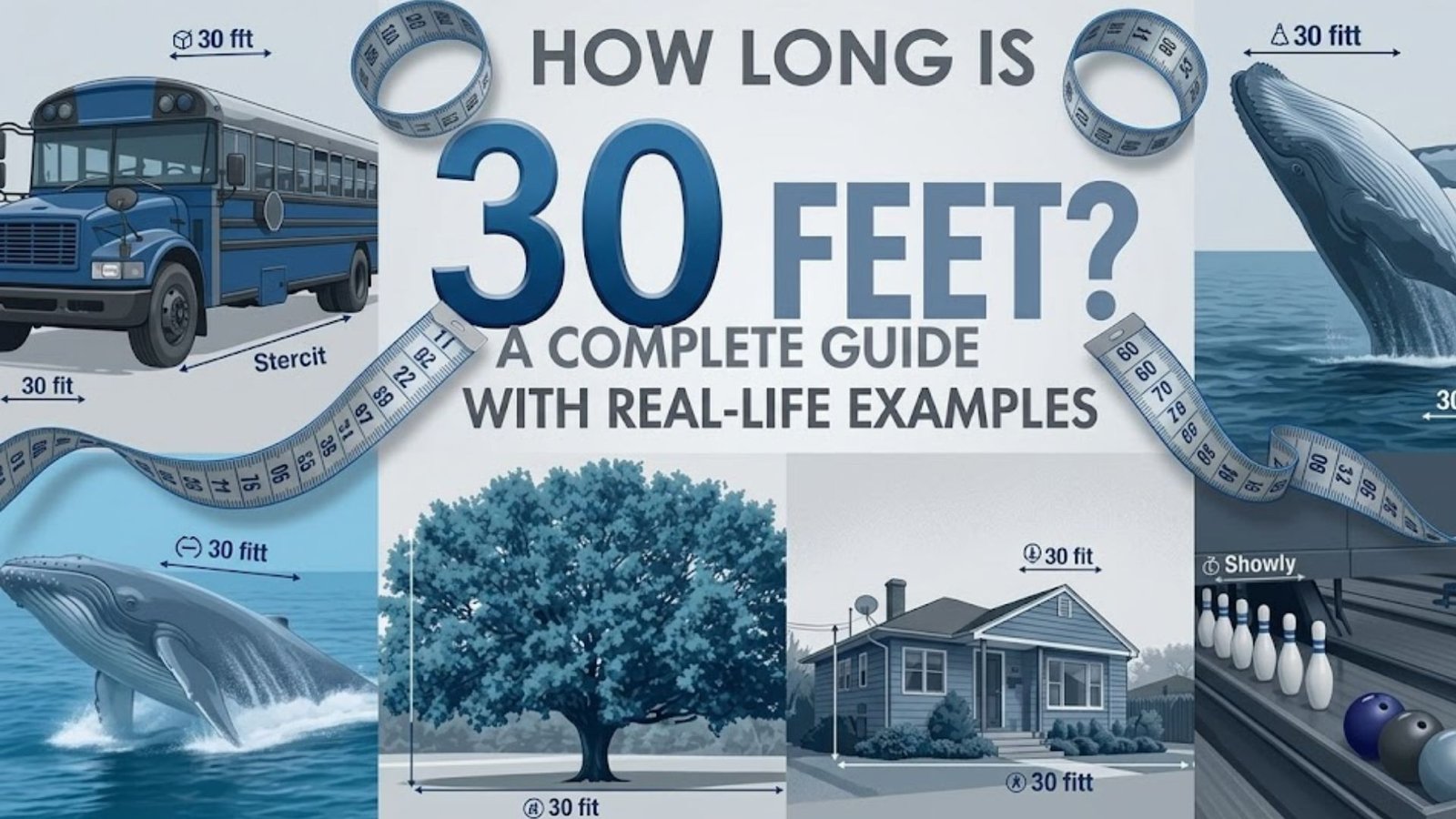
30 feet compared to human

How Long is 30 Feet Visually? 15 Everyday Things That Are Surprisingly 30 Feet Long

Understanding how long is 30 feet visually can be challenging if you’re only looking at the number. While 30 feet may sound like a simple measurement, many people find it easier to understand when it is compared to familiar objects and everyday spaces. Whether you’re wondering how far is 30 feet, how big is 30 feet, or what does 30 feet look like, visual comparisons provide a clear picture. From the length of a large vehicle to the height of a small three-story building, there are many practical ways to imagine this distance. In this guide, we’ll explore easy examples and comparisons to help you visualize exactly what 30 feet looks like in real life.

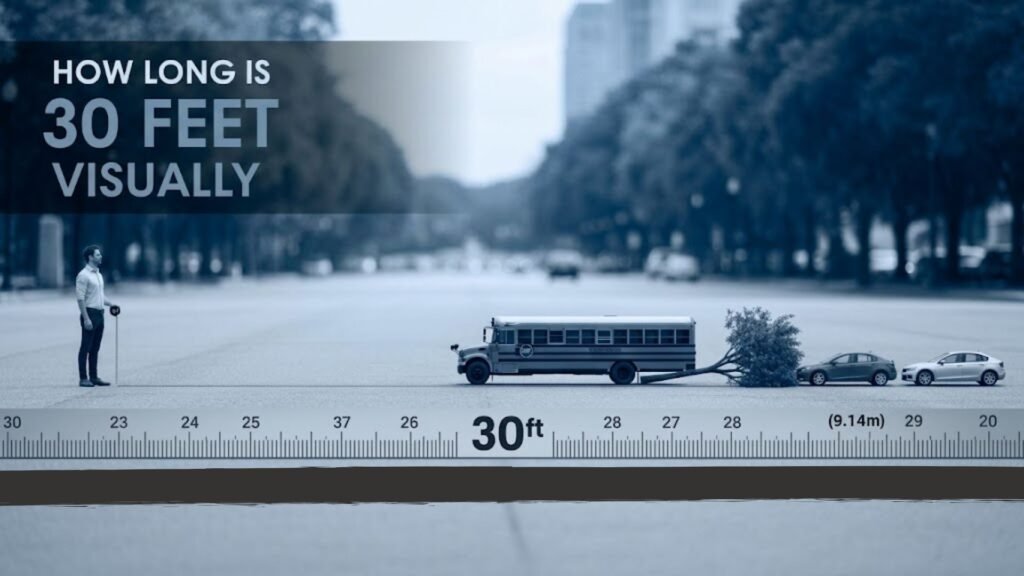
When people search how long is 30 feet visually, they usually want an easy real-world idea of size. In simple terms, 30 feet visualized means a length that is about the size of a large school bus or three small cars parked in a row.

The basic measurement of 30 feet helps understand everyday space, and many people also ask how long is 30 feet, how big is 30 feet, and what does 30 feet look like to get a clear mental image. In short, 30 ft is a moderate distance that is easy to notice in real life, and many use 30 feet example comparisons to understand it better.

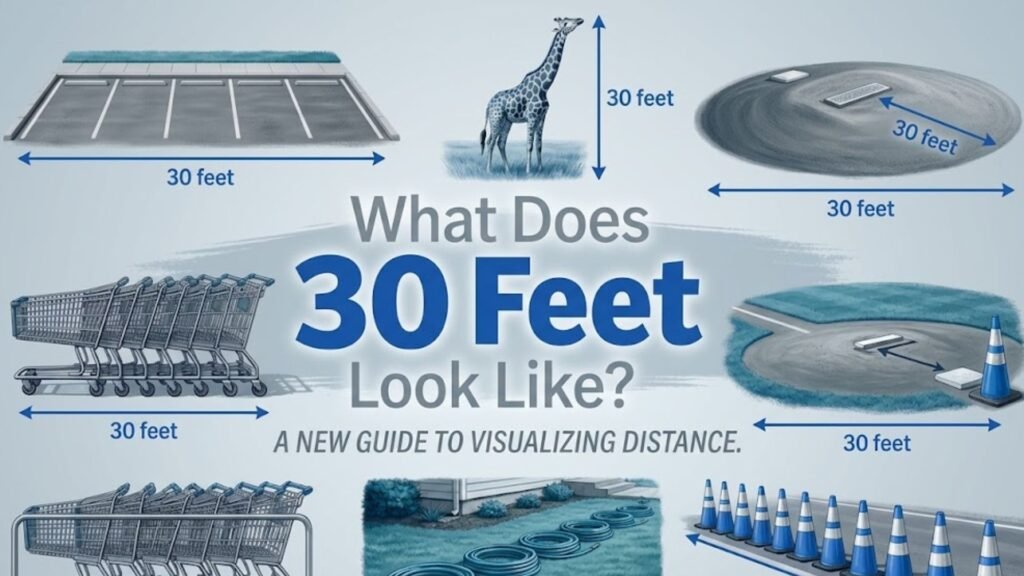
A strong way to understand this measurement is through human and object comparison. For example, 30 feet compared to human is about the height of a 3-story building or five to six average adults stacked head-to-toe.

When thinking about height, people also search how tall is 30 feet, 30 feet tall, and 30 ft high to imagine vertical size. In real-life visuals, what does 30ft look like can be explained as a tall tree or a small building.

These comparisons also help answer 30 ft comparison questions by showing how space looks in daily life rather than numbers only.

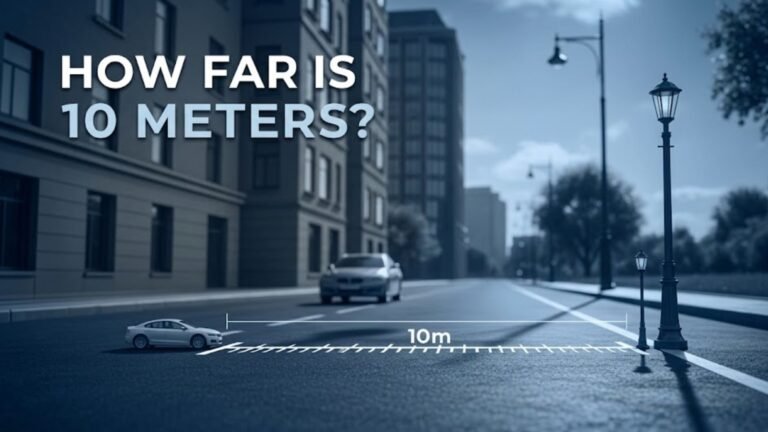
When talking about distance, people often wonder how far is 30 feet or how far is 30 ft, especially in sports, rooms, or outdoor spaces.

It is roughly the length of a small apartment hallway or a short backyard. Another common question is how much is 30 ft, which simply refers to the same measurement in feet.

To make it even clearer, what does 30 feet look like and how long is 30 feet example show that it can be visualized as a straight line of parked bikes or a small swimming pool length.

Imagine standing on a football field, where the end zones stretch beyond the goal lines. Thirty feet is roughly the distance from the goalposts to the 10-yard line, a span that can seem both small and vast depending on your perspective.

When you visualize it in terms of everyday objects, 30 feet is about the length of a classic city bus, or the height of a three-story building. This familiarity helps ground us in understanding distances that may otherwise feel abstract.

how long is 30 feet visually

In your backyard, you’ll discover that 30 feet can be the length of an average garden plot or the width of a trampoline. Such dimensions can serve as a practical reference point for planning activities like barbecues or family gatherings.

It’s also worth considering how 30 feet plays a crucial role in architecture and design think of a comfortable living room where a cozy seating area flourishes within this space, allowing for both functionality and flow.

It’s the length of a hallway or the distance between two trees in your local park, 30 feet is a scale that often defines our daily interactions with space, making it both a measurement of distance and a measure of experience.

At 30 feet above ground, the world transforms into an expansive tapestry of color and movement.

The once-familiar landscape takes on a new perspective, where trees sway in unison, their canopies forming a green sea beneath you.

From this height, the intricacies of nature unveil themselves; you can spot intricate nests woven meticulously by industrious birds and the darting shadows of squirrels navigating their arboreal highways.

Human life, too, appears different; cars become mere dots, and the hustle and bustle of the streets morphs into an orchestral rhythm.

Conversations flow like music, though muted, punctuated by the honks and whooshes of life below. This vantage point offers a brief escape from everyday chaos, heightening the appreciation for both nature and human ingenuity.

The air feels fresher, more electric, and each breath becomes a reminder of the beauty of perspective. Embracing this elevation can inspire a deeper connection to the world, inviting reflection and an appreciation for the interconnectedness that often goes unnoticed on solid ground.

Thirty feet tall is an astonishing height when compared to the average human. To put it in perspective, the typical adult stands at around 5 to 6 feet, meaning 30 feet is five to six times that height.

This transformation visually stretches out our everyday understanding of scale. Imagine standing next to a structure that towers above you at that height like a giant tree or an expansive totem pole where the sheer magnitude can evoke feelings of awe and insignificance.

In practical terms, towering structures at 30 feet often instill a sense of wonder and curiosity. For example, think about the giant redwoods in California; their impressive height dwarfs most human achievements.

This stark comparison not only highlights the grandeur of nature but also challenges our perceptions of space and design. Architects and artists harness this awe-inspiring scale, creating spaces that make us question our place within the environment.

We explore settings with such towering heights, we are reminded of the vastness of the world around us, prompting us to appreciate both our humble stature and the incredible things humanity can build.

Imagine standing next to a typical three-story building; the height can be a stark reminder of how 30 feet is perceived in architecture. It’s not just about height; it’s a measure of space that brings a sense of community and presence.

In urban landscapes, these buildings can house apartments, offices, and shops, serving as bustling hubs where life unfolds. When you visualize 30 feet in such contexts, it becomes a bridge between the ordinary and the extraordinary, melding every day with the aspirational.

When you consider the dimensions of a bowling lane, which stretches 60 feet in its entirety, 30 feet represents the sweet spot for beginners.

This distance is a beginner’s playground, often the point where skill meets enjoyment. It’s a reminder that even something as recreational as bowling builds confidence as you master those final 30 feet to the pins, emphasizing that our desires and capabilities often dwell within a reachable distance.

In cricket, the standard pitch measures 22 yards, approximately 66 feet long. Halving that to 30 feet gives a solid context to a strategic segment of the game, where speed, skill, and precision come into play.

This distance encapsulates the essence of competition, where a bowler’s delivery can shape the destiny of a match and where a batsman’s quick reaction can yield success or failure. Considering 30 feet in this context brings to light how vital perceptions of distance are in sports, where every inch counts.

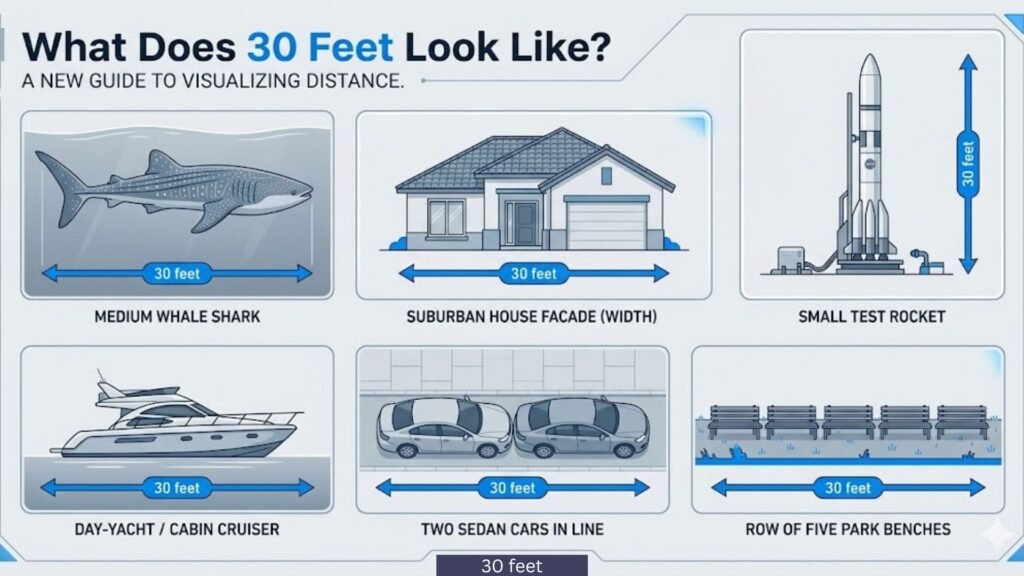
Now, envision two of the ocean’s top predators side by side, each averaging around 15 feet in length. Together, they stretch a formidable 30 feet, embodying the vastness and intrigue of the underwater world.

It’s astonishing to think that in the wild, 30 feet can translate to the powerful presence of a pair of sharks gliding through their habitat, reminding us of the awe and beauty of nature that surrounds us each day, often unnoticed yet ever-present.

Consider the space occupied by three standard table tennis tables aligned together; that’s a bustling 30 feet of competitive spirit and agility.

This distance is not just physical; it represents the energy and camaraderie found in recreational settings where friends gather for spirited matches.

Each game signifies the pulse of social engagement, where moments of triumph are celebrated just as much as the joy of simply playing together.

A queen-size bed measures roughly 5 feet long, making 30 feet a staggering 4.5 times that length.

This perspective shifts our understanding of personal space and comfort, showcasing how expansive a length can feel in everyday life.

Visualizing this distance in your home may evoke thoughts of cozy gatherings, quality time with family, or simply a welcoming space where dreams take shape a reminder that even in the simplest shapes and measures, we discover the extraordinary in our everyday experiences.

Imagine standing beneath a giant Christmas tree adorned with thousands of twinkling lights. At 30 feet tall, it dwarfs even the most majestic festive display.

This height is comparable to the tallest trees in your neighborhood, creating a sense of wonder and joy during the holiday season. Such a towering presence not only amplifies the warmth of celebration but encourages a sense of unity as families gather around to admire the spectacle.

Andre the Giant, standing at an impressive 7 feet 4 inches, was an icon of stature and strength. When you visualize 30 feet, it’s almost unfathomable to think it’s over four times his height.

This comparison evokes an image of a larger-than-life figure, emphasizing how extraordinary that height truly is. It makes you appreciate the uniqueness of human stature while igniting curiosity about the structures, landmarks, and feats of engineering that can achieve such heights.

A classic London double-decker bus, typically around 15 feet tall, is an iconic symbol of the city. Double that height, and you reach 30 feet a scale that transforms our daily commute into a sky-high view.

30 ft comparison

This comparison not only highlights the bus’s familiar presence in urban life but also invites reflections on how transportation can scale and influence our urban landscapes.

Imagine looking down on a bustling street from that vantage point; it redefines our relationship with mobility and city life.

Standing around 30 feet tall, a standard telephone pole serves a practical purpose while being a common sight in our everyday environment. It’s a reminder of the systems that keep our world connected.

Visualizing this height helps us appreciate the infrastructure that quietly supports modern life, often overlooked. The pole not only carries communication lines but also marks the boundaries of our neighborhoods, evoking a sense of community in its unwavering presence.

The inside length of most semi-truck trailers comes in at approximately 30 feet, a crucial dimension for transporting goods across vast distances. This measurement represents the backbone of supply chains, silently influencing the economy and daily life.

Visualizing this length allows us to grasp the scale of logistics and trade, as well as the effort behind getting products from factories to store shelves. It emphasizes the unseen work that fuels our consumer-driven society while illustrating the importance of transportation in maintaining our daily needs.

Consider how 30 feet can align with ten standard parking spaces in a row, a visual that many drivers can easily relate to. This comparison adds a layer of practicality and familiarity; it’s a length most of us encounter regularly, yet rarely think about.

Recognizing this measurement in terms of parking spaces not only impacts urban planning but also our own habits and movements in daily life. It’s a reminder of how space is utilized and structured around us, shaping our routines in often unnoticed ways.

Imagine the bustling scene of a schoolyard, with children laughing and scattering as the last bell rings. A full-size school bus measures about 30 feet in length, a familiar sight that delineates space in parking lots everywhere.

This length is optimal for transporting a group of kids, yet it also offers a tangible reference point for everyday distances.

When you spot a parked bus, consider how that space signifies safety it’s designed not just for transportation, but to hold the memories of countless students embarking on their educational journeys.

Standing at nearly 30 feet when you account for the height of one adult giraffe and a half, this iconic animal brings a unique perspective on length.

Those towering necks and long legs allow giraffes to reach leaves in the canopy, but their impressive size can be a startling reminder of nature’s grandeur.

Visualizing a giraffe’s stature against a backdrop of trees highlights not only its length but the narrow spaces it navigates. This comparison prompts us to appreciate the harmony of nature, where even the tallest creatures find their place in the ecosystem.

A standard extension ladder typically reaches around 30 feet when fully extended, serving as a crucial tool for contractors and DIY enthusiasts alike.

This versatile piece of equipment translates height into function, whether it’s for painting the exterior of a house or accessing a steep roof.

When you see one leaning against a home, remember how it connects life to proportions; it brings the unreachable within arm’s length.

This practical comparison not only emphasizes the ladder’s functional value but also encourages us to think about how tools bridge the gap between ground-level tasks and our aspirations.

Visualizing 30 feet can initially seem daunting, but tapping into familiar references can make it surprisingly intuitive. Imagine the length of a standard school bus, which is approximately 35 feet.

Picturing it alongside your favorite neighborhood landmark, you can reasonably gauge that distance while also grounding it in your everyday experiences.

Think about the height of a full-grown, adult giraffe averaging about 15 to 20 feet tall two adult giraffes standing shoulder-to-shoulder can provide a mental framework for picturing 30 feet.

You can also use your own body as a measurement tool. The average adult stride is around two to three feet, so taking ten big steps forward can paint a vivid picture of what 30 feet looks like.

Engaging in this physical form of measurement not only helps you visualize but also reinforces your spatial awareness. Consider marking that distance with everyday objects, like laying down three standard folding tables or a row of twelve-foot-long basketball court sidelines.

Linking it to elements of your environment, the exercise transforms into an enjoyable exploration of space, enhancing your appreciation for distances in the world around you.

One of the most prevalent errors people make when estimating 30 feet is relying too heavily on visual judgment without any reference points. Without markers or familiar distances to compare against, perceptions can easily distort reality.

For example, many might underestimate or overestimate the distance simply based on how it feels, which can lead to significant miscalculations, especially in outdoor settings where visual cues can be misleading.

Common pitfall is neglecting to account for environmental factors. Things like perspective distortion where objects appear smaller or larger depending on the surrounding landscape can skew one’s perception of distance.

Attempting to estimate without considering one’s own position can result in a skewed understanding of scale. By proactively addressing these pitfalls, individuals can improve their estimates, enhancing their ability to navigate both practical and recreational scenarios effectively.

Understanding 30-foot measurements is crucial in various aspects of daily life, particularly in activities like home improvement and landscaping.

Knowing that 30 feet equates to roughly the length of a standard school bus can redefine your spatial awareness. When planning a garden or designing a new room layout, visualizing distances can help you maximize space and create harmonious environments, making even small areas feel open and inviting.

In safety considerations, comprehending adequate distances can prevent accidents. Whether determining how far to park from a fire hydrant or understanding the necessary clearance between structures, this measurement plays a vital role.

In recreational settings like sports fields or parks, recognizing how 30 feet influences play areas can enhance both safety and enjoyment, ensuring that activities are not only fun but also appropriately spaced for optimal engagement.

When considering whether 30 feet is perceived as long or tall, context plays a crucial role. In architectural terms, a building reaching 30 feet may be considered modest, perhaps the height of a two-story home.

In the realm of landscape design, a 30-foot tree stands majestically, framing the environment and providing a sense of grandeur. This duality highlights how our perspective shifts dramatically based on the objects and settings around us.

what does 30 feet look like

In recreational spaces, 30 feet can embody a playful challenge, such as the height of a climbing wall or the drop on a zipline.

In these contexts, it evokes excitement and a thrilling sense of adventure. However, in contrast, when we lean towards transportation or sport, such as a boat or a kite, 30 feet may not seem particularly colossal.

This exploration invites us to rethink our perceptions and the dimensions of our experiences, reminding us that “long” and “tall” are not fixed terms but rather fluid concepts shaped by our surroundings.

To truly grasp the significance of 30 feet, consider it the length of a standard school bus, a familiar sight that emphasizes just how far this distance stretches.

Imagine standing beside a bus it gives a sense of scale that makes 30 feet more tangible. This distance is substantial enough to hold a lively gathering, yet contained enough to foster intimacy, exemplifying how space shapes our interactions.

In contrast, 30 feet is also the average height of a three-story building, providing a different perspective on verticality. Standing at the base of such a structure can evoke feelings of awe, showcasing how our physical environment influences our experiences.

In outdoor contexts, like parks or sports fields, 30 feet can equate to the height of a basketball hoop, a measurement that resonates with anyone who’s shot hoops or cheered from the sidelines.

Each of these comparisons reveals how 30 feet balances familiarity with a sense of scale, inviting us to appreciate both the everyday and extraordinary dimensions of our world.

How many stories is 30 feet?  

A standard story in a building typically measures around 10 feet, which means that 30 feet equals about three stories. This height can vary based on architecture and design, but for most residential structures, three stories is a reasonable approximation. Visualizing this, imagine three stacked levels of a home, each allowing for comfortable living space with adequate ceiling height.

How long is a foot visually?  

A foot is about the length of a standard ruler, providing a tangible reference point in everyday life. When you visualize it, think of the length of a shoe or a loaf of bread. It’s a practical measurement that finds its way into various aspects of design, crafting, and even cooking, making it essential for visualizing dimensions in both small-scale and large-scale projects.

How big is 30 square feet visually?  

Imagine a space roughly the size of a small bathroom or a walk-in closet; that’s approximately 30 square feet. To put it into perspective, it could comfortably fit a bistro table and a couple of chairs. This size might feel modest, but with clever layout choices, it can serve multiple functions, from a cozy reading nook to a compact office.

How tall is length 30?  

When considering the height of something listed as 30 inches, envision a low kitchen countertop or a standard table. This height is often optimal for comfortable use, facilitating easy access for most people without straining. Since it’s below average waist height, it allows for a functional design that balances accessibility with aesthetic appeal.

Understanding how long 30 feet is visually becomes much easier when compared to familiar objects and spaces. Whether you think of a school bus, several parked cars, or a small building, these examples help turn an abstract measurement into something you can easily picture. Using real-world comparisons, 30 feet becomes a practical and recognizable distance that is simple to estimate and understand in everyday situations.

Similar Posts

Leave a Reply