How Far is 10 Meters? 1 Most Common Things And Distances That Are 10 Meters Long 2026
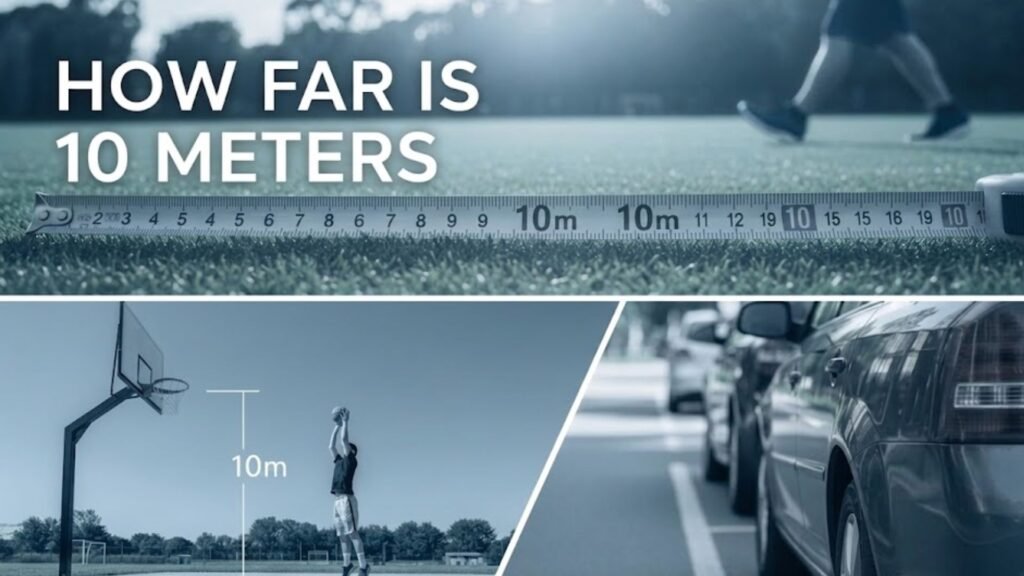
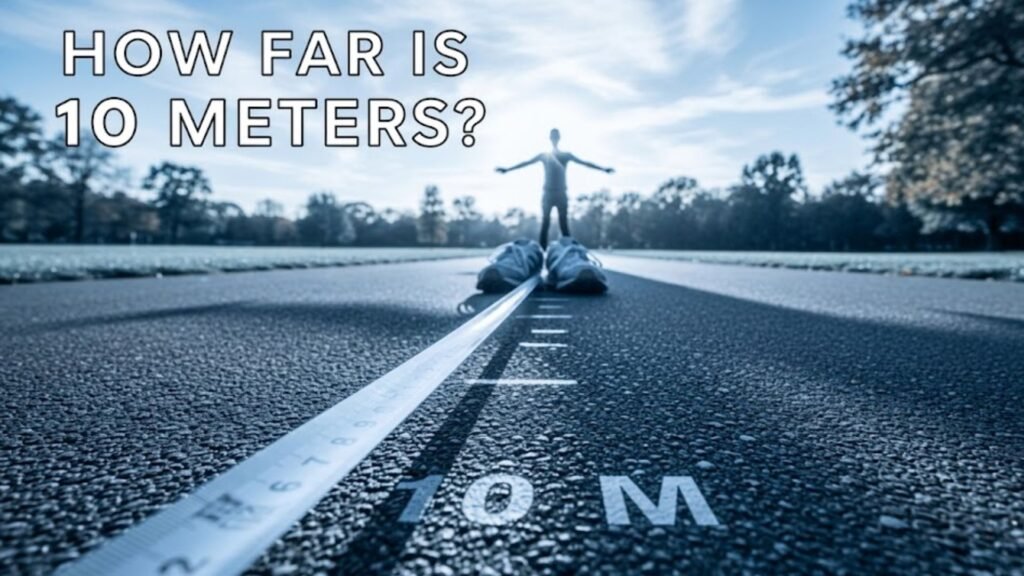
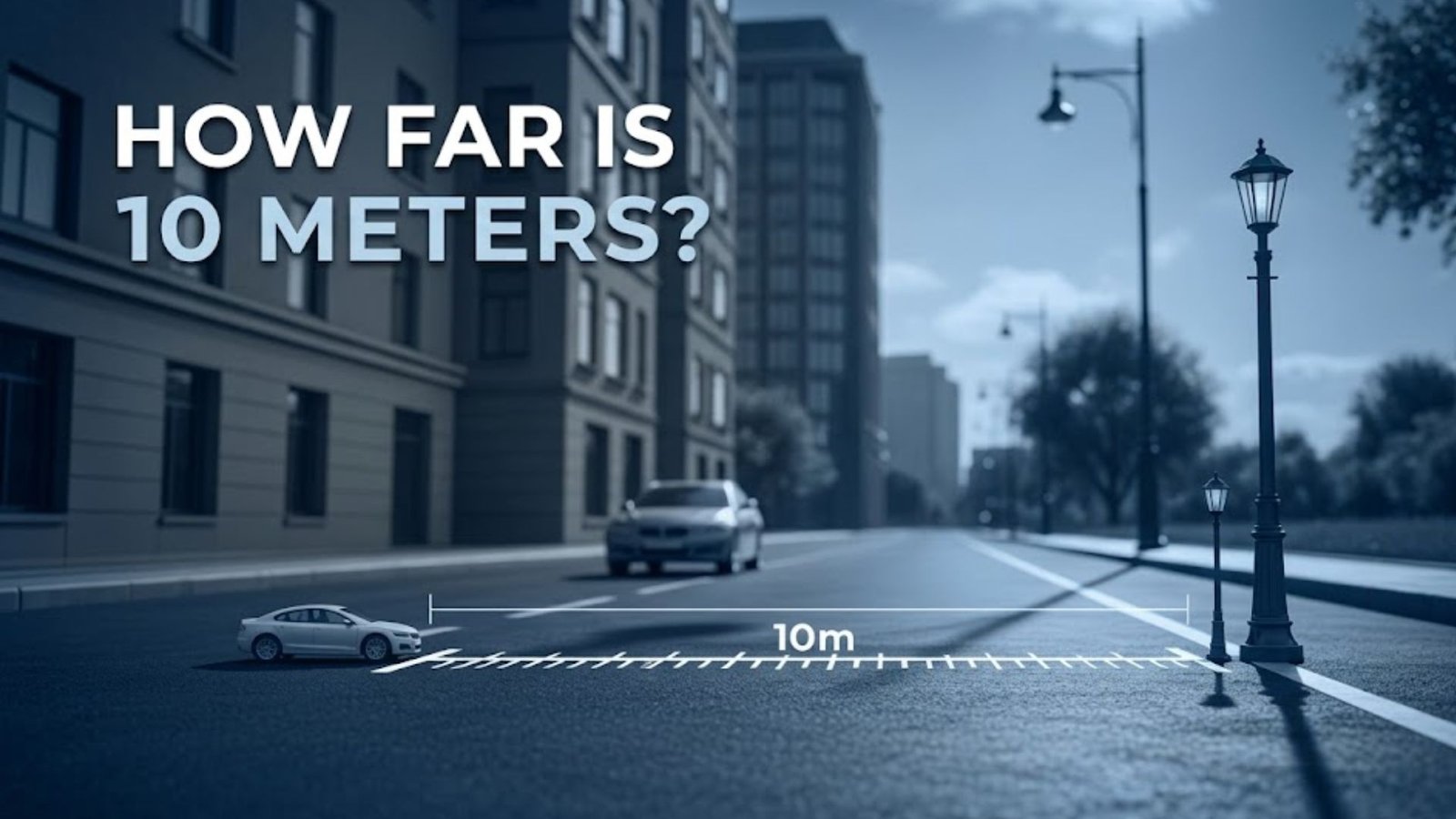
Many people wonder how far is 10 meters because it can be difficult to picture a distance using numbers alone. Ten meters is equal to 32.8 feet or about 393.7 inches, making it a useful measurement for everyday activities, sports, construction, and outdoor spaces. By comparing it to familiar objects and distances, it becomes much easier to understand what 10 meters looks like in real life.
How Long Is 10 Meters?
If you have ever wondered how long is 10 meters, the distance is equal to 32.8 feet or approximately 393.7 inches.
Many people search for what is 10 meters, how far is 10 meters, how far is 10 m, and how long is ten meters because it can be challenging to visualize.
In simple terms, 10 m is about the length of a large bus or two average cars parked end-to-end. Understanding how big is 10 m becomes easier when compared to familiar objects.
When trying to imagine what does 10 meters look like, there are several useful 10 meters examples.
Some common objects that are 10 meters long include a telephone pole lying flat, a large truck, or a small sailing boat. These everyday comparisons help make 10 meters visualized much more clearly.
If someone asks how long is 10 m or how far is ten meters, thinking about these objects can provide a quick and accurate mental picture.
For measurement conversions, 10m to inches equals about 393.7 inches. If you are asking how many inches is 10 meters, that is the exact conversion.
You may also see the measurement written as 10m to in on conversion charts and calculators. You are measuring a room, sports field, or outdoor space, knowing how long is 10 meters, how far is 10 meters, and recognizing things that are 10 meters long can make estimating distances much easier.
How Much Is 10 Meters?
Ten meters may seem like a straightforward measurement, but it holds significance across various contexts, transforming from a mere numerical value into a tangible representation.
Envision standing under a basketball hoop; the rim is approximately three meters high. By that comparison, ten meters is just over three times the height of that hoop, suggesting a thrilling leap or an impressive dunk.
This makes ten meters not just a distance, but a benchmark for human capability in sports and physical feats.

In architectural terms, ten meters can be the height of a small building or a towering sculpture, making it a familiar yet awe-inspiring sight in urban landscapes.
Imagine standing beneath the soaring structure of a canopy or a modern art installation soaring into the sky this scale can evoke a deep connection to both nature and human ingenuity.
Consider everyday scenarios like swimming pools, where a standard Olympic-sized pool is 50 meters long; ten meters becomes a mere fragment that highlights vastness and depth.
Exploring ten meters also gives us insight into our surroundings. In nature, ten meters might be the height of a young tree, symbolizing growth and potential.
Understanding this measurement is not only about numerical comprehension but also about recognizing its profound impact on our physical world and how we interact with it.
From art installations to natural wonders, ten meters transforms into a powerful reference point, urging us to appreciate the scale of life around us.
Distance And Things That Are 10 Meters Long
When we think of distances, 10 meters may seem innocuous, but it often represents the space between familiar objects that convey the scale of our everyday environment.
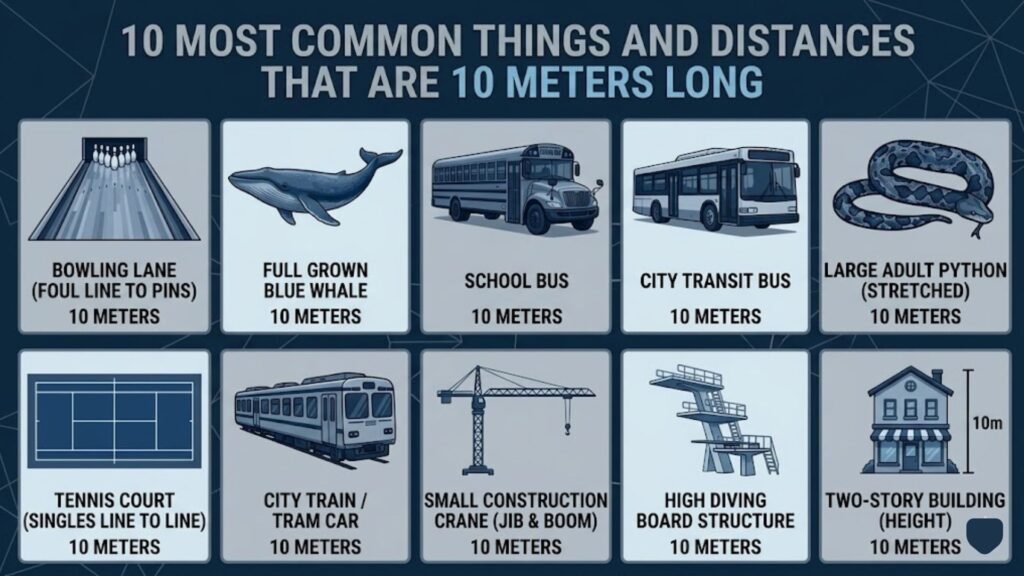
Imagine standing at the length of a London double-decker bus; these iconic vehicles, which smoothly traverse the city’s bustling streets, are approximately 10 meters long.
This distance encapsulates not just the physical measurement but also the vibrancy of urban life each bus represents a conduit of stories and encounters.
London Double-Decker Bus
A bowling lane, measuring around 18.3 meters in total, includes a crucial 10-meter stretch from the foul line to the beginning of the pins.
This segment is more than just a medium distance; it’s a launchpad for competitive spirit, laughter, and camaraderie.
As players send their carefully chosen bowling ball down this track, the anticipation builds, echoing the hopes for that elusive strike, marking each game as a unique narrative fleshed out with friendly competition.
Bowling Lane
In netball, the goal third spans a crucial 10 meters, crafting a zone of tactical play and strategy. Here, agility meets precision, where players display their skills in maneuvering around defenders to sink that game-winning shot.
This space not only captures the essence of athleticism but also fosters team dynamics and spatial awareness, transforming each move into a calculated step toward triumph.
A Netball Court Goal Third
The ladder of a fire truck extends to critical heights, often reaching around 10 meters for quick access to buildings in emergencies. This essential tool symbolizes safety and protection, representing first responders’ courage as they ascend to rescue.
The sight of a fire truck with its towering ladder is not just about height; it’s a beacon of hope, a reminder of the community’s resilience and readiness in times of crisis.
Fire Truck Ladder
Standing at about 10 meters, the height of a two-story building offers a familiar yet remarkable perspective on architectural design.
These buildings arise as modern homes and offices create bustling spaces for living and working. They epitomize the comforts of human habitation while also showcasing the interplay of nature and urban life, reminding us that every structure is a blend of utility and artistry.
Two-Story Building Height
Imagine a classroom wall within a large gym, roughly 10 meters long, acting as a canvas for learning and growth. This wall doesn’t just separate spaces; it holds the potential for creativity, collaboration, and inspiration.
It’s adorned with colorful educational posters or serves as a backdrop for group activities, it stands as a testament to moments of discovery in student life, playing a pivotal role in shaping young minds.
10-meter Sprint Lane
the 10-meter sprint lane is a crucial segment where speed meets precision. This short distance serves as a critical measure for the all-important first strides of sprinters, emphasizing explosive power and technique.
It’s where champions are forged, and personal records are set, reminding athletes that every meter counts in their quest for excellence.
Olympic Diving Platform
The Olympic diving platform, standing proudly at a height of 10 meters, is a spectacular sight. From this vantage point, divers experience immense exhilaration and anxiety as they perfect their acrobatics before plunging into the water below.
This height challenges athletes to confront their fears, reinforcing mental fortitude alongside physical prowess.
Soccer Penalty Arc Radius
The soccer penalty arc has a radius of 9.15 meters, illustrating the delicate balance between skill and strategy in the game. While it’s just shy of the 10-meter mark, it becomes a focal point during high-pressure moments.
The arc defines the space from which defenders must respect the kicker, making it a calculated dance of anticipation and timing.
Large Crocodile
In the realm of wildlife, a large crocodile often measures about 10 meters in length, showcasing nature’s raw power.
These ancient reptiles remind us of the untamed wild, lurking in their watery habitats with stealth and grace. Their size and predatory prowess serve as a reminder of the delicate balance within ecosystems and our responsibility to protect such magnificent creatures.
Shipping Container (40-ft)
A standard 40-foot shipping container translates to approximately 12 meters, but adjust your perspective, and it can provide insights into the global economy.
These containers symbolize international trade’s backbone, transporting goods across the world. They are not just metal boxes; they represent connectivity, commerce, and the intricate webs of modern society.
School Bus
A typical school bus is about 10 meters long, brimming with memories of childhood journeys. It carries not just students but also dreams and aspirations, weaving through neighborhoods as a symbol of community.
The bright yellow exterior serves as a daily reminder of the vital role education plays in shaping future generations.
Telephone Pole
Standing tall at about 10 meters, the telephone pole is a silent sentinel in our urban landscapes, connecting us to the vast web of communication. Its sturdy structure supports not only cables but also the lifeline of information exchange.
Each pole is a conduit of connectivity, representing the invisible threads that link us, reminding us that our voices can resonate far beyond the physical distance.
Large Whale Shark
The awe-inspiring whale shark, the largest fish in the ocean, can boast an impressive length that sometimes reaches up to 10 meters. This gentle giant glides gracefully through tropical waters, captivating divers and marine enthusiasts alike.
Imagine standing at the edge of the water, where a creature as long as a small bus swims past you, bringing the marvels of our planet’s oceans to the forefront. The sheer size of the whale shark serves as a reminder of the vastness of marine life and the importance of ocean conservation.
Tennis Court Baseline to Service Line Span
On a tennis court, the distance from the baseline to the service line measures exactly 10 meters. This specific length plays a crucial role in the game’s strategy, dictating how players position themselves for serves and returns.
Visualize a player expertly pacing out this distance, rhythmically preparing for a critical serve, a moment that encapsulates both physical prowess and mental strategy. Understanding this distance is key for budding players learning the nuances of their game.
City Street Lamp Post + Arm
A standard city street lamp, when combined with its extending arm, often reaches a length of around 10 meters.
Picture strolling down an urban boulevard lined with such lamp posts, their warm glow illuminating the path ahead as evening descends.
These fixtures not only enhance safety and visibility but also play a vital role in setting the atmosphere of the cityscape, merging functionality with artistry. Their design and placement can significantly influence how we experience our urban environments.
Small Yacht
A small yacht can typically measure around 10 meters in length, offering an ideal size for leisurely coastal cruising.
Imagine the sensation of wind in your hair as this vessel navigates through serene waters, embodying freedom and adventure on the high seas.
This length strikes a perfect balance, allowing for both maneuverability and comfort, making it popular among weekend sailors.
The allure of a 10-meter yacht goes beyond mere dimensions; it’s about the experiences and memories created aboard, encapsulating the spirit of nautical exploration.
Everyday Places You Can See 10 Meters
Imagine standing in your backyard, surrounded by seemingly mundane scenery, yet keenly aware of the stretching 10 meters before you.
In urban environments, those 10 meters could lead you to a hidden gem: a vibrant mural painted on a once-bare wall, bursting with color and local stories.
Every city has its anecdotes, and these tiny patches of art often reflect the community’s spirit, inviting passersby to pause and appreciate the creativity that thrives in unexpected places.
Venturing into local parks, you can spot that same distance marked out by trees swaying gently in the breeze.

Each tree boasts its own history and ecosystems, serving not only as a habitat for countless creatures but also as a reminder of the passage of time. Imagine the life beneath the canopy squirrels darting about, birds nesting, all interacting within this measured expanse.
This simple stretch encourages you to embrace nature, fostering a sense of connection with the living world that often goes unnoticed in our fast-paced lives.
Even on the bustling streets of a neighborhood, a mere 10 meters can transform your perspective. Take a moment to look closely at the sidewalk often dotted with intricate patterns or ingenious designs that reveal the craftsmanship of those who laid them.
The details in the pavement, like the nearby café’s inviting outdoor seating, narrate the daily rhythm of life, where strangers become friends over shared experiences.
These everyday places aren’t just backdrops; they hold stories waiting to be discovered, each meter inviting you to explore deeper and appreciate the surrounding tapestry of life.
Why Knowing 10 Meters Matters
Understanding the significance of 10 meters extends beyond mere distance; it can be pivotal in various contexts such as sports, navigation, and even environmental science.
In athletics, a ten-meter mark can be a critical threshold that separates amateur efforts from elite performances, influencing the outcomes of competitions.
For divers and swimmers, precision at this distance can mean the difference between an awe-inspiring leap and an awkward entry, showcasing the importance of judging depth and perimeter accurately.
In a broader context, 10 meters is often a vital scale in environmental studies, especially in assessing climate change impacts.
For example, rising sea levels can have catastrophic consequences for coastal cities, and understanding the implications of even slight shifts at this distance can guide urban planning and disaster preparedness.
It’s fascinating to consider how this seemingly small metric can dictate the resilience of ecosystems and human settlements alike, highlighting the interconnectedness of our world.
Every meter counts, and understanding these nuances can empower individuals and communities to take informed action.
How Many Steps Is 10 Meters When Walking?
Walking 10 meters might seem like a simple task, but it can open up a world of insights into how we navigate our environment.
On average, a person’s stride length is about 0.7 to 0.8 meters, meaning that it typically takes around 12 to 15 steps to cover 10 meters.
This seemingly mundane exercise highlights the rhythm and pace of our everyday lives, underscoring the importance of movement in maintaining physical health.
Moreover, considering the number of steps in relation to distance allows us to appreciate our surroundings in a new light.
Think about it: each step is an opportunity to engage with the world, whether it’s feeling the pavement underfoot or noticing the beauty of a passing flower.
Tracking our steps not only motivates us to reach fitness goals but also encourages mindfulness in our daily walks, transforming a simple journey into an exploration of our environment.
So, the next time you set out on a short walk, remember: every step counts, both in distance and in the experience of life.
How Long Does It Take to Walk 10 Meters?
Walking 10 meters might seem like a trivial distance, but it can actually reveal a lot about our daily interactions with space and movement.
On average, a comfortable walking pace ranges from 1 to 1.5 meters per second, so traversing 10 meters would take approximately 7 to 10 seconds.
This journey is influenced by various factors, from one’s physical fitness to the terrain underfoot. For instance, a stroll on a flat, smooth sidewalk will naturally differ from a walk across uneven grass or through a crowded environment.
The speed can be affected by more than just physical conditions; mental state plays a significant role. When we’re lost in thought or preoccupied, we tend to walk more slowly.
In contrast, an excited sprint towards an anticipated destination can compress those seconds into mere moments. Beyond mere calculations, the act of walking even a short distance can be an opportunity for mindfulness.
Embracing the simple endeavor of walking 10 meters allows one to appreciate the surroundings, observe details often overlooked, and infuse daily routines with a dash of awareness. In this sense, every step counts, regardless of how short the distance might seem.
What Does 10 Meters Look Like in a Room or Building?
Visualizing 10 meters in a room or building transforms our understanding of space. Imagine a standard living room: it stretches about 3 to 4 meters in height, making 10 meters roughly the length of three medium-sized sofas lined up end-to-end.
This measurement can evoke a sense of vastness or confinement, depending on how it’s framed within the walls.
In a cozy apartment, 10 meters could represent the length from one corner wall to another, highlighting how a relatively short distance can significantly impact the room’s layout and flow.
In commercial settings, 10 meters becomes even more intriguing. Picture an expansive gallery where art pieces are spaced intentionally along a 10-meter path, inviting the viewer to walk and engage with each installation.
It emphasizes not just physical space but also the emotional distance we navigate within it. This perspective invites us to rethink how we occupy and move through our environments, recognizing that even a modest distance can influence our experiences significantly.
How Far Is 10 Meters Compared to a Car Length?
Imagine standing next to a car, perhaps a compact model like a Honda Civic, which typically measures around 4 meters in length. Now, stretch that visual to encompass 10 meters essentially, it’s like placing two and a half of those cars end to end.
This distance transforms our everyday perception of space, making it relatable and tangible.

In practical terms, think about navigating through a city street or a busy parking lot. Ten meters can seem brief when you’re rushing to cross an intersection, yet it could also represent a significant distance when trying to grasp the scale of a larger construction site or sporting field.
The perception of distance often shifts depending on our surroundings and speed. Next time you measure out 10 meters, envision those car lengths stacking up, bridging your understanding of space in a whole new way.
How 10 Meters Is Used in Sports and Athletics
In the world of athletics, the 10-meter measurement plays a pivotal role across various disciplines, providing a standard that enhances competition and skill assessment.
In air pistol shooting, competitors aim to hit targets positioned precisely 10 meters away, challenging their precision and nerve.
This distance is not arbitrary; it is carefully calibrated to test the sharpshooters’ ability to maintain focus and control under pressure, which can translate to greater performance under competitive conditions.
In diving, the 10-meter platform represents a benchmark for athletes showcasing their aerial acrobatics and technical finesse.
This height is not just about the drop but also the artistry of the performance, demanding perfect execution as divers perform flips and twists before entering the water.
Athletes are pushed to hone their skills, as they face the challenge of both physical height and the psychological aspect of fear management, ultimately contributing to their overall sporting resilience.
The 10-meter distance finds relevance in various training programs, serving as a benchmark in sprinting drills. Coaches often use this distance to gauge explosive speed and acceleration, allowing athletes to refine their technique and achieve optimal performance.
Events like the 10-meter split time in swimming also hold significance, offering insights into pacing and stroke efficiency, key components in competitive racing.
This versatile measurement continues to shape the landscape of sports, testing and developing dimensions of athletic capability that extend beyond mere physicality.
Simple Ways to Measure 10 Meters Without Tools
Measuring 10 meters without tools can be an exciting exercise in creativity and observation. One simple method involves using your footsteps as a guide.
The average adult stride is approximately 0.75 meters, so counting your steps can give you a rough estimate of the distance. Try marking your starting point and walking normally; ten steps usually covers around 7.5 meters.
This not only applies a practical approach but also invites you to pay attention to your pace and rhythm, making it an engaging activity.
Consider the height of commonly available objects. A standard doorway is roughly 2 meters tall. Visualizing five doorways in a row provides a handy reference point for measuring 10 meters.
This method also emphasizes your surroundings, prompting you to notice architectural elements you might typically overlook.
Utilizing these everyday measures, you cultivate a deeper awareness of the environment, turning even the simplest distance estimations into a learning opportunity.
FAQ’s
How far is 10 meters in feet to walk?
Ten meters is approximately 32.8 feet, which can often feel like longer when visualized on the ground. An average walking stride measures about 2.5 feet; thus, it would take roughly 13 strides to cover this distance. Understanding this conversion not only helps in grasping distances in metric systems but also adds a practical angle to spatial awareness in everyday situations, such as navigating through parks or city streets.
How long does it take to walk 10 meters?
Walking 10 meters usually takes about 4 to 5 seconds for the average person. This brief moment offers a glimpse into the rhythm of our lives, accentuating how swiftly we can traverse such a short distance. It challenges you to ponder how often we rush through minor distances, often overlooking the surrounding environment and experiences that unfold even in these fleeting moments.
How to measure 10 meters by walking?
To measure 10 meters by walking, you can use your stride length as a guide. Count your steps as you traverse a measured area, such as a track or the length of your living room, until you reach that ten-meter mark. Alternatively, pacing out the distance with a tape measure beforehand can enhance your accuracy, bridging the gap between estimation and precise navigation in unfamiliar spaces.
How to imagine 10 meters?
Visualizing 10 meters can be simplified by envisioning everyday items: think of the length of a school bus or the height of a tall basketball hoop stacked several times. In spaces like a typical gym, this distance becomes tangible as you recognize how quickly you can cover it while engaging in varied activities. This mindset shifts your perspective on daily tasks, encouraging you to appreciate the small distances we often overlook in our fast-paced environments.
Conclusion
Understanding how far is 10 meters becomes simple when you relate it to common objects such as a large bus, two cars parked end-to-end, or a small section of a sports field. Whether you are measuring a space, estimating a distance, or converting units, knowing the real-world size of 10 meters helps you visualize and use this measurement more accurately in daily life.