
How Much Is 10 Miles? Common Things and Distances That Are 10 Miles Long
Wondering how much is 10 miles and what this distance actually looks like in real life? Ten miles may sound simple, but it can be difficult to visualize without familiar comparisons.
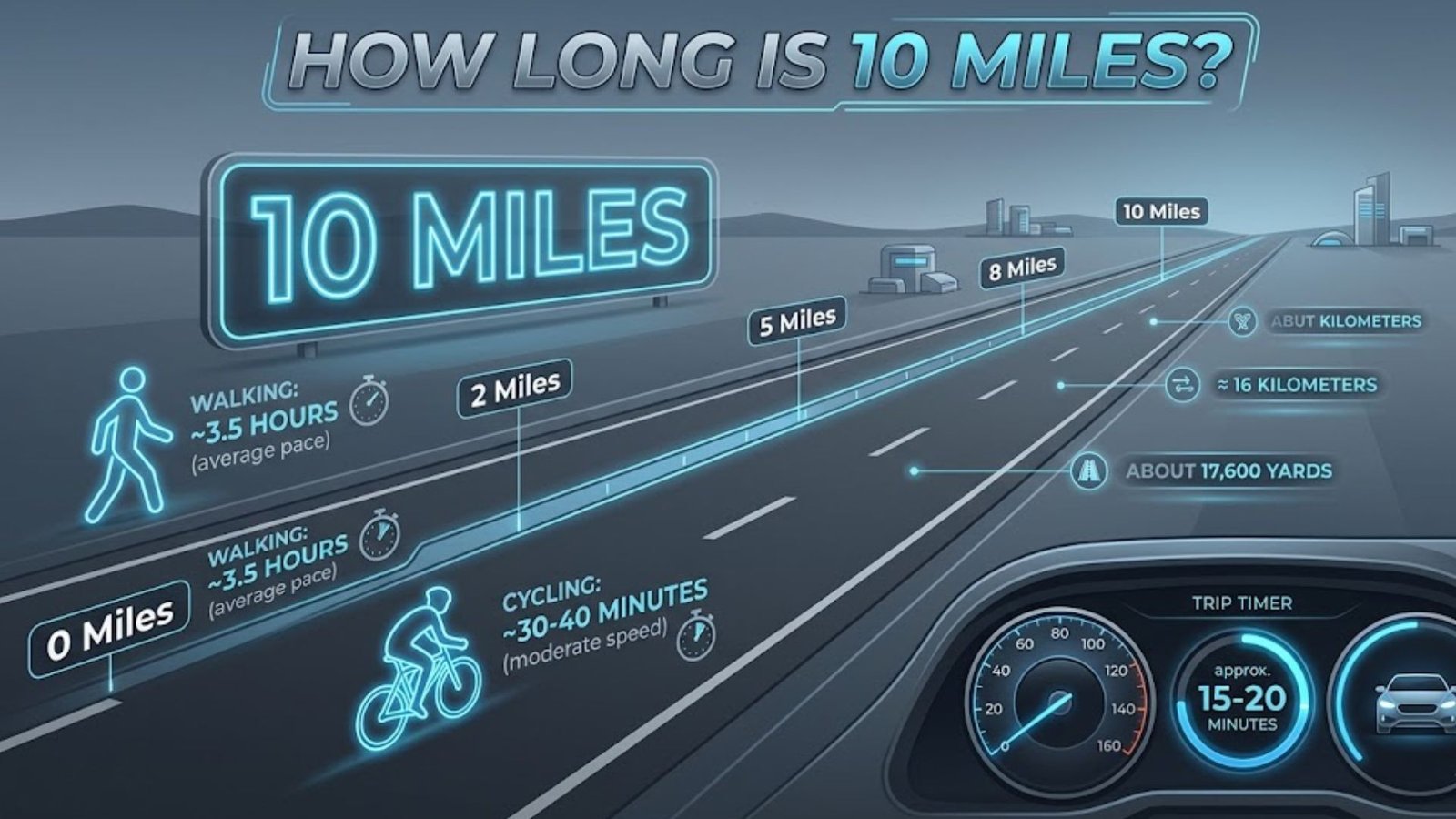
10 miles equals 16.09 kilometers, 52,800 feet, or 17,600 yards. Depending on how you travel, it can be a short drive, a long bike ride, or several hours of walking.
In this guide, you’ll learn how far 10 miles is, how long it takes to travel, how many steps it can take, and what common distances and places can help you visualize 10 miles.
How Long Is 10 Miles?
So, how long is 10 miles? In distance, 10 miles is exactly 52,800 feet or about 16.09 kilometers.
It is also equal to 17,600 yards. If you imagine walking this distance, it is a substantial journey. For comparison, a standard American football field is 100 yards between the goal lines, so 10 miles is equal to 176 football-field lengths from goal line to goal line.
The time needed to cover 10 miles depends heavily on your speed and transportation method.
How Much Is 10 Miles? 10 Miles Equivalent to Other Units
Here is a quick conversion table:
| Unit | Equivalent to 10 Miles |
| Kilometers | 16.09 km |
| Meters | 16,093.44 m |
| Feet | 52,800 ft |
| Yards | 17,600 yd |
| Inches | 633,600 in |
| Miles | 10 miles |

The most useful conversion to remember is that 10 miles is about 16.1 kilometers.
How Far Is 10 Miles?
10 miles is a moderate-to-long distance for everyday travel. Whether it feels far depends on how you are moving.
By car, 10 miles can be a relatively short trip. By bicycle, it can be a useful workout. On foot, however, 10 miles is a significant walk that can take several hours.
You can also think of 10 miles as traveling between nearby communities, crossing a large metropolitan area, or completing a long recreational route.
What Does 10 Miles Look Like?
One of the easiest ways to understand what 10 miles looks like is to compare it with familiar objects.
Ten miles is about 176 football-field lengths, 52,800 feet, or 16.1 kilometers. If you lined up cars that averaged 15 feet in length, you would need roughly 3,520 cars to cover 10 miles.
Another useful comparison is a running or walking route. A person completing a 10-mile route may pass through several neighborhoods, parks, shopping areas, or other landmarks depending on the location.
The actual appearance of 10 miles can therefore vary greatly, but these comparisons make the distance easier to picture.
Common Things and Distances That Are About 10 Miles
There is no single object that is exactly 10 miles long, but many familiar distances can help you visualize the measurement.
1. 176 Football Fields
A regulation American football field is 100 yards between the goal lines. Since 10 miles equals 17,600 yards, you would need 176 field-lengths to reach 10 miles.
If you include the end zones, the comparison changes slightly, but the overall scale remains useful.
2. A 10-Mile Running Race
A 10-mile race is one of the clearest examples because the route itself measures exactly 10 miles.
It is shorter than a half marathon, which is 13.1 miles, but considerably longer than a 5K or 10K race.
For runners, 10 miles is often used as an endurance-training distance before longer races.
3. A Long Bike Ride
For a recreational cyclist, 10 miles can be a manageable but worthwhile ride.
At a moderate cycling speed, it may take around 40–60 minutes, although hills, traffic, fitness level, weather, and stops can change the actual time.
4. A Long Walking Route
Walking 10 miles is a much bigger commitment than driving the same distance.
At a moderate walking pace, many people may need approximately 3–4 hours to cover 10 miles, depending on their pace and breaks.
5. A Short Road Trip
Ten miles can represent a short road trip between nearby neighborhoods, towns, or attractions.
In light traffic, a driver traveling around 30–40 mph could cover 10 miles in roughly 15–20 minutes. Heavy traffic or frequent stops can make the trip much longer.
6. Part of a Large City
In a large metropolitan area, 10 miles can take you across several neighborhoods.
For example, a 10-mile route may connect a suburban area with a city center or take you from one side of an urban region to another.
7. Several City Blocks
A city block can vary dramatically in size, so there is no universal number of blocks in 10 miles. In some urban areas, however, traveling 10 miles can mean passing through hundreds of blocks.
This is why city traffic can make a 10-mile trip take much longer than the distance itself suggests.
8. A Long Hiking Trail
Many hiking routes include sections of around 10 miles.
A 10-mile hike can take several hours because hikers must account for elevation changes, uneven terrain, weather, rest stops, and the weight of their gear.
9. About 33,000 Average Steps
A commonly used estimate is around 2,000 steps per mile, which would put 10 miles at approximately 20,000 steps.
However, step count varies considerably with height, stride length, walking speed, and whether you are walking or running. Therefore, 20,000 steps is better treated as a general estimate rather than an exact number.
10. A Large Suburban Commute
For some commuters, 10 miles is the distance between home and work.
Although the distance is not particularly large by road-trip standards, rush-hour traffic can make a 10-mile commute surprisingly time-consuming.
Distance Between Brooklyn And The Bronx
The distance between Brooklyn and the Bronx may be a mere 13 miles, yet these two boroughs of New York City each wield a unique cultural identity that sets them apart.
This proximity often belies the rich tapestry of experiences that await within each borough.
While Brooklyn boasts artisanal coffee shops, vibrant street art, and a laid-back atmosphere punctuated by hip neighborhoods like Williamsburg, the Bronx offers an exuberant mix of history and diverse culinary options, from the historic Grand Concourse to the vibrant atmosphere of Arthur Avenue, known as the real Little Italy.
Traveling between the two can transform your perspective on urban life, especially when you consider the myriad of transit options from the subway to a leisurely bike ride over the iconic Manhattan Bridge.
The journey itself, often taken for granted, reveals a landscape rich in stories from the breathtaking views at sunset over the East River to the murals that celebrate local heroes.
Each mile traversed is a reminder that, despite their close proximity, Brooklyn and the Bronx each present an entirely different rhythm of life, making the journey between them not just a distance, but an invitation to explore the diverse heartbeat of New York City.
Distance Between Mississauga And Toronto
The distance between Mississauga and Toronto is approximately 30 kilometers, making it a manageable commute for many who live in one city and work in the other.
This seemingly short distance belies the rich tapestry of experiences and communities that stretch between the two urban landscapes.
For those traveling this route, whether via car, public transit, or rideshare, the journey can unveil a unique mix of suburban tranquility and urban vibrancy.
Beyond the mere measurement of kilometers, the connection between these two cities reveals a deeper cultural exchange.
From the diverse culinary options lining the streets of Mississauga to the bustling art scene in Toronto, each area offers distinct flavors and experiences.
The GO Transit system bridges the gap efficiently, allowing for seamless travel and fostering a sense of unity among residents.
The distance becomes less about how far apart they are and more about how interconnected they truly feel, shaping a dynamic that is fundamentally shared.
Distance Between Vatican City And Ciampino Airport
The distance from Vatican City to Ciampino Airport, approximately 16 kilometers (10 miles), offers an enticing glimpse into the seamless blend of history and modern travel.
This relatively short journey is more than just a transfer; it encapsulates the quick transition from the sacred ambiance of one of the world’s smallest states to the contemporary bustle of air travel.
As you make your way, expect to encounter a tapestry of Roman life charming streets, local cafes, and historical landmarks that enhance the travel experience.
Traveling by car, taxi, or shuttle, the trip typically takes around 30-40 minutes, depending on traffic.
Don’t miss the chance to hop on public transit options, such as buses or the train to nearby stations, which offer a unique perspective of the local culture.
For the intrepid traveler, consider timing your departure to catch a sunrise or sunset over the iconic skyline, turning a simple airport transfer into an unforgettable moment.
This juxtaposition of ancient and modern Rome only adds to the allure of visiting the heart of Catholicism and the vibrant life that surrounds it.
Distance Between Bandar Utama And Kuala Lumpur City Centre
The distance between Bandar Utama and Kuala Lumpur City Centre (KLCC) may seem short, measuring just around 10 kilometers, but the journey can reveal a tapestry of urban experiences that highlight Malaysia’s dynamic landscape.
Whether you take the LRT or drive through bustling streets, each option offers an opportunity to engage with the rhythms of city life.
The contrast between Bandar Utama’s suburban charms, with its lush parks and modern malls, and the vibrant, skyscraper-dominated skyline of KLCC underscores the harmonious blend of nature and urban development that characterizes Kuala Lumpur.
As you navigate this distance, consider the social and cultural insights that punctuate the route. From quaint local eateries in Bandar Utama serving up mouthwatering dishes to the high-end dining establishments nestled in the heart of KLCC, the culinary journey reflects Malaysia’s rich multicultural tapestry.
The convenience of technology has transformed commuting; apps and ride-hailing services connect districts seamlessly, allowing residents and visitors alike to traverse this vibrant city with ease, making even the most mundane commute an adventure.
Common Objects That Are 10 Miles Long
Golden Gate Bridge
Stretching majestically across the San Francisco Bay, the Golden Gate Bridge is a feat of engineering and art.
At approximately 1.7 miles long, it might not fit the 10-mile criterion literally, but its cultural and symbolic significance resonates far beyond its physical span.
As you cross its iconic orange expanse, you’re enveloped by sweeping views of the Pacific Ocean, making it a destination for both tourists and locals alike.
The bridge is often shrouded in fog, creating an ethereal atmosphere that enhances its allure.
Great South Run
The Great South Run in Portsmouth is the UK’s largest 10-mile road race, attracting elite athletes and casual runners from all over.
Participants weave through scenic coastal paths, historic sites, and vibrant city streets, experiencing a unique blend of competition and camaraderie. The energy is palpable, with cheering crowds providing support along the route, making it not just a race, but a celebration of community and endurance.
This event showcases the beauty of running while encouraging inclusive participation, from novices to seasoned racers.
Cherry Blossom Ten Mile Run
Held annually in Washington, D.C., the Cherry Blossom Ten Mile Run coincides with the stunning bloom of cherry blossoms, creating a picturesque backdrop for runners. Participants enjoy the vibrant display of pink and white flowers while covering a scenic course around the Tidal Basin and Jefferson Memorial.
Beyond the race, the event promotes fitness and the beauty of nature, offering a refreshing blend of athleticism and aesthetic appreciation.
It’s a beautiful reminder of the fleeting nature of this seasonal spectacle, making every stride through the blossoms not just a run, but a cherished memory.
Tilburg Ten Miles
The Tilburg Ten Miles in the Netherlands is more than just a race; it’s a festival of sport and community.
Participants navigate a course that showcases the city’s charm while encouraging local engagement through enthusiastic spectators.

The atmosphere brims with excitement, supported by local music, food stalls, and community spirit. This event transcends physical achievement, fostering a sense of belonging and celebration among diverse groups who come together to enjoy the thrill of competition.
Dam tot Damloop
From Amsterdam to Zaandam, the Dam tot Damloop is another iconic 10-mile race that captures the essence of Dutch culture and community.
This route, dubbed the ‘Tour de Dutch Culture’, is lined with enthusiastic supporters and local festivities, transforming a simple race into a vibrant carnival of camaraderie and energy.
Runners traverse through scenic canal paths and historic streets, all while experiencing the warm enthusiasm of local cheerleaders.
This race exemplifies how sporting events can serve as powerful community connectors, turning competition into a shared celebration of health and joy.
Army Ten-Miler
The Army Ten-Miler isn’t just a race; it’s a patriotic event steeped in tradition, celebrating both physical endurance and community spirit.
Participants run through the historic streets of D.C., gaining a personal connection to the nation’s capital while contributing to military charities.
It’s a striking combination of personal challenge and camaraderie, where thousands unite for a common cause.
Perfect Ten Loop
The Perfect Ten Loop is a hidden gem for runners seeking a natural escape. Nestled within beautiful parklands, this route offers breathtaking views of wildlife and scenic landscapes along the way.
The experience transforms a standard run into a nurturing interface with nature, turning fitness into a form of exploration and peace.
Crim 10-Mile Race
Originating in Flint, Michigan, the Crim 10-Mile Race has gained notoriety for its lively atmosphere and enthusiastic spectators.
It’s not just about competition; it’s a community festival where high-fives from locals fuel participants’ spirits. The race cleverly interweaves local pride and athleticism, making it a must-experience event for runners and spectators alike.
Twin Cities Medtronic 10 Mile
The Twin Cities Medtronic 10 Mile runs along a picturesque course that showcases the beautiful landscapes of Minnesota.
Participants enjoy the unique experience of running alongside the Mississippi River, with the vibrant fall colors adding to the event’s allure.
It captures the essence of camaraderie, with local cheer groups and live music energizing runners, establishing a heartfelt connection between athletes and the community.
Great South Run (10 miles)
As one of the UK’s most celebrated running events, the Great South Run presents a stunning seaside route in Portsmouth. The course is a celebration of endurance and diverse inclusivity, welcoming runners of all abilities.
The vibrant atmosphere, heightened by local support, makes it more than just a race; it’s a festival of health and determination, leaving a lasting impression on all who participate.
Distance Between Manhattan And Queens
The distance between Manhattan and Queens is often marked by one iconic bridge or subway ride, yet the reality of this journey is rich with cultural experiences.
Each mile traversal exposes travelers to the unique stories and flavors that define New York City, reflecting the vibrant tapestry of life woven across boroughs.
Distance Across San Francisco
While walking across San Francisco may seem straightforward, the challenges posed by its steep hills make it an adventure in endurance and discovery.
Traversing this distance takes you through historic neighborhoods, and stunning views of the Golden Gate Bridge, emphasizing the city’s diverse character.
Distance Between Santa Monica And Downtown Los Angeles
The distance between Santa Monica and Downtown Los Angeles provides a striking contrast of beach vibes and urban energy.
This journey highlights California’s unique landscapes sun-soaked shores meet bustling city life, offering a multi-faceted experience that embodies the state’s charm.
Length of the Las Vegas Strip Area Drive
The Las Vegas Strip, though not ten miles in length, offers an extravagant drive filled with neon lights and entertainment spectacles.
It thrives on a blend of luxury and excess, leaving witnesses in awe as they soak in the vibrancy of iconic landmarks and bustling crowds.
Distance Between Miami Beach And Downtown Miami
Traveling the distance between Miami Beach and Downtown Miami reveals the dynamic interplay of sun-soaked beaches and urban sophistication.
This journey resonates with lively art scenes and culinary treasures, making it a perfect reflection of Miami’s cultural richness and vibrant nightlife.
Everyday Commutes and Travel Times for 10 Miles
The experience of commuting just 10 miles can vary dramatically based on your chosen mode of transport and the time of day.
For example, a 10-mile bike ride can transform an ordinary trip into a refreshing opportunity for exercise and mental clarity, especially if you’re weaving through scenic routes.
Contrast this with a car commute during rush hour, where the same distance can become an exercise in patience, often stretching to over an hour due to traffic snarls.
Finding joy in the mundane is about perspective; while the cyclist enjoys the breeze and surroundings, drivers might find solace in podcasts or audiobooks that turn their travel time into personal growth sessions.
Public transportation adds another layer of complexity to this commute. A 10-mile journey on a bus or subway can seamlessly blend convenience with social interaction, where solitude is traded for shared experiences and the chance to observe the city’s dynamic pulse.
Despite occasional delays, commuters can engage in reading, work, or simply daydreaming, crafting their own mini-oasis amid the urban hustle.
Embracing alternatives to driving, like carpooling, can foster community connections while reducing carbon footprints, making a seemingly simple trip a part of a larger narrative of sustainability and camaraderie.
Visualizing 10 Miles in Nature and Outdoor Spaces
Imagine standing at the base of a sprawling mountain range, each peak stretching high into a cerulean sky, and then finding solace in the realization that a mere 10 miles could lead you to their majestic summits.
This distance, often seen as a mere number, transforms into an exhilarating adventure, inviting you to explore hidden trails, ancient forests, and crystal-clear lakes.
With each step, the landscape shifts lush greenery gives way to rocky outcrops, and the gentle sounds of rustling leaves morph into the invigorating rush of a nearby stream.
You traverse those ten miles, consider the micro-environments you encounter each creating a unique ecosystem that thrives in its own right.
You might spot wildflowers blooming in vibrant hues, their petals dancing in the light breeze, or catch a glimpse of elusive wildlife, which goes about its day in a world largely untouched by human presence.
Every turn in the trail unveils its own story, reminding us that 10 miles isn’t just a distance; it’s an invitation to connect deeply with nature’s wonders and appreciate the beauty that unfolds when we take the time to explore.
How Long Does It Take to Travel 10 Miles?
Traveling 10 miles can feel like a quick jaunt or a prolonged journey, depending on your mode of transportation.
On average, a casual cyclist might cover this distance in about 45 minutes, while a brisk walker could take up to two hours.
These numbers can fluctuate dramatically based on terrain, weather, and even personal fitness levels. It’s fascinating to consider how context alters our perception of distance and time.
In urban settings, factors like traffic and stoplights transform a seemingly straightforward 10-mile drive into an unpredictable adventure, often taking anywhere from 20 minutes to over an hour.
Technological advancements like electric scooters and rideshares have made swift travel more accessible, allowing for quicker commutes that might shock traditionalists.
The journey is as much about the experience as it is about the distance, beckoning us to appreciate the diverse perspectives on what 10 miles truly represents in our daily lives.
How Many Steps Are in 10 Miles?
When you set out to walk or run 10 miles, have you ever pondered the number of steps it takes to reach that distance?
On average, a person takes about 2,000 steps for every mile walked. This means that to complete a 10-mile journey, you’d clock in around 20,000 steps.
This number can vary based on factors such as stride length and fitness level. For instance, taller individuals typically have longer strides, which may reduce their total step count, whereas those with shorter legs may find themselves taking more steps to cover the same distance.
Beyond the mere numbers, consider how each step contributes to your overall health and well-being. Walking such a distance can be a meditative experience connecting with nature, reflecting on life, or simply enjoying the rhythm of your body in motion.
It offers not only physical benefits, like improved cardiovascular health and calorie burning, but also mental clarity and emotional resilience.
Engaging in longer walks can also serve as an opportunity to disconnect from screens, allowing your mind to wander freely and fostering creativity. Whether tackling these 20,000 steps solo or with a friend, each step brings you closer to better health and deeper insights.
How Big Is a 10-Mile Radius on a Map?
A 10-mile radius on a map covers an impressive area, often surprising those who visualize it. Think of it as a circle with a diameter of 20 miles, which amounts to approximately 314 square miles in total.
This vast expanse can encompass neighborhoods, parks, and even small towns, connecting various communities in unexpected ways.
Within that circle, you might find local businesses, schools, and recreational spots that are often overlooked when zoomed into smaller sections of a map.

This geographical perspective shifts how we perceive distance and accessibility. A 10-mile radius isn’t just about physical space; it reflects accessibility to essential services, such as healthcare facilities or grocery stores.
Particularly in urban environments, this radius can illustrate how urban sprawl influences reliance on transportation, showing that simply living within a 10-mile stretch can dramatically shift one’s quality of life.
Exploring the significance of this space encourages a rethinking of community connections, reminding us that proximity can foster deeper social interactions and improve overall well-being.
Tips for Training and Preparing for a 10-Mile Run or Ride
Training for a 10-mile run or ride requires more than just logging miles; it’s about building a holistic regimen that prioritizes endurance, strength, and recovery.
Incorporate varied workouts into your weekly routine, such as interval training or hill repeats, to enhance your speed and stamina.
These high-intensity sessions will challenge your muscles and improve your cardiovascular fitness, providing a stronger base for longer efforts.
Equally important is the role of nutrition in your preparation. Fuel your body with nutrient-dense foods that support muscle recovery and sustained energy levels.
Consider experimenting with different types of pre-workout snacks some athletes thrive on carbohydrates like bananas or energy bars, while others prefer protein-rich options.
Consistent hydration is crucial too; find a routine that works for you, whether it means sipping water throughout the day or using electrolyte drinks during longer sessions.
FAQ’s
How far is 10 miles to walk?
Walking 10 miles is a commitment that typically takes the average person about 2 to 3 hours, depending on pace, terrain, and conditions. It’s not just a distance but an immersive experience that allows one to appreciate nature and surroundings. Walking offers physical benefits and is often a time for mental clarity, making it both a workout and a form of meditation.
How many minutes is a 10-mile drive?
When driving, 10 miles can typically take anywhere from 10 to 20 minutes, influenced by traffic conditions and speed limits. This relatively short drive can serve as a perfect break from longer journeys, offering an opportunity to reset mentally. Given that driving times can vary significantly, it’s essential to consider peak hours and route planning for more efficient travel.
What is 10 miles in kilometers?
To translate miles into kilometers, 10 miles is approximately 16.1 kilometers. This conversion is particularly useful for those traveling internationally, where kilometers are the standard unit of distance. Understanding this metric can enhance your travel experience, particularly when planning routes or participating in global events like marathons.
Is 10 miles a long-distance?
In the context of running or walking, 10 miles is often viewed as a considerable distance, especially for beginners. However, seasoned athletes may consider it a manageable route, fitting nicely into training programs for marathon runners. This perspective emphasizes the importance of personal goals and fitness levels in determining what constitutes “long-distance.”
How many steps are in 10 miles?
Walking 10 miles generally equates to about 20,000 to 25,000 steps, depending on individual stride length. This substantial number highlights the achievement of traversing such a distance, serving as a motivational benchmark for fitness enthusiasts. Breaking it down further encourages individuals to set smaller, attainable daily goals.
Is 10 miles a good cycling workout?
Cycling 10 miles often presents a balanced workout, suitable for various fitness levels. For beginners, it acts as an introductory challenge, while seasoned cyclists can use it as a warm-up or a part of a more extensive training program. What’s exciting is how cycling allows for the enjoyment of surroundings and speed, merging fitness with adventure seamlessly.
Conclusion
10 miles is a moderate distance that can take around 15–20 minutes by car, a few hours on foot, or less than an hour by bicycle. Knowing how long 10 miles is can help with travel planning, fitness goals, and understanding real-world distances more clearly. Whether for exercise, commuting, or general knowledge, 10 miles is a useful distance to picture in daily life.