18 Most Common Things That Weigh About 1 Gram Compared
Understanding small weights becomes much easier when they are compared to familiar everyday objects. A weight of 1 gram may seem insignificant, but it is surprisingly common in daily life, appearing in items ranging from office supplies and food ingredients to small household objects.
This guide explores 18 common things that weigh about 1 gram, helping you visualize this tiny unit of measurement through practical, real-world examples. Whether you’re learning about weights, estimating measurements, or simply satisfying your curiosity, these comparisons provide a simple and engaging way to understand just how much 1 gram weighs.
What Does a Gram Look Like?
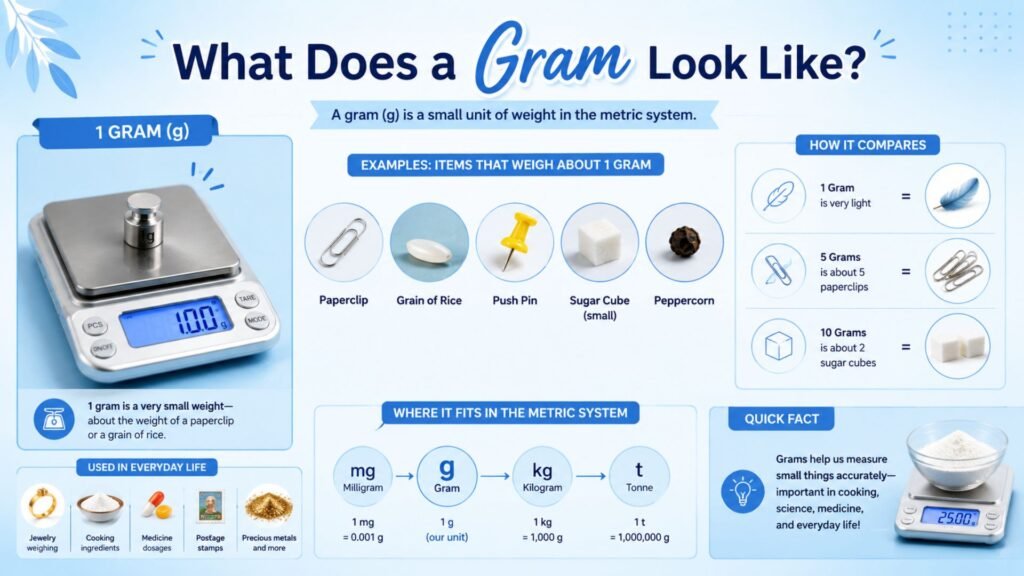
To make it easier to see 1 gram comparison, consider the following table of common 1 gram objects in real life:
| Object | Approximate Weight | Notes |
| Paperclip | 1 g | Standard #1 office staple |
| Dollar Bill | 1 g | 75% cotton, 25% linen |
| Apple Seed | 1 g | Weight of one medium apple seed |
| Small Birthday Candle | 1 g | 2-inch thin candle |
| Plastic Bottle Cap | ~1 g | Standard PET bottle cap |
| 1 cm³ of Water | 1 g | 1 ml of water equals 1 gram |
| Sugar Packet | 1 g | Small table-top sweetener packet |
Read Also: How Far Is 50 Miles: Understanding Distance in Everyday Life
Common Things That Weigh 1 Gram
Small Birthday Candle
A small birthday candle typically weighs about 1 gram, making it a common item that many might overlook in weight discussions. Despite its minimal heft, this tiny accessory holds great significance bringing joy and celebration to countless gatherings. The psychological impact of lighting a candle and making a wish often transcends its physical presence, focusing our attention on the symbol of hope and renewal.
Standard Office Staple
The standard office staple is another item that weighs approximately 1 gram. Often taken for granted, these little metal pieces play a crucial role in organizing paperwork. Each staple connects documents reliably, showcasing that even the lightest objects can have a big impact on productivity. Their slight weight belies their importance in maintaining organization in offices worldwide.
1 Cm³ of Water
Measuring 1 cm³ of water equals precisely 1 gram, showcasing the unique connection between volume and mass in the metric system. This equivalency is simple yet profound, illustrating the beauty of scientific principles in everyday life. Water’s density allows for easy conversions, making it essential in cooking and chemistry. Understanding this relationship enhances our appreciation for the elements that form our world.
Apple Seed
An apple seed weighs around 1 gram, encapsulating the potential for an entire tree within such a small mass. This connection reminds us that great things often come from humble beginnings. Beyond its weight, the apple seed is a testament to nature’s design, offering insight into agricultural practices and the importance of seeds in sustainability efforts worldwide.
Sugar Packet (table‑top sweetener)
A sugar packet, often found at coffee shops and diners, represents about 1 gram of sweetness. Though tiny, it plays a role in shaping our experiences with food and beverages. The simplicity of adding a mere gram of sugar can transform a bitter cup of coffee into a delightful treat, illustrating how small changes can lead to significant enjoyment. It’s a reminder of the impact on taste and pleasure we often underestimate.
Clothespin Spring
A clothespin spring also weighs around 1 gram, showcasing the blend of engineering and functionality in everyday objects. This seemingly trivial component ensures that clothes stay securely fastened while drying.
Its lightweight design demonstrates the balance between strength and ease of use, reflecting the ingenuity behind basic household tools that enhance our daily lives in imperceptible ways.
Read Also: How Much Is 10 Miles? Most Common Things And Distances That Are 10 Miles Long 2026
One Paper Staple
A single paper staple weighs about 1 gram, but its significance extends beyond mere weight. Traditionally used to bind documents, this tiny metal fastener symbolizes organization and efficiency in our paperwork. The simplicity of a staple is deceptive; it’s a reminder that even the smallest tools can play pivotal roles in our daily routines.
Dollar Bill
Surprisingly, a one-dollar bill also tips the scale at approximately 1 gram. This lightweight currency serves as a crucial part of our economy, embodying both value and history. Each dollar bill carries stories and transactions, reminding us that even in its lightness, money can hold monumental weight in our lives and economies.
Plastic Bottle Cap
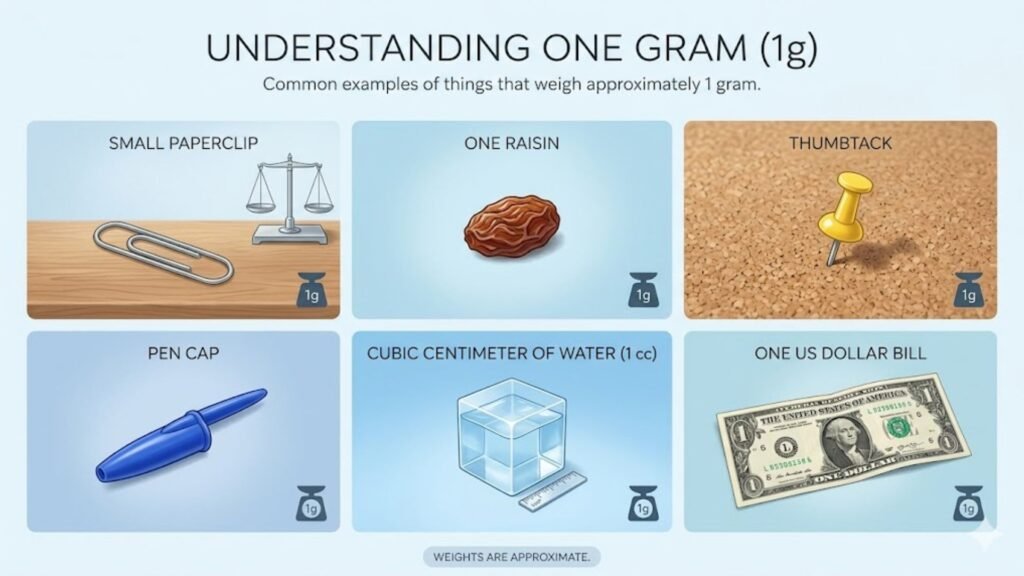
Often overlooked, a plastic bottle cap weighs 1 gram and embodies the convenience of modern hydration. However, this small object raises significant environmental concerns due to its prevalence in plastic pollution. Understanding its weight can encourage mindful consumption and recycling habits, prompting us to consider how even the minutiae of our lives contribute to larger ecological issues.
Read Also: How Much Is 70 Kg? 14 Most Common Things That Weigh About 70 Kilograms
Additional Common Objects
A Paper Clip
A standard paper clip weighs about 1 gram, making it a perfect example of everyday items that embody this weight. Despite its small size, the paper clip has revolutionized office organization. Think about it: this simple tool can hold dozens of sheets of paper together without causing any damage. Its design is not just functional; it’s an enduring symbol of practicality in the workplace.
Cap of a Ball Pen
The cap of a ball pen also clocks in at around 1 gram. While often overlooked, this tiny component plays a vital role in preventing ink from drying out. Its weight belies the importance of seal and protection in writing instruments, ensuring that ideas flow smoothly whenever inspiration strikes. Moreover, most caps are designed ergonomically, making this lightweight part indispensable for daily use.
Silica Gel Packets
You’ve likely encountered silica gel packets in new product packaging, and believe it or not, they too weigh 1 gram! Their primary role is to absorb moisture and keep items dry, which helps to preserve the quality of everything from electronics to food. They serve as a reminder of how tiny elements can influence the longevity of larger products, embodying the idea that small things can have a big impact.
A Piece of Chewing Gum
A single piece of chewing gum typically weighs around 1 gram enough to freshen your breath without weighing you down. Chewing gum not only satisfies cravings but also offers health benefits, such as improving focus and reducing stress. The surprisingly light weight of this popular treat highlights how something so small can deliver a significant gustatory experience.
A Single Grape
One grape weighs about 1 gram, showcasing nature’s efficiency in packaging flavor and nutrients. This tiny fruit packs antioxidants, vitamins, and minerals, all contributing to a healthy diet. It stands as a perfect example of how nature’s smallest creations can hold immense nutritional power, reminding us that good health often comes in small packages.
One Raisin
One raisin, which weighs around 1 gram, is a concentrated source of energy. Unlike its fresh counterpart, the grape, the raisin offers a chewy texture and a lofty sweetness, making it an excellent snack for on-the-go. This transformation from grape to raisin illustrates not only how weight can change through processing but also how flavors intensify, offering a delightful burst of taste.
A Piece of Paper Towel
A single piece of a standard paper towel usually weighs about 1 gram, a testament to its versatility and utility. This lightweight absorbent can tackle spills, clean surfaces, or serve a myriad of functions, making it an essential household item.
Its compact weight demonstrates that an effective cleaning tool doesn’t have to be heavy to be powerful, emphasizing the idea that efficiency often comes in a slender package.
Read Also: How Far Is 500 Feet? 20 Most Common Things That Help You Visualize 500 Feet Perfectly
10 Toothpicks
Toothpicks may seem like insignificant everyday items, but did you know that ten toothpicks together weigh exactly 1 gram? This tiny weight illustrates how even the most mundane objects can add up. Toothpicks play a role beyond the dinner table; they can serve as makeshift tools for art projects or DIY crafts.
A Jelly Bean
A single jelly bean, beloved by candy lovers, typically weighs around 1 gram. The flavor explosion that comes from this tiny treat packs a punch, making it hard to enjoy just one. This sugary delight shows that sometimes, small pleasures can hold great joy.
A Small Safety Pin
Ever thought about a small safety pin? Weighing just 1 gram, this handy tool is a staple for fastening fabric, but its utility stretches far beyond clothing. In a pinch, it can be used for emergency repairs or even as a zipper pull, highlighting its functional versatility.
A Small Rubber Band
A small rubber band, weighing in at about 1 gram, offers incredible utility for organizing loose items. Beyond its basic function, it serves as a great tool for creating makeshift slingshots or even for keeping hair ties together. This simple accessory proves that even the lightest items can have endless applications.
A Single Almond Slice
One almond slice also tips the scale at 1 gram, making it a healthy addition to your diet. Rich in vitamins and minerals, this minuscule piece contributes to heart health and provides a satisfying crunch. It serves as a reminder that even a single nutrient-dense food can make a positive impact on overall well-being.
A Small LEGO Piece
Did you know that a small LEGO piece weighs around 1 gram? This compact building block is fundamental to imaginative play, encouraging creativity and problem-solving skills. The weight adds up when creating large structures, teaching that every piece, however small, has its role in the grand design.
A Small Popcorn Kernel
A small popcorn kernel, weighing just 1 gram, is tiny but mighty. It reflects the transformation that occurs when heated, popping into a fluffy snack that delights moviegoers everywhere. This humble kernel captures the essence of potential, reminding us that great things often come from the smallest beginnings.
Everyday Objects You Didn’t Know Weigh 1 Gram
Many common items surprisingly weigh around 1 gram, making it fascinating to recognize the weight of the seemingly mundane. For instance, a paperclip typically weighs 1 gram, showcasing how these tiny tools are not just functional but also serve as a tangible reference for measuring weight.
A standard penny made after 1983 falls close to this weight, allowing you to carry a small piece of currency in both hands and make quick estimates in everyday scenarios.
Even more intriguing, the average sugar packet found in restaurants also hovers around 1 gram. Such objects help us visualize this small weight, making it easier to relate to other items that might be around the same weight. These items are not just useful for hands-on examples; they spark curiosity about the weight of things we often overlook in our daily lives.
How to Estimate 1 Gram Without a Scale
Estimating 1 gram without a scale can be both fun and practical. One effective method is to use familiar items. For example, a stick of chewing gum typically weighs about 1 gram, so if you ever need a quick reference, just reach for your favorite chew.
You can use common food items as benchmarks: a single almond or a half-teaspoon of sugar also weighs around 1 gram, giving you everyday tools to visualize this unit of weight.
Another technique involves using your body as a reference. The weight of a small button or the tip of a pencil can help you gauge what 1 gram feels like. These tactile experiences enable a more intuitive understanding of weight, especially in cooking or science experiments where precision isn’t always feasible.
Leveraging these simple methods can transform how you interact with measurements, making it easier to gauge weights in various contexts.
Why Understanding Small Weights Like 1 Gram Is Useful
Grasping the concept of small weights like 1 gram is essential, particularly in culinary and scientific pursuits. In cooking, knowing that a pinch of salt or a teaspoon of a spice typically equates to about 1 gram can greatly improve culinary accuracy, resulting in better flavors and more consistent dishes.
It also fosters creativity in recipe adjustments, allowing home cooks to intuitively modify ingredients based on weight rather than volume.
In scientific contexts, understanding 1 gram as a basic unit of measurement lays the groundwork for more complex calculations. It aids in understanding concentration, whether in chemistry or when gauging nutrient intake in diets.
Honing our perception of such small weights aids not just in practical daily tasks but also enhances our knowledge of science and nutrition, enriching our understanding of the world around us.
Grams vs Ounces: Understanding Small Weight Differences
When cooking or baking, understanding the difference between grams and ounces can significantly impact your results. One gram is approximately 0.035 ounces, making it a smaller measurement that’s often used in precise recipes. This distinction becomes crucial when you’re trying to achieve the perfect texture in dishes that depend on exact ingredient ratios, such as pastries.
In many countries, recipes are listed in grams rather than ounces due to the metric system’s accuracy in small measurements. For instance, while an ounce might be sufficient for substantial items, using grams for spices, herbs, or leavening agents allows for accurate flavor profiles. This precision can elevate your culinary skills and inspire confidence in your cooking.
Everyday Kitchen Ingredients That Weigh Around 1 Gram
Several common kitchen ingredients weigh approximately 1 gram, making it easier to visualize small quantities. For instance, a single coffee bean typically weighs around 1 gram, allowing coffee enthusiasts to fine-tune their brews by counting beans rather than measuring them out. Similarly, a small pinch of salt or sugar often balances around 1 gram, which can help in achieving the perfect seasoning.
Items like peppercorns and a slice of fresh herb (like basil) can also translate to about 1 gram. Understanding these nuances fosters a deeper appreciation for ingredient proportions and encourages cooks to experiment with flavors without overwhelming their dishes. Having a mental image of what 1 gram looks like can significantly enhance your culinary confidence.
Read Also: How Tall Is a Monster Can? Full Monster Can Dimensions Guide (16 oz, 24 oz & More)
Fun Facts About the Gram Measurement
Did you know that the term “gram” comes from the Latin word “gramma,” which means a small weight? This historical context adds a layer of intrigue to the term, emphasizing its significance in precise measurements. Introduced in the 18th century, the gram revolutionized the way people perceive weight, allowing for a more scientific approach in various fields, including cooking.
The gram isn’t just a unit of weight in the kitchen it’s universally recognized in scientific fields as well. For example, 1 gram of water is equivalent to 1 milliliter, creating a seamless relationship between weight and volume that simplifies cooking and scientific calculations alike. This interconnectedness showcases the versatility of the gram, bridging the culinary world with the scientific one in captivating ways.
FAQ’s
What Does 1 Gram Look Like?
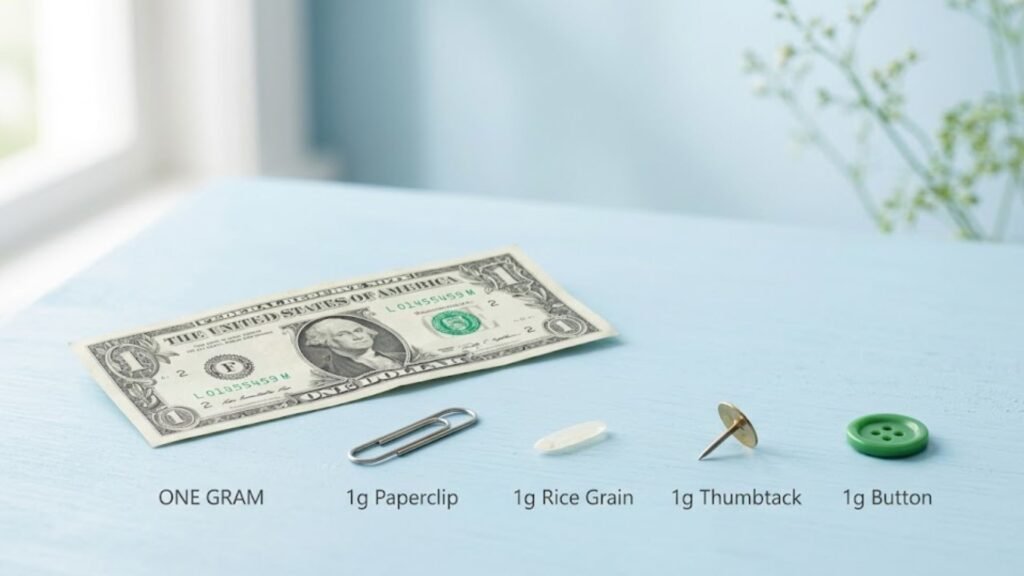
1 gram is roughly equivalent to the weight of a standard paperclip or a dollar bill.
Is 1 Gram Equal to 1 Teaspoon?
No, 1 gram is not equal to 1 teaspoon. The weight of 1 teaspoon varies depending on the substance (e.g., sugar vs. salt).
How Many Pieces is 1 Gram?
The number of pieces in 1 gram depends on the item’s weight; for instance, there are about 20 jelly beans in 1 gram.
Can I Use my Phone as a Gram Scale?
Some smartphone apps can approximate weight, but for accurate measurements, a dedicated scale is recommended.
How Small is 1 Gram Compared to a Pound?
1 gram is approximately 0.0022 pounds, which means there are about 453.6 grams in a pound.
What Household Item Weighs Exactly 1 Gram?
A small paperclip is a common household item that weighs about 1 gram.
Can Food Items Weigh About 1 Gram?
Yes, many food items can weigh around 1 gram, including a single raisin or a small piece of candy.
Conclusion
A single gram may be one of the smallest units of weight we commonly use, yet it can be found in many everyday items around us. By comparing 1 gram to familiar objects, it becomes easier to understand and estimate small weights without relying on a scale. These real-life examples offer a practical perspective on measurements and show how even the lightest objects can help us better understand the world around us.