1 Inch Objects: 15 Everyday Things That Are About 1 Inch Long
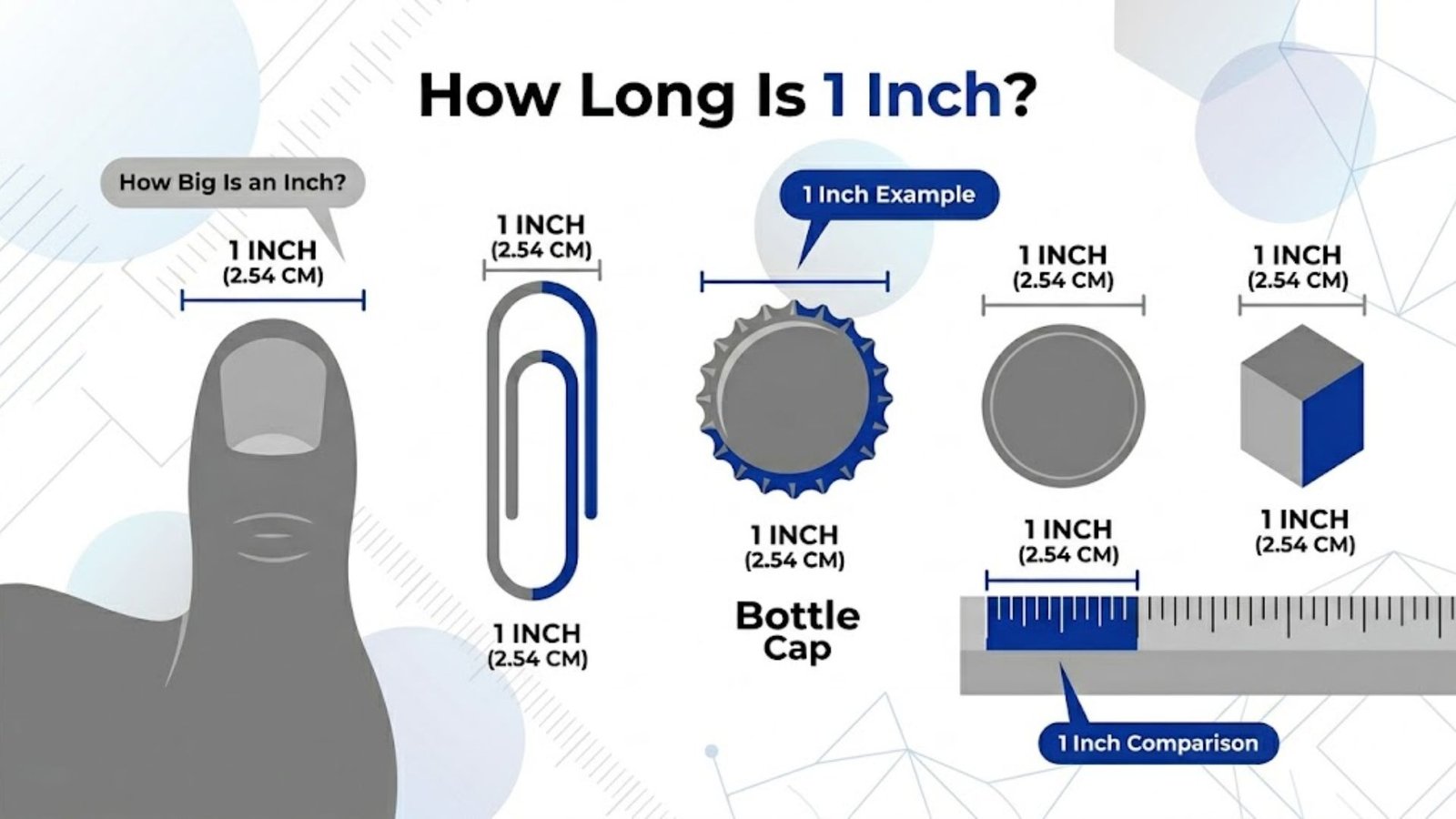
How big is 1 inch? One inch is a small but commonly used unit of length, especially in the United States. It equals 2.54 centimeters (cm) or 25.4 millimeters (mm).
If you are trying to understand how long is an inch or what one inch looks like in real life, familiar everyday objects can make the measurement much easier to visualize.
How Long Is 1 Inch?
1 inch is exactly 2.54 cm or 25.4 mm. It is equal to 1/12 of a foot and is commonly used for measuring small objects, product dimensions, clothing sizes, and other everyday items.
When people search for how big is 1 inch, how big is an inch, or how big is 1 in, they are usually looking for a simple way to picture this small measurement.
The easiest way to understand one inch is to compare it with familiar objects such as a U.S. quarter, a finger segment, or a small button.
How Long Is 1 Inch in CM and Millimeters?
If you need the exact 1 inch length, the conversion is:
| Measurement | Equivalent |
| 1 inch | 2.54 cm |
| 1 inch | 25.4 mm |
| 1 inch | 0.0833 feet |
| 1 inch | 1/12 foot |
So, 1 inch = 2.54 cm = 25.4 mm.
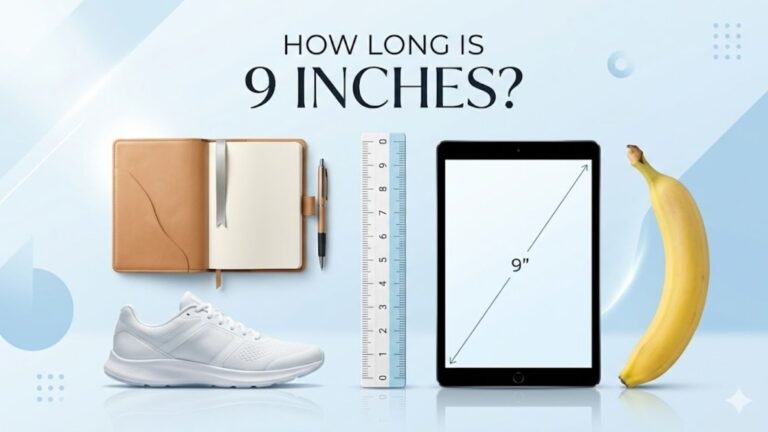
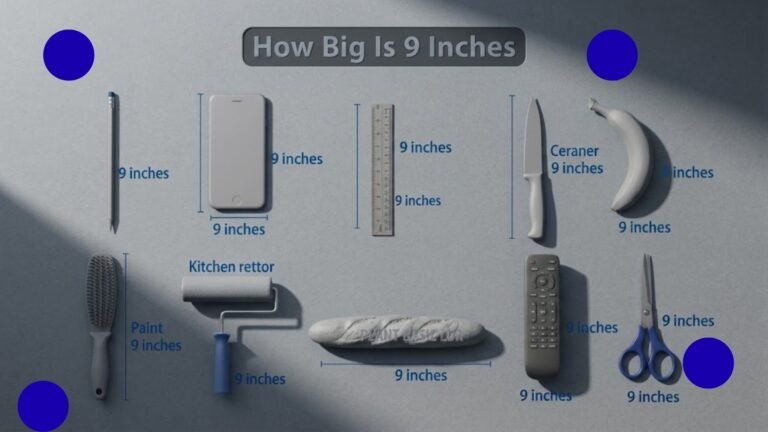
Read More: How Long Is 9 Inches? 15 Eye-Opening Size Comparisons
1 Inch in CM
1 inch in cm is 2.54 centimeters. This conversion is useful when comparing imperial and metric measurements.
For example, if a product is listed as 1 inch wide, its width is 2.54 cm.
1 Inch in MM
1 inch in mm is 25.4 millimeters. Millimeters are useful when measuring very small dimensions where greater precision is needed.
What Does 1 Inch Look Like in Real Life?
So, what does 1 inch look like in real life?
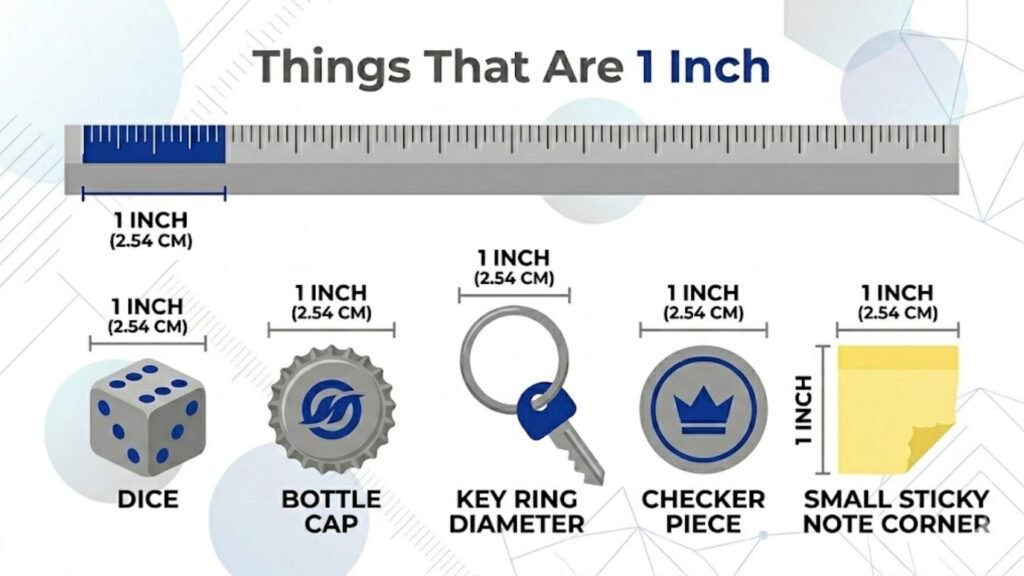
Because an inch is only 2.54 cm long, it is a relatively small distance. You can picture it using several everyday objects.
A U.S. quarter is about 0.955 inches in diameter, which is very close to one inch. A finger segment, small button, or similar everyday object can also provide a rough visual comparison.
Keep in mind that the exact size of body parts and everyday objects varies, so these examples are useful for estimation rather than precise measurement.
Compared to a Ruler
On a standard ruler, the 1-inch mark is the first major measurement after zero. Looking at the space between 0 and 1 gives you an exact visual reference for one inch.
A ruler is still the best option when accuracy matters.
Compared to a Finger Joint
The width or length of part of an adult finger can sometimes be close to one inch, depending on the person.
For a quick estimate, place your finger next to the object and compare the sizes. This is useful when you do not have a ruler nearby, but it should not be used for precise measurements.
Also Read: How Far Is 20 Inches? 16 Most Common Things Explained for Easy Understanding
Compared to a Coin
A U.S. quarter is one of the easiest coin comparisons because its diameter is very close to 1 inch.
This makes a quarter a convenient reference when you want to understand how big is an inch without using a measuring tool.
15 Common 1 Inch Objects You See Every Day
Here are some familiar 1 inch objects that can help you visualize the size of one inch.
A US Quarter (Almost 1 Inch Wide)
A U.S. quarter has a diameter of about 0.955 inches, making it slightly smaller than one inch. Because the difference is small, a quarter is a useful visual reference for understanding how big is 1 inch.
A Standard Bottle Cap
Many standard bottle caps are close to 1 inch in diameter, although sizes vary by bottle and manufacturer.
A bottle cap can therefore provide a quick everyday comparison for one inch.
A Small Paperclip
Some small paperclips are approximately an inch long. Their exact dimensions vary, but they can still help visualize a short length.
A Pencil Eraser Tip
A pencil eraser or eraser section can be close to one inch in some pencils. It provides another familiar reference for understanding a small measurement.
A Dice Cube (Close Approximation)
Many commonly used dice are close to 1 inch on each side, although dice are available in different sizes.
A standard game die is therefore a simple object to use when imagining one inch.
Also Read: How Long Is 8 Inches? Incredible 24 Everyday Objects
A Keyboard Ctrl Key
Some individual keyboard keys are around an inch wide, although the exact dimensions depend on the keyboard design.
The familiar size of a keyboard key can help you estimate what 1 inch looks like.
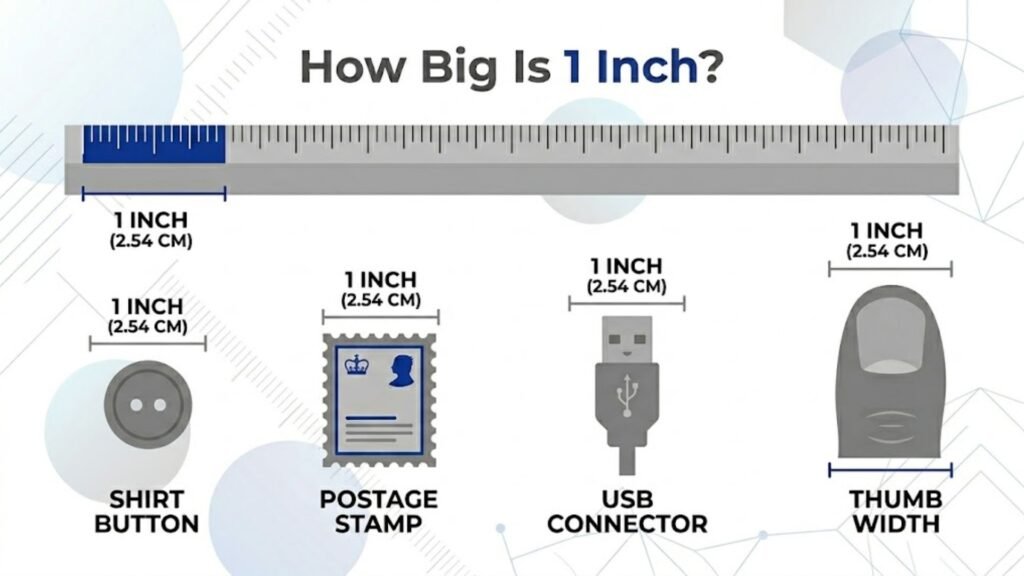
A Postage Stamp Width
A postage stamp width may seem trivial, but it represents an important link in communication. The relatively small size belies its significant role in connecting friends and family across distances, manifesting the nostalgia of handwritten letters in an increasingly digital world.
A Hockey Puck Height
A regulation hockey puck is 1 inch high, making it one of the more precise real-world examples of a one-inch measurement.
A Pocket Sharpener
Small pencil sharpeners can have a dimension close to one inch. Their actual size varies depending on the design.
A Thumb Segment
Part of your thumb can provide a rough way to visualize one inch. Finger and thumb sizes differ from person to person.
A USB Drive Thickness
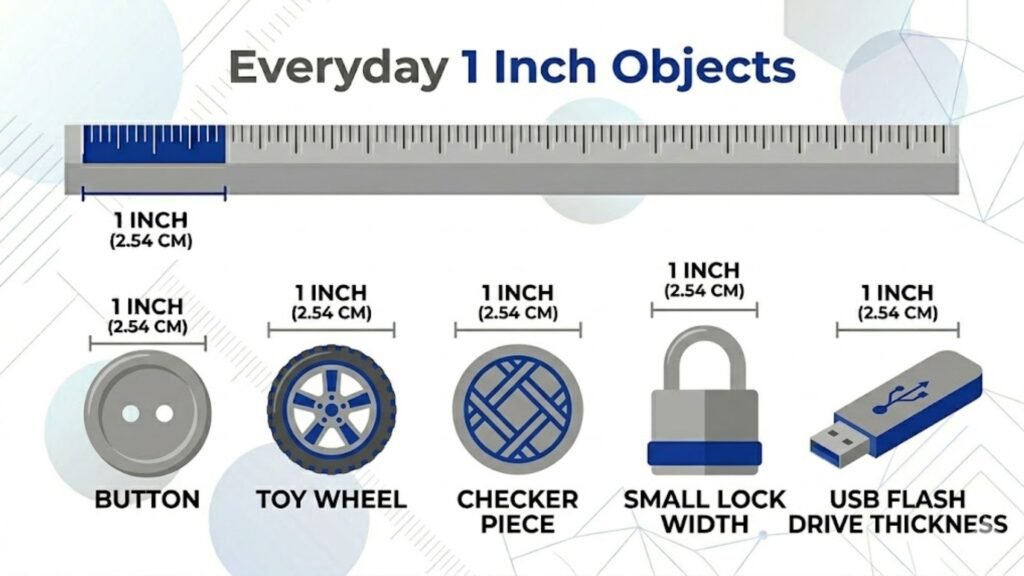
Some USB drives have a dimension close to one inch, although their size and thickness vary considerably between models.
A Lego Brick Height
The height of a Lego brick, also 1 inch, speaks to the creativity and imagination of both children and adults. These versatile blocks, found in homes worldwide, foster a sense of play and innovation, underscoring the importance of creativity at any age.
A Sewing Button
A larger sewing button may measure around one inch across. This makes it another familiar example of a small object that can help visualize the measurement.
A Small Padlock Width
The width of a small padlock highlights security in our daily lives, emphasizing the need for protection in an unpredictable world. With just an inch to spare, these locks symbolize trust and safety in both personal and public spheres.
Read More: How Big Is 9 Inches? 14 Most Common Things to Visualize This Measurement
A Watch Strap Width
Some small padlocks have a width or dimension close to one inch. The exact measurement depends on the lock.
How to Measure 1 Inch Without a Ruler
You can also measure 1 inch without a ruler using a figure or coins etc.
Using your finger
A finger can work as a quick reference because some adult finger widths are close to one inch. Place your finger next to the object and compare the dimensions.
Remember that this is only an estimate because everyone’s hands are different.
Using coins
A U.S. quarter is 0.955 inches across, so it is very close to one inch. Place the quarter beside the object to get a quick visual comparison.
Using paper width
Standard printer paper is 8.5 inches wide. You can use its known width as a reference and mentally divide it into smaller sections to estimate one inch.
For more accurate measurements, however, a ruler or measuring tape is recommended.
Quick estimation tricks
For a quick estimate, remember these simple references:
- 1 inch = 2.54 cm
- 1 inch = 25.4 mm
- A U.S. quarter is slightly smaller than 1 inch across.
- A regulation hockey puck is 1 inch high.
- Some everyday objects, such as buttons and small paperclips, may be close to 1 inch.
These comparisons can help you estimate how big is 1 in when a ruler is not available.
Is 1 Inch Considered Small?
Is 1 inch considered small? Yes, in most everyday situations, 1 inch is considered a small unit of length. It is equal to 2.54 centimeters (cm) or 25.4 millimeters (mm), which means it is shorter than most objects we commonly see in daily life.
People often ask how big is an inch or how long is 1 inch to understand its real size, especially when comparing it with familiar items.
Compared to 1 foot
One foot contains 12 inches, so one inch represents only a small portion of a foot.
If you look at a 12-inch ruler, the distance from 0 to 1 is one inch.
Compared to 1 centimeter
One inch is equal to 2.54 centimeters, so it is more than twice the length of one centimeter.
Compared to common objects
A smartphone is usually several inches wide, while a quarter is slightly less than one inch across. These comparisons show why one inch is considered a relatively small length.
Why 1 Inch Is a Common Measurement in Daily Life
The inch is useful for describing small dimensions in many everyday situations.
You may see inches used for:
- Product dimensions
- Screen sizes
- Clothing measurements
- Furniture dimensions
- Construction materials
- Crafts and sewing
- Packaging
- Tools and hardware
Knowing how long is 1 inch makes it easier to understand measurements when shopping online, reading product specifications, or comparing object sizes.
Frequently Asked Questions
How Many cm is 1 Inch?
One inch is equivalent to 2.54 centimeters. This conversion is essential for everyday measurements, and for crafts, cooking, and international travel where metric units are common.
How Many mm is 1 Inch?
In millimeters, one inch measures 25.4 mm. This precision is crucial in fields ranging from engineering to tailoring, where exact dimensions matter. A clear grasp of these conversions allows for better planning and execution of projects, ensuring compatibility in designs, whether you’re working with machinery parts or fashion garments.
Is a Quarter Exactly 1 Inch?
A U.S. quarter coin is not exactly one inch across it measures about 0.955 inches in diameter. Though it’s close, this small difference can impact measurements in various scenarios, from DIY projects to games where precision counts.
How Big is 1 Inch On Your Hand?
Visualizing one inch can be made easier by looking at your fingers: the width of a standard adult’s pinky finger is roughly one inch.
What Objects are Exactly 1 Inch Long?
Several everyday items can serve as practical references for one inch. For example, a standard paperclip measures about one inch in length. Similarly, many buttons and the erasers on pencil tops fit this measurement.
Conclusion
1 inch is equal to 2.54 cm or 25.4 mm, making it a small but commonly used unit of length. If you are wondering how big is 1 inch, everyday comparisons such as a U.S. quarter, a finger segment, or a small button can help you visualize it.
Whether you are checking product dimensions, measuring an object, or simply trying to understand how big is an inch, knowing these simple comparisons makes one-inch measurements much easier to picture.