How Much Is 10 Grams? 17 Most Common Things That Weigh About 10 Grams
10 grams is a small unit of mass commonly used to measure items such as food ingredients, jewelry, spices, medicines, and precious metals. Understanding how much 10 grams is can help with cooking, shopping, and everyday measurements by providing a clear sense of its size and weight.
What Is 10 Grams?
Ten grams might seem like a trivial amount, but it encapsulates a world of substance and meaning.
This weight can represent the perfect measure for culinary precision, enabling chefs to create sublime dishes where balance is key. Just think ten grams of salt can enhance the flavor profile of an entire meal, transforming basic ingredients into a culinary masterpiece.
Beyond the kitchen, ten grams finds significance in various fields. In the realm of science, it serves as a common benchmark for lab experiments and chemical reactions, offering a tactile connection to concepts that might otherwise feel abstract.
Ten grams of a rare mineral might be the difference between a collector’s prized possession and a mere rock. In the environmental sector, understanding this weight can impact discussions on sustainability, from measuring waste to quantifying resources in nature.
10 grams is not merely a weight; it is a bridge connecting our everyday lives to broader themes of precision, value, and responsibility.
How Much Is 10 Grams?
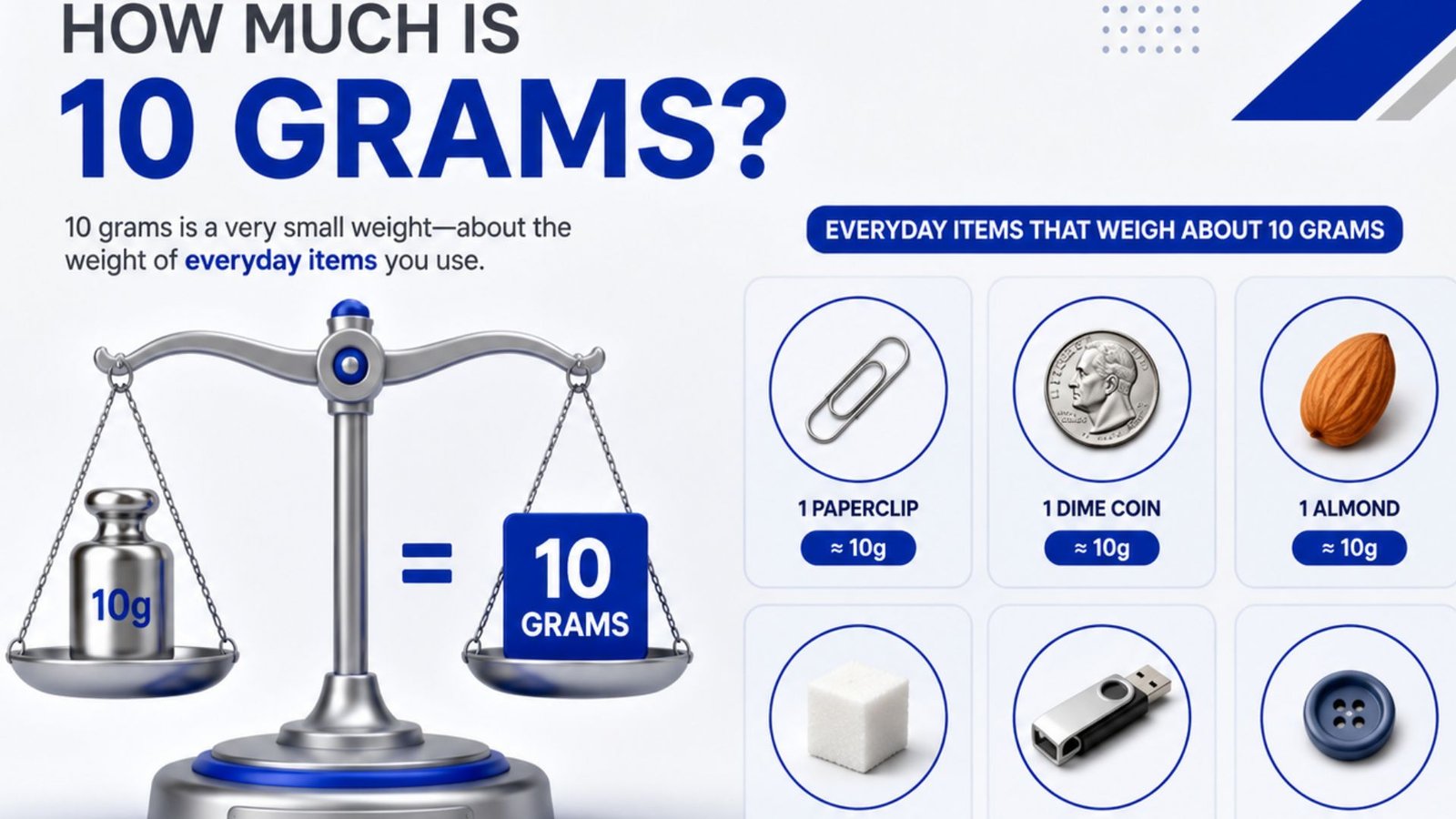
10 grams is a relatively small and lightweight metric measurement that can be tricky to visualize without a digital scale.
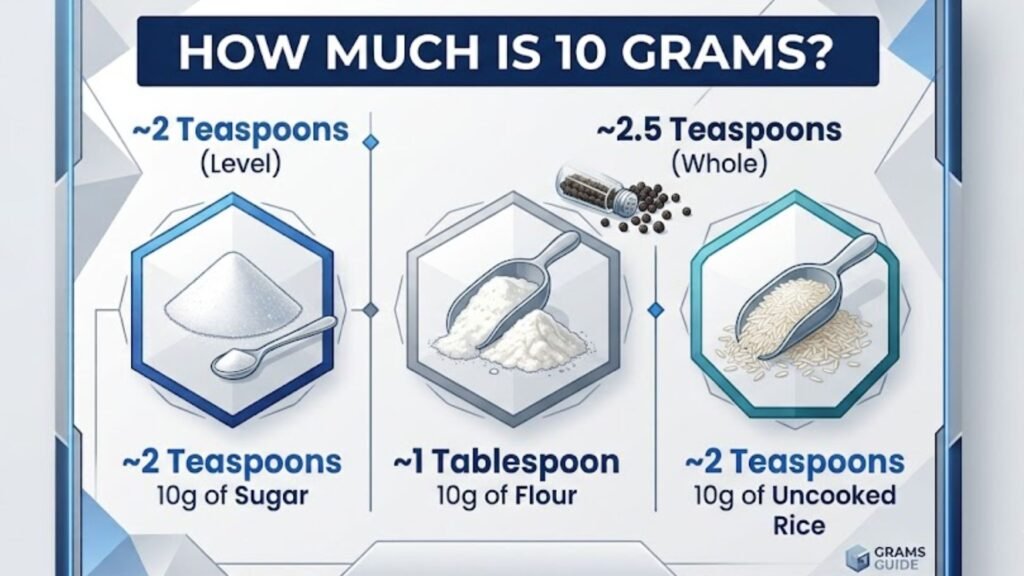
In everyday kitchen terms, 10 grams is roughly equal to 2 level teaspoons of granulated sugar or uncooked rice, whereas a lighter, less dense ingredient like flour requires about 1 level tablespoon to reach the same weight.
If you look outside the kitchen for context, 10 grams is equivalent to the weight of about 8 to 10 whole almonds, two US quarter coins, or exactly 10 standard paperclips (since a single paperclip weighs roughly 1 gram).
Because different substances have varying densities, using a digital kitchen scale remains the best way to get an exact 10-gram measurement for cooking, baking, or mailing.
Things That Weigh About 10 Grams
Ten Paper Clips
A standard paper clip weighs just about one gram, making ten of them an easy, relatable unit of measure. These ubiquitous office supplies not only hold your documents together but also symbolize organization and efficiency in our daily lives.
Their lightness allows you to carry a handful without noticing, yet they play a critical role in maintaining order.
Two Teaspoons of Sugar
Sugar is a sweet addition to our lives, and two teaspoons amounting to about 10 grams highlight the delicate balance between flavor and health.
While it enhances our favorite beverages and baked goods, it also serves as a reminder of moderation. This weight exemplifies how small quantities can add up and impact our overall wellness.
Four Standard Ping-Pong Balls
Four ping-pong balls, collectively weighing around 10 grams, serve as a reminder of leisure and competition. Each ball symbolizes fun, agility, and the chance to engage in spirited games, whether it’s a casual match with friends or more serious competition. Their lightweight design belies their role in fostering social connections and physical activity.
Two A4 Sheets of Paper
We often overlook paper’s weight, yet two A4 sheets equaling around 10 grams embody creativity and communication. This minimal heft represents ideas waiting to be expressed, whether in written form or artistic endeavors. It’s a reminder of the significant impact of the written word in our lives and the power of preserving thoughts on paper.
Seven Almonds
Nutrient-dense and satisfying, seven almonds showcase how ten grams can come packed with health benefits.
Each nut is a powerhouse of protein, healthy fats, and essential nutrients, reminding us that healthy snacking is not just about quantity but quality. This small portion symbolizes mindful eating and can inspire us to make better dietary choices.
One Graphite Pencil
A single graphite pencil weighing about 10 grams serves as a metaphor for creativity and potential. It’s an everyday tool that transforms ideas into reality, embodying the writer’s journey or the artist’s sketch.
Its portability means you can carry inspiration with you, ready to capture fleeting thoughts at a moment’s notice.
One Tablespoon of Flour
Even a tablespoon of flour, weighing around 10 grams, highlights the art of baking, where precision is key.
Flour is the backbone of countless recipes, making it fundamental in kitchens worldwide. This measure reflects the delicate balance of ingredients essential for creating something delicious.
Two Nickels
Two nickels, totaling 10 grams, not only add up to a dime but also illustrate financial literacy and the importance of small savings.
Each coin is a tangible reminder of value and exchange in our economy. They symbolize the small steps we can take toward greater financial awareness and responsibility.
Ten Dollar Bills
Ten grams of currency in the form of dollar bills might seem minimal, yet it holds significance in our perspective on wealth. It can awaken thoughts about financial habits and the value of each transaction, no matter how small.
This weight prompts us to ponder our spending choices and the power of money in our lives.
Four US Pennies
Four pennies, while seemingly insignificant, provide a nostalgic glimpse into the simplicity of transactions past. Weighing about 10 grams, they remind us of a time when small amounts held more purchasing power.
Their presence can evoke memories of childhood or spark discussions about the evolution of currency.
One Plastic Pen
A single plastic pen represents not just a writing instrument but a tool for expression. Weighing around 10 grams, it symbolizes the power of language and the impact of even the smallest thoughts when put to paper.
This everyday object can inspire creativity and ensure that our ideas are captured and shared.
A Coffee Scoop
A coffee scoop weighs about 10 grams and represents the ritual of brewing the perfect cup. It embodies the love of coffee culture as well as the importance of balance in flavor and strength.
This small measure can elevate our daily routines and prompt us to appreciate the little moments that enhance our day.
Two Credit Cards
Two credit cards weighing 10 grams can spark conversations about modern finance and our consumer-driven society.
They serve as gateways to convenience and flexibility in spending, but they also remind us of the importance of responsible financial management. Their lightweight nature belies the weight of the debt or opportunity they can represent.
Ten Thumbtacks
Consider the unassuming thumbtack, often overlooked yet essential in organizing our lives. Weighing in at about 10 grams for ten, these small items not only hold up our notes and reminders but also serve as a metaphor for the weight of our obligations.
Each tack represents a fragment of our daily responsibilities, invisible yet crucial to maintaining order in our chaotic environments.
Six Playing Cards
With six playing cards, we delve into the realm of leisure and strategy. This modest stack can carry the weight of nostalgia, evoking memories of game nights filled with laughter and friendly rivalry.
Each card, a gateway to countless stories and strategies, reminds us of the moments shared with friends and family, emphasizing that the value of time spent together transcends any tangible weight.
One Tablespoon of Flour
A single tablespoon of flour encapsulates the essence of culinary creativity. At around 10 grams, it’s a seemingly insignificant amount, yet it has the power to transform ingredients into something remarkable.
This tiny measurement serves as a reminder that even the smallest contributions can have a profound impact in the kitchen and in life, encouraging us to blend our unique elements to create something beautiful.
Ten Birthday Candles
The weight of ten birthday candles symbolizes not just celebration, but also the passage of time. As we blow them out, we make wishes that reflect our hopes for the future, entwined with the fond memories of years gone by.
They remind us to savor each moment and celebrate our growth, making the act of marking another year a journey of reflection.
Three AA Batteries
Three AA batteries weigh in at about 10 grams and represent the power that fuels our daily conveniences. Often taken for granted, these little energy sources keep our world running, from remote controls to children’s toys.
They serve as a metaphor for the unseen drivers in our lives, reminding us to acknowledge the energy we draw from both people and experiences around us.
A Small Matchbox
a small matchbox, weighing about 10 grams, holds much more than matches; it’s a vessel of potential. Each match offers the spark of possibility, reflecting how small ideas can ignite significant changes.
This tiny box invites us to consider how even the smallest of our actions can have impactful outcomes, illuminating the power of intention.
Two Dice
Two dice weigh roughly 10 grams, embodying chance and the thrill of unpredictability. They remind us that life is often a game of chance, with opportunities and risks rolling in and out of our paths.
Each throw can lead to unexpected outcomes, highlighting the importance of embracing uncertainty and the excitement that comes with taking risks.
A Small Packet of Sugar
A small packet of sugar, with its 10-gram weight, reveals the sweetness lurking in life’s everyday moments.
It invites us to ponder the small indulgences that make life enjoyable, much like the relationships we cultivate. Just as sugar adds flavor to our meals, a sprinkle of kindness or joy enhances our experiences, underscoring the importance of savoring each delightful moment.
One Medium Strawberry
a single medium strawberry may weigh about 10 grams, it encapsulates the bountiful flavors of summer and the joy of simple pleasures.
This fruit is not just a nutritious treat but also an emblem of nature’s beauty, reminding us to appreciate the little things that bring us happiness. Each bite is a reminder of the richness that existing in the present moment can offer.
Eight Cashew Nuts
Eight cashew nuts, weighing around 10 grams, provide a perfect example of how a small handful can pack a nutritional punch.
These nuts remind us of the importance of mindful eating and the joy of healthy snacking. Their creamy texture and unique flavor serve as a delicious reminder that even small servings can offer substantial nourishment and satisfaction.
A Small Key
a small key, weighing approximately 10 grams, unlocks not just doors but also countless possibilities.
It symbolizes access and opportunity, representing the choices we have in our lives. Each key can symbolize a new chapter, reminding us of the potential we hold within to open new paths and explore new adventures.
How to Measure 10 Grams Without a Scale
Measuring 10 grams without a scale may seem daunting, but it opens the door to innovative kitchen techniques.
One handy approach is to utilize common objects around your home. For example, a standard teaspoon can typically hold about 4.5 grams of granulated sugar by using two teaspoons, you can achieve a close approximation of 10 grams.
Likewise, a tablespoon, which equals about 15 grams, can help you gauge measurements just fill it slightly less than full.
Another creative method involves the use of everyday items as makeshift weight references. A nickel weighs 5 grams, so placing two nickels on one side of a balanced setup can provide a visual benchmark for your 10-gram target.
This simple yet effective trick not only hones your measuring skills but also fosters a more intuitive understanding of volume and weight.
Engaging with these methods enhances your culinary confidence, transforming a potentially frustrating task into an opportunity for creativity and resourcefulness.
Why Knowing 10 Grams Matters in Cooking and Science
In both cooking and science, precision is paramount, and understanding why 10 grams is significant can unlock a world of creativity and accuracy.
In the culinary arts, ingredients measured to the exact gram can transform a dish from mediocre to extraordinary.
For bakers, for instance, 10 grams can mean the difference between a dense cake and one that’s light and airy, as it tweaks the balance of flour to liquid or leavening agents.
Such precision also extends to flavor profiles; a mere 10 grams of spices can elevate a dish, enhancing aromatic depths that might otherwise remain unexplored.
In the realm of science, especially in disciplines like chemistry and biology, a mere 10 grams can be crucial when it comes to experiments and formulations. This small mass can significantly influence reaction rates or the behavior of compounds in a mixture.
For budding scientists, mastering the measurement of 10 grams can instill confidence in their ability to manipulate variables effectively, leading to groundbreaking discoveries or innovative solutions.
When both worlds blend, this understanding can inspire a new generation of cooks and researchers who value meticulousness, knowing that the smallest details often lead to the most significant outcomes.
Everyday Situations Where You Might Need to Know 10 Grams
Understanding measurements in grams can be surprisingly useful in everyday life, particularly in cooking and baking.
The difference between a perfectly baked cake and a dense, clumpy one often comes down to precise ingredient measurements. When a recipe calls for 10 grams of salt or sugar, knowing how to visualize this can elevate your culinary creations.
A scale may seem daunting, but mastering such small measurements allows for creativity in adjusting flavors and textures confidently.
Beyond the kitchen, 10 grams can play a crucial role in health and fitness. Consider the nutritional values listed on food packaging; many servings indicate protein or carb content in grams.
Recognizing that 10 grams of protein equates to a small handful of nuts can help you make better snack choices throughout the day.
It’s these little insights that can lead to improved dietary habits and a deeper understanding of how nutrition impacts your overall wellness, giving you the power to tailor your intake to fit your lifestyle.
Comparing 10 Grams to Other Common Weights
When we think about weight, 10 grams often feels like a small quantity, easily dismissed in the grand scheme of measurement.
It’s intriguing to explore how this seemingly negligible weight compares to everyday items. For instance, a standard paperclip weighs about 1 gram, meaning that 10 grams would amount to the weight of ten paperclips stacked together a visual reminder of just how trivial or significant weight can feel depending on context.
Consider the kitchen as another comparison point. A teaspoon of sugar typically weighs around 4 grams, so 10 grams is equivalent to roughly 2.5 teaspoons – a modest but measurable amount that can make a difference in recipes and nutrition.
This small weight can carry substantial implications, influencing everything from daily calorie intake to the precision needed in baking.
Thus, when we delve into the scale of 10 grams, it prompts us to reconsider how we break down, quantify, and understand our world through these lightweight benchmarks.
Simple Kitchen Ingredients That Are Close to 10 Grams
When it comes to cooking, measuring out ingredients can sometimes feel like a chore, but understanding that some common items are close to 10 grams can simplify your culinary adventures.
One example is a tablespoon of honey, which not only sweetens dishes but also brings along a delightful depth of flavor. Just imagine drizzling that sticky goodness over a warm biscuit or using it to glaze roasted vegetables; the possibilities are endless.
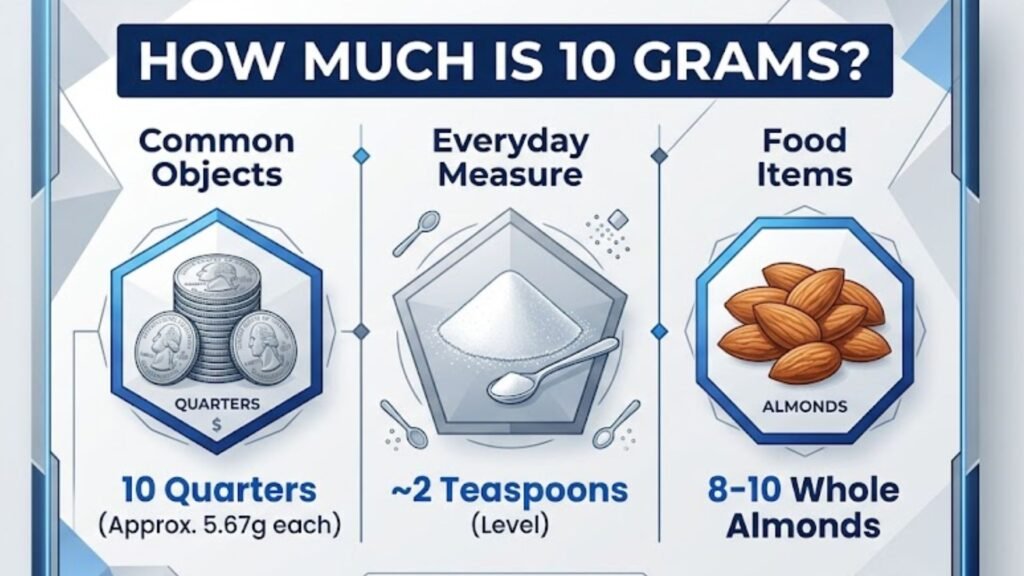
Another versatile hero in your pantry is the humble almond. Roughly 10 almonds amount to about 10 grams of weight, making them a convenient and nutritious snack. They’re perfect for tossing into salads, enriching smoothies, or even grinding into nut flour for baking.
Harnessing these simple ingredients, you’re not just following recipes; you’re creating layers of flavor and nutrition that transform everyday meals into something extraordinary.
Why Small Weight Measurements Can Be Misleading
Small weight measurements can be surprisingly deceptive, particularly in the realms of nutrition and fitness.
When evaluating food portions, a slight discrepancy like a few grams can skew perceptions of calorie intake and nutritional value. This becomes even trickier with highly processed foods where additives and fillers can mask true serving sizes, leading us to underestimate our actual consumption.
The psychological aspect of measuring weight contributes to the misleading nature of small measurements. People often latch onto these tiny figures as definitive truths, overlooking factors like density and water content that influence weight.
For example, a cup of vegetables might weigh less than a cup of dense grains, yet the nutritional benefit is far more significant in the former.
Thus, a fixation on weight numbers can distract from a more holistic understanding of health, encouraging individuals to overlook quality in favor of mere quantity.
Recognizing the complexities behind small weight measurements can empower better choices, fostering a more balanced approach to dietary habits.
Tips for Estimating Small Weights Accurately at Home
When estimating small weights at home, precision can be surprisingly attainable with a few clever methods.
One effective technique is the use of common household items as reference weights. A standard object, like a AAA battery, weighs about 11.5 grams; you can use this as a baseline to gauge smaller items.
By stacking or grouping these reference weights creatively, you can derive a fairly accurate estimation without the need for precise scales.
Another invaluable tip involves leveraging the power of water displacement. By filling a graduated container with water, you can place your item in the water and measure how much the water level rises.
This method is particularly useful for irregularly shaped objects, as it allows for an indirect measurement of weight based on volume.
Make sure to note the unit conversions one milliliter of water roughly equals one gram, offering a fascinating way to visualize weight through a simple science experiment.
FAQ’s
How Many Teaspoons is 10 Grams?
10 grams is approximately 2 teaspoons for granulated sugar, but this conversion can vary depending on the substance’s density. For instance, flour may need slightly more, while spices may weigh less. Understanding such distinctions is crucial for accurate cooking and baking, allowing you to achieve the perfect balance in your recipes.
Is 10g a Tablespoon?
A tablespoon generally equals about 15 grams, 10 grams is slightly less than a full tablespoon. This difference highlights the importance of knowing your ingredient’s density. For precise measurements, especially in baking, using a kitchen scale can safeguard your culinary creations from being overly sweet or too bland.
How Much is 10 Grams in a Cup?
10 grams does not directly convert to any standard cup measurement due to varying ingredient densities. For example, 10 grams of water is about two teaspoons, yet 10 grams of flour will take up more space. When working with liquid versus dry ingredients, keep these distinctions in mind to achieve consistent results.
Is 10 Grams Half an Ounce?
Yes, 10 grams is just under a third of an ounce, specifically about 0.35 ounces. Knowing these conversions can be helpful, especially for recipes that use metric measurements. It allows those used to the imperial system to navigate recipes with ease.
Is 10 grams a lot or a little?
10 grams can be seen as a small amount, often used for seasoning or garnishing dishes. However, in nutritional terms, 10 grams of a nutrient can significantly impact your dietary intake, especially when considering proteins or essential vitamins. This duality indicates that understanding context is key.
How can I estimate 10 grams at home?
You can estimate 10 grams by using common kitchen items for reference; for example, a packet of sugar typically weighs about 4 grams. So, if you use about two and a half packets, you get roughly 10 grams. This handy trick can be quite useful when you don’t have a scale at hand.
What foods commonly weigh around 10 grams?
10 grams can represent small portions like a slice of cheese, a handful of nuts, or a small piece of fruit. Recognizing these common items can help you visualize portions better and manage serving sizes effectively, making grocery shopping and meal planning more intuitive.
Conclusion
10 grams is a relatively light weight, it is an important measurement in many everyday situations. Whether you’re weighing ingredients, comparing jewelry, or measuring small objects, knowing what 10 grams looks and feels like makes it easier to estimate and use accurate measurements in daily life.