How Far Is 500 Feet

How Far Is 500 Feet? 20 Most Common Things That Help You Visualize 500 Feet Perfectly

Have you ever heard someone say “How Far Is 500 Feet” and struggled to picture the actual distance? You’re not alone. While 500 feet may sound simple, visualizing it in real life can be surprisingly difficult without relatable examples.

Whether you’re estimating distances for walking, construction, sports fields, travel, or everyday conversations, understanding how far 500 feet really is can make measurements feel much more practical and meaningful.

To make it easier, this guide explores 20 common things that help you instantly visualize 500 feet. From famous landmarks and sports comparisons to everyday objects and real-world spaces, these examples will give you a clear mental picture of this distance. By the end, you’ll never have to guess what 500 feet looks like again.

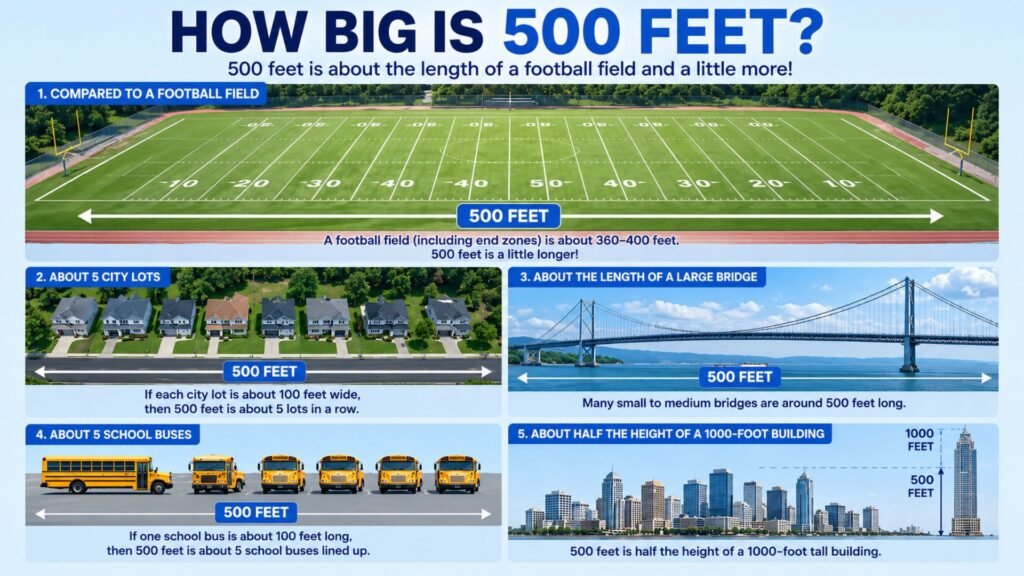
How Big Is 500 Feet?

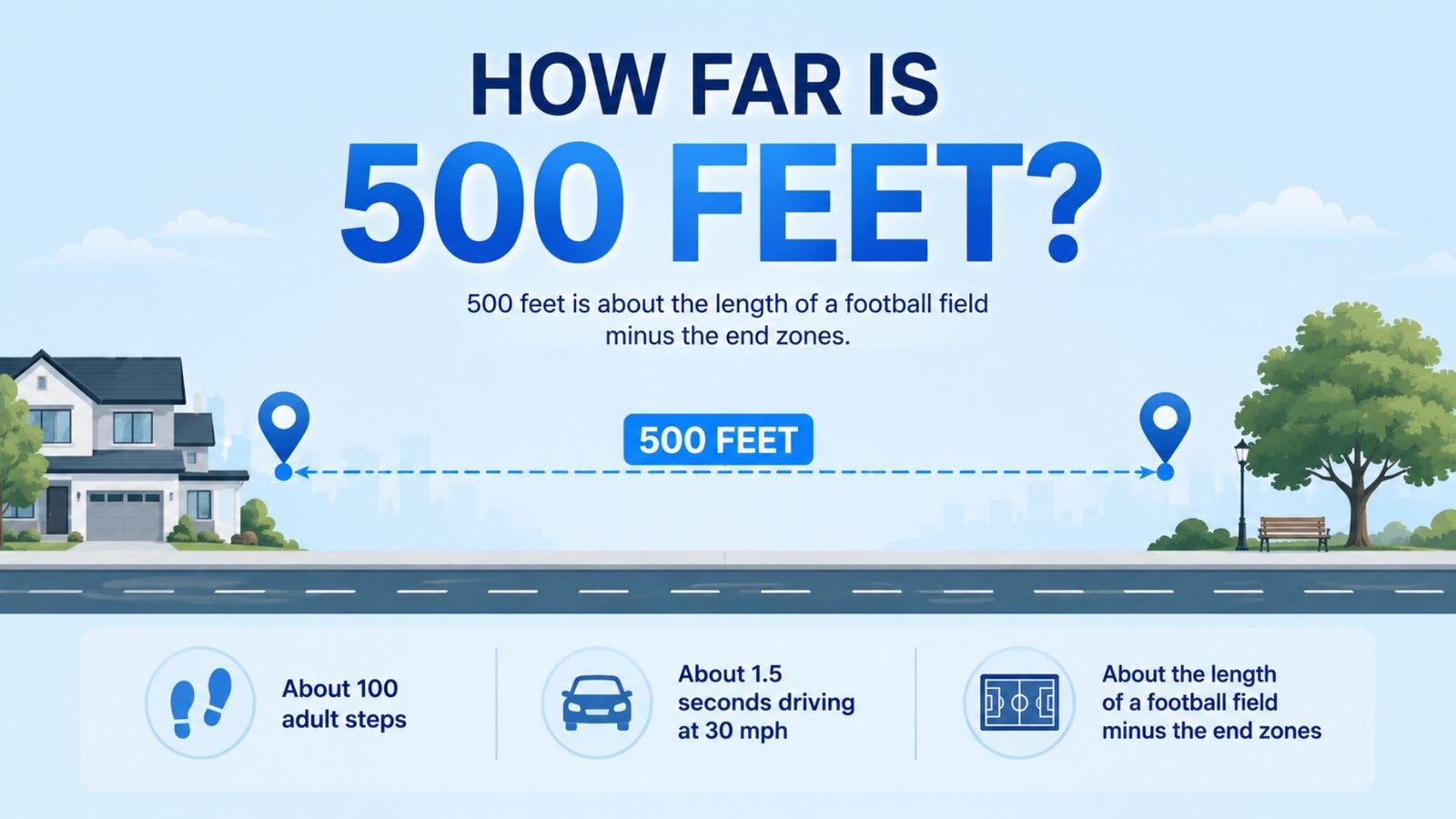
To grasp the massive scale of 500 feet, imagine standing at a football field’s end zone and stretching your arm towards the opposite end. A standard football field, including the end zones, measures 360 feet long, so 500 feet surpasses it by a significant margin.

Visualize walking from one end zone to the other, then adding an additional 140 feet that’s roughly the length of a city bus. This expansive distance can also be seen in contexts like corporate campuses, where buildings and facilities are often spread over vast lengths, emphasizing the sheer size of 500 feet.

How Big Is 500 Feet

In urban settings, consider a typical city block that can range from 200 to 400 feet in length. When you step back to see 500 feet, you’re looking at nearly two full city blocks, which can be the distance from a bookstore to a coffee shop in a bustling downtown.

This range of 500 feet can impact our daily lives from ensuring proper spacing in road construction to measuring out distances for running tracks or marathon courses. It’s an essential measurement that underscores how we perceive distances within familiar environments.

Read Also: 14 Most Common Things That Weigh About 500 Grams 2026

How Long Is 500 Feet?

Understanding how long 500 feet is becomes even clearer when you think about common objects that can help frame this distance. For instance, consider a large jetliner — some of the most common commercial aircraft are roughly 200 to 250 feet long. Now imagine stacking two of these planes end to end, and you’ve reached around 500 feet. This visual serves as a powerful reminder of just how significant this length can be, especially in terms of transportation and travel.

In another context, a high school track, typically measures 400 meters or about 1,312 feet for four laps. This can help put into perspective how small or large distances can feel depending on the setting.

MeasurementConversion
500 feet in yards166.67 yards
500 feet in meters152.4 meters
500 feet in miles0.0947 miles
500 feet in inches6000 inches

Imagine sprinting two laps around that track; you would have covered 800 feet, quickly realizing that 500 feet is just under two-thirds of a lap, illustrating how this distance nests within everyday experiences of physical activity and sport.

What Does 500 Feet Look Like?

When you visualize 500 feet, it could easily look like a long stretch of road with anything from houses on one side to trees or fences on the other, revealing a line of sight unobstructed by structures.

In a natural setting, think of a wooded area: 500 feet can represent a depth in the woods from a trailhead, where the trees rise high and bird songs fill the air. This expansive view of 500 feet can create feelings of adventure and exploration, evoking memories of hiking trips or outdoor gatherings.

What Does 500 Feet Look Like

If you’re standing on a beach, the distance can appear even more striking. 500 feet can stretch from one area of the shoreline to where waves softly lap at the sand, offering a refreshing visual contrast between land and sea.

In a more urban scene, this distance can be represented by a line of cars parked along the road, illustrating how significant it can be, whether through nature or city life. Understanding how far 500 feet is provides not only perspective on distances we traverse daily but also the beauty and variety encountered along those paths.

Things That Are 500 Feet Long – 20 Real-World Comparisons

20 Real-World Comparisons helps people easily understand this distance using familiar objects, landmarks, and everyday examples. Since 500 feet can be difficult to picture, comparing it to things like football fields, school buses, bridges, and tall buildings makes the measurement much more relatable. These real-world comparisons are useful for education, travel, construction, sports, and daily life.

Seattle’s Space Needle

The iconic Seattle’s Space Needle stands as a symbol of the city, reaching approximately 605 feet into the sky, making it a remarkable sight on the Seattle skyline. However, if you were to imagine a point on the observation deck extending outwards, you’d find that 500 feet is just about the distance from the base to a neighboring park.

This measurement embodies the essence of urban exploration, inviting you to consider how a short walk would connect you to other attractions within Seattle, including the vibrant Pike Place Market or the serene waters of Lake Union. The Space Needle thus serves as a magnificent reference point for assessing various distances in this bustling metropolis.

1.5 Football Fields

When you think of 500 feet, visualize 1.5 football fields laid end to end. Each standard American football field measures 300 feet from goalpost to goalpost. This comparison illustrates just how expansive 500 feet can be, whether you’re watching a game or running through your local park.

Imagine attending a tailgate and realizing that this spaciousness could accommodate not just players, but also fans, food trucks, and festive gatherings stretching out across that length. This distance translates to a vibrant atmosphere filled with excitement and communal spirit surrounding America’s beloved pastime.

5 Blue Whales lined Up

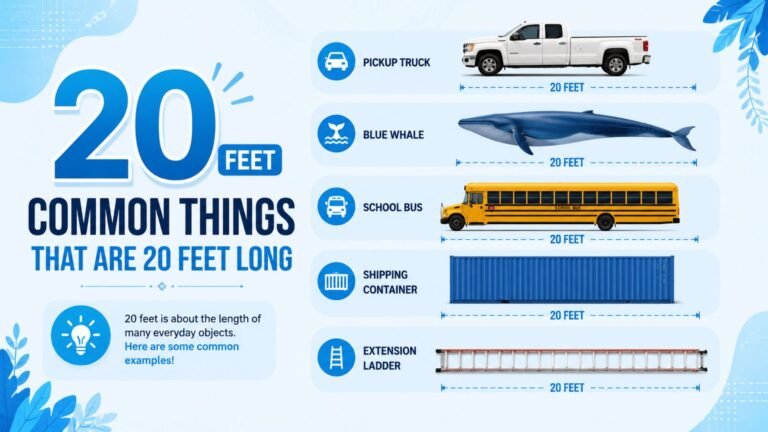
To further grasp the length of 500 feet, imagine the majestic blue whale, the largest animal on Earth, which can reach lengths up to 100 feet. When you envision five blue whales lined up in a row, you can easily appreciate the scale; that’s a staggering 500 feet! This comparison not only highlights the grandeur of these marine mammals but also showcases the breathtaking vastness of the ocean they inhabit.

It gives a sense of the incredible natural world, conjuring up imagery of deep blue waters and the thrumming life beneath the surface, emphasizing the beauty and biodiversity our planet holds.

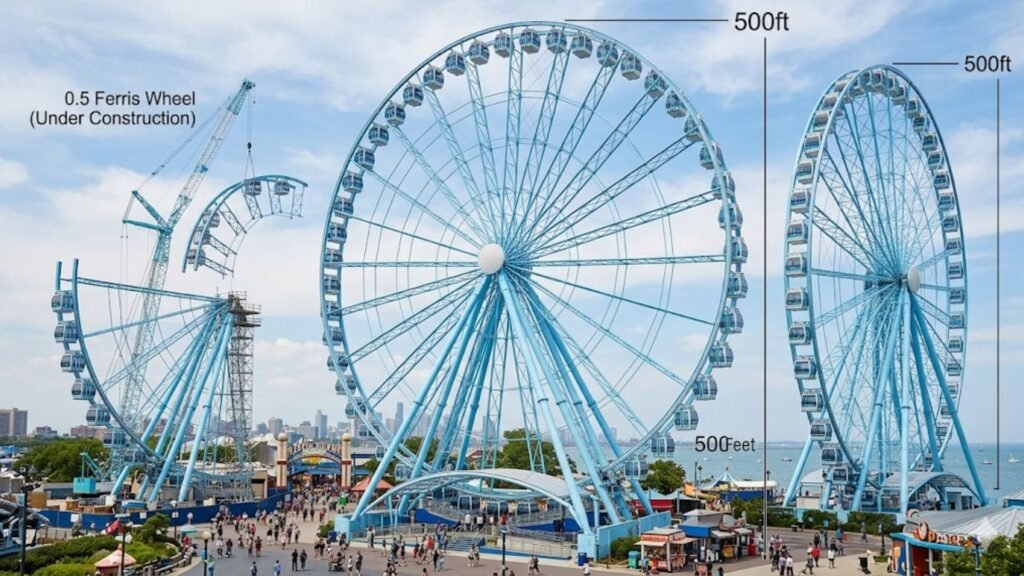
2.5 Ferris Wheels

In terms of amusement, picture 2.5 Ferris wheels, typically ranging from 200 to 250 feet in diameter. The notion of gathering up this many iconic attractions paints a picture of excitement and laughter, reflecting how many people could enjoy the views of the city while perched high above.

This thrilling comparison emphasizes how 500 feet can encapsulate the wonder of a day spent at an amusement park, where kids and adults alike can experience joy amid the bright lights and festive atmosphere.

Large Cruise Ships

Imagine a large cruise ship massive vessels that can measure about 1,000 feet in length. Though 500 feet is just half their size, it still represents an impressive scale, able to accommodate hundreds, if not thousands, of passengers.

These floating hotels symbolize adventure and luxury, navigating tropical waters while connecting travelers to exotic destinations. Envision the majestic sight of a ship gliding through azure waves, giving life to the discussion of how far is 500 feet in the context of ocean journeys and memorable vacations.

Oil Tankers

Trace the profile of a large oil tanker, often stretching 800 to 1,000 feet long. Here, 500 feet stands as a significant milestone on those vast vessels, underscoring the sheer scale of maritime industry.

These ships transport critical resources across oceans, serving as a reminder of humanity’s need for innovation and trade. Visualizing such a large hauler makes the distance of 500 feet resonate in practical terms, expressing the impact of global commerce and energy needs articulated through real-world examples.

Large Docks

Large docks play a crucial role in maritime industries, often extending to about 500 feet long. These expansive structures accommodate multiple cargo ships and fishing vessels simultaneously, enabling efficient loading and unloading of goods.

Envision the bustling activity as massive containers move along the gangplanks and trucks swiftly transport supplies to and from the shore.

A prime example is the Port of Los Angeles, where large docks facilitate the transfer of millions of tons of cargo each year, demonstrating how vital these structures are in international trade.

Seagoing Barge

A seagoing barge, typically around 500 feet long, is designed to transport heavy commodities over oceans and rivers. Used frequently in the shipping and construction industries, a barge’s flat-bottomed design allows it to navigate shallow waters effectively.

Imagine a solitary barge floating along a river, carrying tons of aggregate for a construction project that’s a practical illustration of how far 500 feet can stretch when dealing with heavy loads and vast waterways. For instance, barges in the Illinois River can cover great distances, linking major cities and facilitating trade, blending efficiency with rugged design.

Piers

The measurement of 500 feet is also common among piers seen in many coastal towns. Piers serve not just as fishing spots but also as scenic promenades for tourists wanting to enjoy waterfront views. Consider the iconic Santa Monica Pier in Los Angeles; although slightly shorter, it symbolizes how piers become local landmarks, enhancing community engagement.

Those visiting enjoy attractions, dining, and breathtaking sunsets, all framed by the expansive ocean, making great use of the 500-foot span in creating leisure spaces that weave into the fabric of urban life.

Runway Sections

Runway sections at major airports often take on the dimensions of 500 feet to accommodate various aircraft takeoffs and landings safely. With jets requiring ample space to gain altitude, this measurement becomes paramount in the design and layout of modern airports.

For example, Hartsfield-Jackson Atlanta International Airport, one of the busiest in the world, features runways that can exceed lengths of 10,000 feet, yet many operational sections illustrate how 500 feet can significantly contribute towards ensuring smooth airport operations while highlighting the engineering marvel that is contemporary air travel.

A Typical Suspension Bridge Span

In the world of civil engineering, a typical suspension bridge span can stretch 500 feet across a waterway or valley, serving as an awe-inspiring feat of design and structural integrity. Take the San Francisco-Oakland Bay Bridge, which showcases how these spans enable vehicles and pedestrians to traverse vast distances with elegance.

The combination of strength and beauty allows for urban expansion while beautifying city vistas. These impressive structures demonstrate how far 500 feet can span, connecting communities and enhancing transportation networks while inspiring awe.

A City Block in Many U.S. Cities

When navigating urban landscapes, a city block in many U.S. cities averages about 500 feet in length. Each block is lined with shops, apartments, and parks, forming the backbone of city life.

Picture strolling down Michigan Avenue in Chicago, where each block pulses with activity, shopping, dining, and cultural experiences, effectively showing how much can happen within this 500-foot expanse.

This measurement serves as a baseline from which to understand the scale and connectivity of urban environments, emphasizing the vital role city blocks play in maintaining community dynamics.

A Large Wind Turbine Blade Trio End-to-End

consider the enormous scale of renewable energy solutions, where a large wind turbine blade trio placed end-to-end measures approximately 500 feet. Each blade can reach lengths over 160 feet, and imagine three of them lined up a significant stride in sustainable energy efforts.

Wind farms, such as those in California’s Altamont Pass, promote clean power while demonstrating how structural lengths like 500 feet play a vital role in harnessing natural resources. This visual connection not only signifies advancements in technology but also resonates with global initiatives aimed at combating climate change.

A Medium-Size Container Ship

How far is 500 feet? It’s roughly the length of a medium-size container ship, which typically measures around this distance from bow to stern. These vessels, vital for global trade, transport goods across oceans, with their substantial structure making them an iconic sight in ports worldwide. Imagine the intricate loading processes that take place over such a span, creating a dynamic scene of logistics and commerce.

A Modern Skyscraper Laid on Its Side

If you were to lay a modern skyscraper like New York’s One World Trade Center on its side, it would extend nearly 500 feet, showcasing the immense scale of urban architecture. This length symbolizes the ambition of modern city planning and design, illustrating how vertical space in bustling metropolitan areas can be transformed into sprawling horizontal expanses.

An Aircraft Carrier Hangar Deck Section

The deck of an aircraft carrier is a marvel of military engineering, with sections often measuring around 500 feet long. This ample space supports the deployment and recovery of numerous aircraft simultaneously. Imagine the strategic planning and precision that go into utilizing every inch of this massive structure, which is not just a naval asset but also a floating city, complete with facilities for thousands of personnel.

Converting 500 Feet to Other Units

Here is another simple conversion table in easy English:

UnitEquivalent of 500 Feet
Meters152.4 meters
Yards166.67 yards
Miles0.0947 miles
Inches6000 inches

These numbers support everything from home renovation to scientific measurement and large-scale planning.

Everyday Uses of 500 Feet

In daily life, 500 feet is a distance people often experience without realizing it. Walking from a parking lot to a shopping mall entrance, crossing a large school campus, or moving between sections of a sports stadium can easily cover about 500 feet. It is also close to the length of around 33 average cars lined up together, making it easier to picture in real situations.

Many outdoor activities also involve this distance. A short walk in a public park, the space between two city intersections, or the distance from a bus stop to a nearby store can all be around 500 feet. Using familiar comparisons like a football field and a half helps people quickly understand and estimate this measurement.

500 Feet in Engineering and Science

In engineering and science, 500 feet is an important measurement used in planning, design, and safety calculations. Engineers may use this distance for road layouts, bridge spacing, construction zones, and utility line planning. Scientists and surveyors also measure distances close to 500 feet when studying land, environmental areas, or building projects.

This measurement is useful because it is large enough for practical projects but still easy to calculate. For example, 500 feet equals about 152 meters, which helps in converting between imperial and metric systems. Construction workers, architects, and planners often visualize this length using landmarks like large buildings, stadium sections, or multiple buses parked in a row.

Read Also: How Heavy is 20 Kg? 17 Common Things That Are 20 Kilograms

The Cultural and Historical Significance of 500 Feet

Throughout history, 500 feet has been an important measurement in architecture, construction, transportation, and urban planning. Many historic structures, including bridges, towers, and early skyscrapers, were designed around measurements close to this scale because it represented a major engineering achievement at the time.

In older cities, distances of around 500 feet were commonly used to plan roads, marketplaces, and public gathering areas.

The Cultural and Historical Significance of 500 Feet

Culturally, people often connect 500 feet with impressive size and visibility. Tall buildings reaching nearly 500 feet high became symbols of progress, wealth, and innovation in growing cities around the world. In modern times, this measurement still appears in sports arenas, public safety zones, airports, and entertainment venues, making it a familiar and meaningful distance in everyday life.

500 Feet in Technology and Innovation

Modern technology and innovation often use measurements like 500 feet in communication, mapping, and infrastructure projects. For example, some Wi-Fi signals, drone ranges, and Bluetooth devices can cover distances close to 500 feet under ideal conditions. In smart cities and networking systems, this distance is important for placing sensors and equipment efficiently.

In transportation and urban innovation, planners may use 500-foot spacing for streetlights, camera systems, or public safety devices. Tech companies also use precise distance calculations in GPS systems, digital mapping, and autonomous vehicle testing. Comparing the distance to a large bridge section or a city block makes it easier to understand its scale.

Practical Ways to Visualize 500 Feet in Everyday Life

One of the easiest ways to visualize 500 feet is by comparing it to familiar objects. It is slightly longer than a full football field, equal to around 10 school buses lined up, or about the height of a 40-story building standing upright. These comparisons help turn an abstract number into something more realistic and memorable.

You can also estimate 500 feet while walking or driving. An average person can walk this distance in less than two minutes, while a car covers it in only a few seconds. Looking at the length of a large parking area, a city street section, or several telephone poles in a row can also help you picture this measurement more clearly.

Real-World Objects and Landmarks That Measure About 500 Feet

Many famous structures and objects measure close to 500 feet, making them useful for visual comparisons. Some skyscrapers, observation towers, and large bridges have sections around this height or length. Certain roller coasters and stadium structures also approach the 500-foot mark, helping people imagine the distance more easily.

Natural landmarks can also help visualize this measurement. A long stretch of beachfront, part of a hiking trail, or the width of some city parks may be around 500 feet. Comparing the distance to recognizable places gives a clearer understanding than numbers alone.

Why Understanding 500 Feet Matters in Sports, Safety, and Engineering

Knowing how far 500 feet is can be useful in sports, safety, and engineering. In sports, coaches and athletes use distance awareness for training drills, field positioning, and running exercises. Since it is longer than a football field, it provides a practical reference for estimating movement and space during games.

In safety and engineering, accurate distance estimation is extremely important. Emergency zones, construction site boundaries, and road safety markers may all involve distances close to 500 feet. Understanding this measurement helps improve planning, navigation, and awareness in both professional work and everyday situations.

Read Also: How Much Is 100 Feet? Understanding This Measurement in Real Life 2026

FAQ’s

Is a Football Field 500 Feet?

No, a football field is 360 feet long, so 500 feet is about 1.4 football fields.

How Many Cars Is 500 Feet?

About 33 average-sized cars lined up equal 500 feet.

How Many Kilometres Are in 500 Feet?

500 feet equals approximately 0.152 kilometres.

How Far Is 500 Feet in Miles Driving?

500 feet is about 0.095 miles, or just under one-tenth of a mile.

Conclusion

Understanding how far 500 feet is becomes much easier when you compare it to familiar real-world objects and places. Whether it’s the length of a large building, multiple school buses lined up together, or nearly one and a half football fields, these comparisons help turn an abstract measurement into something you can instantly picture.

Using relatable examples not only improves your sense of distance but also helps in everyday situations like walking directions, fitness tracking, construction planning, and outdoor activities. The next time someone mentions 500 feet, you’ll already have several clear visual references in mind.

Similar Posts

Leave a Reply