How Much Is 100 Feet? Understanding This Measurement in Real Life 2026
100 Feet is a length many people hear about but often struggle to visualize in real life. Whether you are measuring land, planning construction, comparing heights, or just curious, understanding how big 100 feet is can help you picture distances more clearly. From buildings and sports fields to everyday objects, there are many familiar examples that make it easier to imagine this measurement without using a ruler.
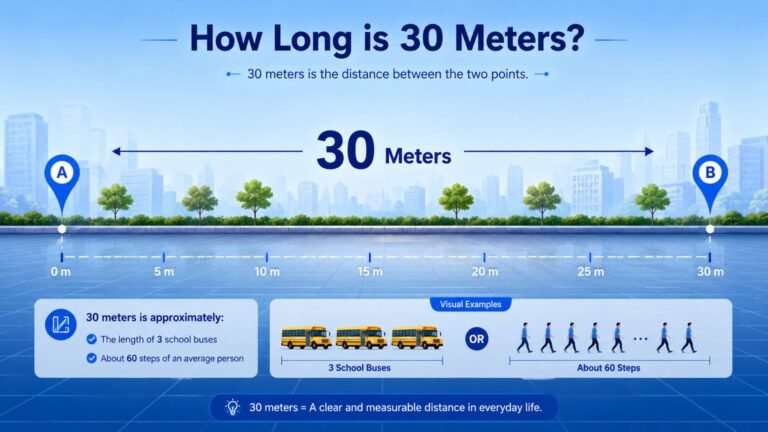
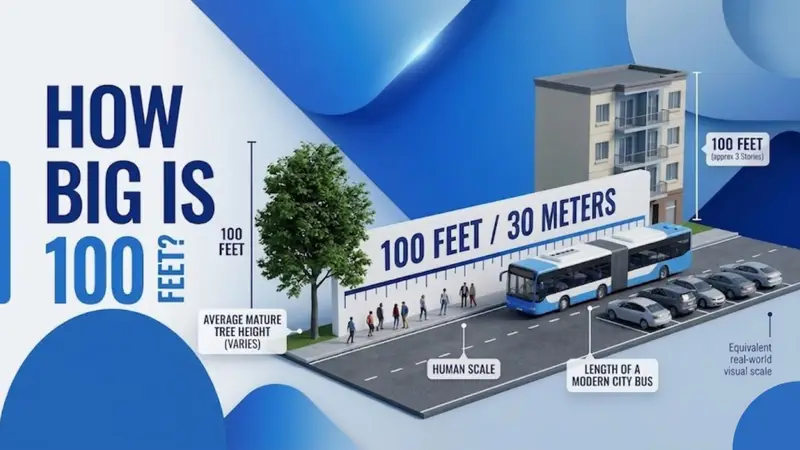
When you break it down, 100 feet equals 30.48 meters, 33.3 yards, or about the length of a 10-story building laid on its side. Visual comparisons like these turn an abstract number into something you can actually see in your mind.
How Big Is 100 Feet?
One hundred feet is a length that can be difficult to imagine at first, but many people search for terms like how long is 100 feet, how long is 100 ft, how tall is 100 feet, how big is 100 feet, or even how far is 100 ft to understand it better.
In simple terms, 100 feet equals about 30 meters (often searched as 100 feet to meters, 100 ft to meters, or how many meters is 100 ft).
That is roughly the length of a standard basketball court or about one-third the length of a football field.
If you were to walk 100 feet (also asked as how much is 100 ft), it would take most people around 40 to 45 steps depending on stride. This is why questions like what does 100 feet look like or 100 feet visualized are so common.
A good way to picture 100 feet is by comparing it to everyday objects. For example, people often ask what is 100 feet long, 100 feet example, 100 ft example, or things that are 100 feet long.
A blue whale can grow close to 100 feet long, and imagining about five cars lined up bumper to bumper also helps explain it.
Some large trees can reach around this height, which answers searches like what is 100 feet tall or things that are 100 feet tall. In buildings, 100 feet is roughly equal to a 10-story building, which helps explain how tall is 100 feet in real life.
The size of 100 feet is often used in construction, sports, and property measurements because it represents a noticeable but manageable distance.
A backyard that is 100 feet long feels spacious enough for a garden, playground, or pool, which is why people search how long is 100 feet in a room or how long is 100 feet in a room.
In sports and land measurement, it is a common reference point when estimating space or distance.
You are asking how long is 100 ft, how far is 100 ft, or simply 100 ft, it is a length that becomes easy to understand when compared with real-world examples like buildings, vehicles, and natural objects.
Visualizing measurements becomes easier with real-life comparisons: just as 100 feet helps you understand distance, familiar weights like 70kg, 30kg, and 15 kg make it simple to imagine how heavy everyday items feel when lifting luggage, groceries, or equipment.
How Long Is 100 Feet?
Imagine standing at the edge of a football field; 100 feet is just under a third of its length. Picture that distance: it’s roughly equivalent to the height of a ten-story building, an impressive vertical stretch that can make one feel small when viewed from below.
The grand scheme of things, 100 feet is often underestimated in our daily interactions and surroundings.
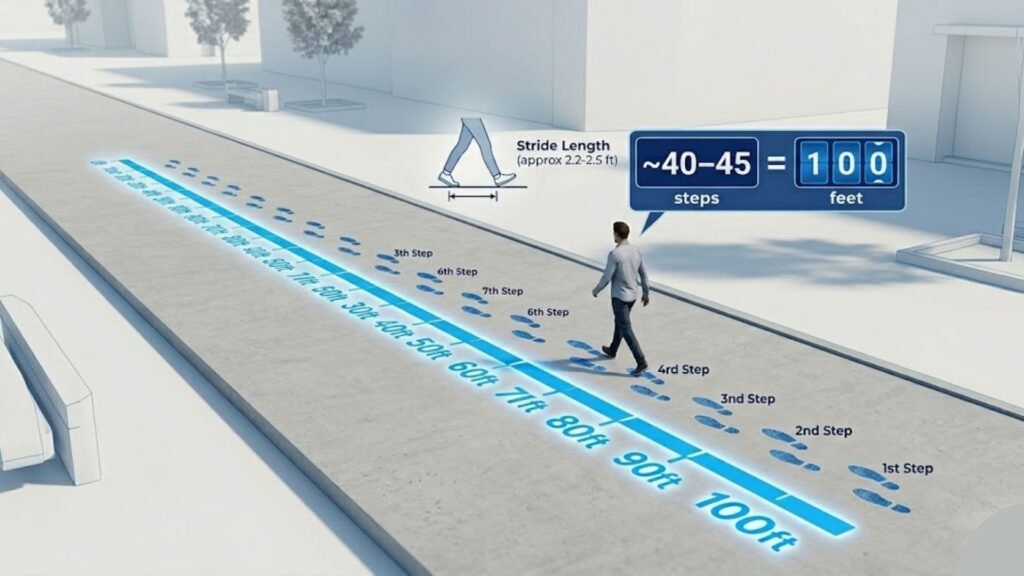
Think about the amenities in a vibrant park: a 100-foot stroll could take you from a serene bench to a bustling playground, transforming your perspective in mere moments. In urban settings, it might represent the distance from a busy café to the subway entrance, a reminder of how our lives often move within such compact spaces.
The beauty of this measurement is its versatility, reminding us that sometimes, the most significant experiences come from brief encounters within seemingly short stretches.
What Does 100 Feet Look Like?
Imagine standing at the base of a towering skyscraper. As you gaze upward, the height of 100 feet becomes a striking visual marker, akin to a ten-story building or the remarkable wingspan of a giant albatross.
This measurement translates not just into architectural wonder but into a visceral experience, where the human perspective shifts dramatically.
From a distance, 100 feet can feel both monumental and intimidating, as if a massive wall of glass and steel is thrusting itself into the sky.
Visualize 100 feet in nature. Picture a vibrant tree with a trunk so wide that several people holding hands can hardly encircle it. Its branches reach skyward, offering a leafy canopy that shelters an entire ecosystem.
This height represents not just physical space it embodies vitality and the story of growth over decades, if not centuries.
Seen in urban landscapes or lush forests, 100 feet challenges our perceptions of scale and invites us to appreciate the wonders that reach for the sky, reminding us of our place within these towering narratives.
Things That Are 100 Feet Long
School Bus
A standard school bus is a familiar sight across neighborhoods, stretching approximately 36 feet in length.
When we consider a typical bus designed to transport students, visualizing its massive size becomes more apparent. Imagine stacking two of these buses together; they would total about 72 feet.
The significance of this length resonates in the safety features and spacious seating designed for children, creating a sanctuary on wheels amid the hustle and bustle of morning commutes.
10-Story Building
Standing tall at nearly 100 feet, a 10-story building transforms urban landscapes, pushing the boundaries of vertical living.
This height not only presents opportunities for incredible views but also poses challenges regarding infrastructure and community dynamics.
From fire escapes to elevators, the engineering that supports such a structure is a testament to human ingenuity. Each level offers a unique perspective on city life, where social interactions pulse through the air, generating a vibrant ecosystem of residents.
Two Semi-Trucks
When we think about transportation, the sight of two semi-trucks parked nose-to-nose illustrates a staggering 100-foot distance.
These colossal vehicles represent the backbone of goods movement, crisscrossing the country with essential supplies.
Their sheer size and the logistics involved in their operation have a ripple effect on everything from traffic patterns to local economies. When paired together, they’re a symbol of the vast network that keeps our modern society functioning smoothly.
Blue Whale
The blue whale, the largest animal known to have ever existed, reaches lengths of around 100 feet. Imagine swimming alongside this majestic creature, where its heart alone can weigh as much as a small car.
As it glides through the ocean, its size serves not just as a marvel of nature but as an essential piece of ecological balance, influencing marine ecosystems. Their presence in our oceans invites us to ponder conservation efforts and our connection to the planet.
Wind Turbines
Standing proudly at around 100 feet, wind turbines harness nature’s energy, converting wind into electricity. These towering structures symbolize the shift towards renewable energy sources and the fight against climate change.
With their sweeping blades delicately turning against the sky, they serve as a reminder of our responsibility to innovate sustainably. As components of large wind farms, they not only generate power but also inspire discussions about our energy future.
IMAX Screen (Diagonal Measurement)
An IMAX screen stretches diagonally to about 100 feet, enveloping viewers in an immersive cinematic experience.
This massive display transforms the way stories are told, pulling audiences into worlds filled with stunning visuals and heart-pounding sound. The sheer size enhances emotional engagement, making even the simplest scenes resonate on a grand scale.
In an age where streaming dominates, the IMAX format reminds us of the collective magic of cinema, encouraging social experiences through shared storytelling.
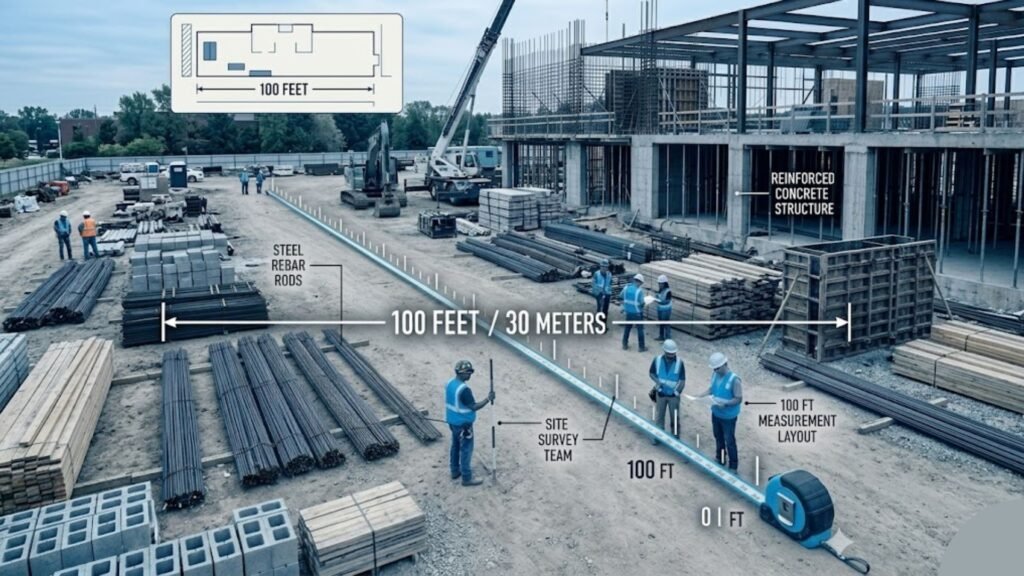
100-Foot Measuring Tape
A 100-foot measuring tape is a quintessential tool for architects, contractors, and DIY enthusiasts alike. This versatile instrument combines practicality with precision, allowing users to effortlessly navigate both indoor and outdoor spaces.
Unlike the traditional yardstick, the retractable tape shows how vast spaces can be without the cumbersome weight of a rigid ruler. Imagine the possibilities transforming a small backyard into an artful garden or measuring the ideal lengths for your new deck.
Boeing 737 Aircraft
The Boeing 737 aircraft, spanning an impressive 100 feet, exemplifies engineering excellence in the aviation industry.
Its length signifies not just the aircraft’s size, but the capacity to connect cultures and continents over 10,000 have been built since its introduction, making it one of the most successful jetliners in history.
A marvel of efficiency and speed, the 737 symbolizes the gateways to adventure and business opportunities. Flying aboard it ensures each journey feels like a leap into the sky, bringing passengers closer to their destinations in a matter of hours.
Basketball Court
A standard basketball court measures exactly 100 feet in length, encapsulating the essence of teamwork, strategy, and athleticism.
This rectangular arena has become synonymous with excitement, as games unfold with the rhythm of synchronized movement and buzzer-beaters that echo in fans’ memories.
More than just a field for competition, it serves as a crucible where young talent is nurtured and legends are born, fostering community and camaraderie.
The court is a canvas where creativity meets athleticism, highlighting how dimensions can shape experiences.
Giant Sequoia Tree
Reaching heights of over 300 feet, the Giant Sequoia tree’s base can often span nearly 100 feet in circumference, making it a natural wonder that holds centuries of secrets within its massive trunk.
This living monument showcases resilience, standing against time and the elements while providing a habitat for countless species.
Walking among these giants instills a sense of awe and inspiration, reminding us of nature’s grandeur and the fragility of life. They serve as a poignant reminder to honor environmental conservation in today’s rapidly changing world.
River Barge Section
A typical river barge section can stretch to about 100 feet, symbolizing the interconnectedness of commerce and waterways.
These floating giants facilitate the movement of goods across vast distances, playing an essential role in the economy by connecting producers with consumers.
As they glide through serene rivers, they evoke a sense of nostalgia for simpler times when trade relied heavily on waterways.
The sight of a barge laden with cargo embodies the dream of navigation and exploration, where every journey holds the promise of discovery and opportunity.
How Long Is 100 Feet in Different Measurements?
When visualizing 100 feet, it’s intriguing to consider how that distance translates across various measurements.
For instance, 100 feet equals 33.33 yards, a length comparable to a little over a third of a football field.
If you think about it, standing at one end of this measurement would place you roughly the distance between a baseball diamond’s bases an effortless sprint for elite athletes, yet a challenge for the average runner.
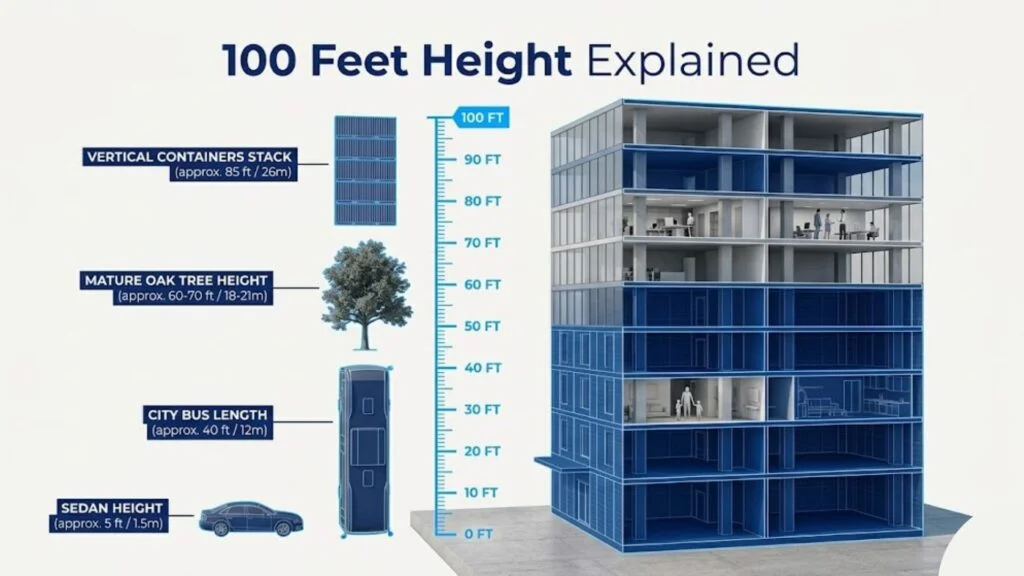
Converting to metric, 100 feet is approximately 30.48 meters, a distance that brings to mind the remarkable feats of Olympic track athletes.
Imagine Olympic sprinters covering that distance in mere seconds, showcasing human speed and endurance.
In urban planning, knowing that 100 feet is about 50 cars lined up in a row can provide a tangible perspective on space and layout; it’s both an intimate and expansive measure, inviting us to reconsider everyday distances in our lives.
How Big Is 100 Feet in Real Life?
Imagine standing next to a giant blue whale, which can reach lengths of up to 100 feet. This marine mammal’s enormity is often difficult to grasp until you see it compared to familiar objects; it’s longer than a school bus and nearly the height of a 10-story building.
This scale can transform your perception of distance and size, making everyday objects appear minuscule in comparison.
In sports, a football field is 100 yards long, about 300 feet total, but the end zones make a significant difference.
Think of how players sprint the length, and suddenly, 100 feet feels much shorter when visualized on the field, where strategy and speed come into play.
Beyond the athletic world, the dimensions of a 100-foot tree or a landmark like the Statue of Liberty (excluding the pedestal) can evoke awe and admiration, prompting us to reflect on nature’s grandeur and the craftsmanship of human creativity.
Exploring your surroundings: a 100-foot length can also represent the distance of a long city block or even the height of some commercial buildings.
When you visualize this measurement in the context of everyday life, you begin to appreciate the vastness of different scales, encouraging a deeper understanding of architectural marvels and the natural world that often go unnoticed.
FAQ’s
How much does 100 feet look like?
Visualizing 100 feet can be more relatable when you compare it to everyday objects. For instance, imagine a large school bus, which typically spans around 45 feet; thus, 100 feet would be just over two bus lengths end-to-end. It’s roughly equivalent to the height of a 10-story building, which adds an additional layer of comprehension for those who can picture a city skyline. This perspective helps emphasize the impressive scale of 100 feet and puts it into contexts we encounter daily.
How to measure 100 feet by walking?
To gauge 100 feet by walking, take a confident stride measurement. The average person’s stride ranges from two to three feet, making it an accessible DIY method. If you estimate your stride at 2.5 feet, 100 feet would require roughly 40 steps. Marking off a straight stretch with visual cues like a row of trees or a long sidewalk can help maintain accuracy. This method not only gives you a practical understanding of measurement but also encourages physical activity and awareness of one’s surroundings.
How much is 100 feet in a bedroom?
In a typical bedroom, 100 feet can feel surprisingly spacious or potentially overwhelming, depending on its arrangement. A standard bedroom often measures around 10 by 12 feet or 120 square feet, so imagine two side-by-side rooms to encompass the 100 feet length. This distance allows for creative furniture placement, emphasizing the need for smart design in maximizing comfort and utility. Understanding this scale can also inspire interior design ideas, from spatial planning to decorative enhancements that cater to that kind of space.
What is the length of 100 feet?
100 feet is a linear distance equal to 1/3 of a football field, which is 300 feet. This length can be visually broken down; if you stand at one end of a typical tennis court, you’d have to walk only a little beyond the opposite baseline to cover 100 feet. This comparative measurement helps clarify how 100 feet occupies space, providing a tangible reference point that transcends abstract calculations. Recognizing such dimensions in familiar settings can bridge gaps in understanding spatial relationships in our everyday environments.
Conclusion
100 feet is much longer than most people expect. By comparing it with common objects like buses, buildings, and sports areas, you can quickly understand and estimate this distance in daily life. Knowing how big 100 feet is not only useful for measurements and planning but also makes it easier to relate to distances you encounter around you.