How Much Is 20 Grams? 15 Most Common Things That Weigh About 20 Grams 2026
“How Much is 20 Grams?” is a common question people ask when they want to understand small weights in a simple way. Twenty grams is a very light measurement used in everyday life for food, jewelry, and small objects. It helps people compare and understand how heavy or light something is in real terms instead of just numbers. For example, a few coins, paper clips, or a small amount of sugar can be close to 20 grams, making it easier to imagine this weight in daily use.
How Much is 20 Grams?
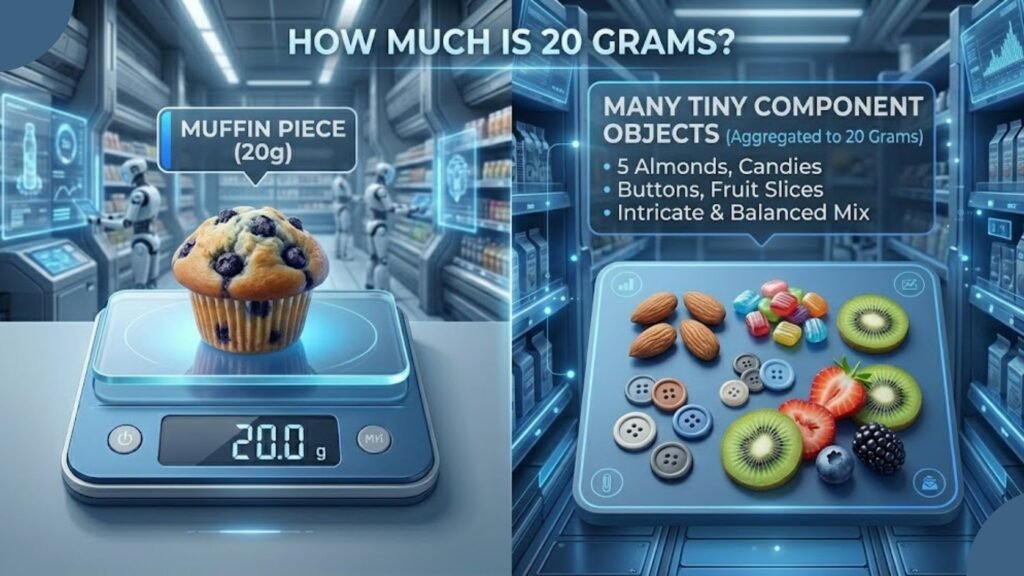
Many people search how much is 20 grams because it can be difficult to picture such a small weight in daily life.
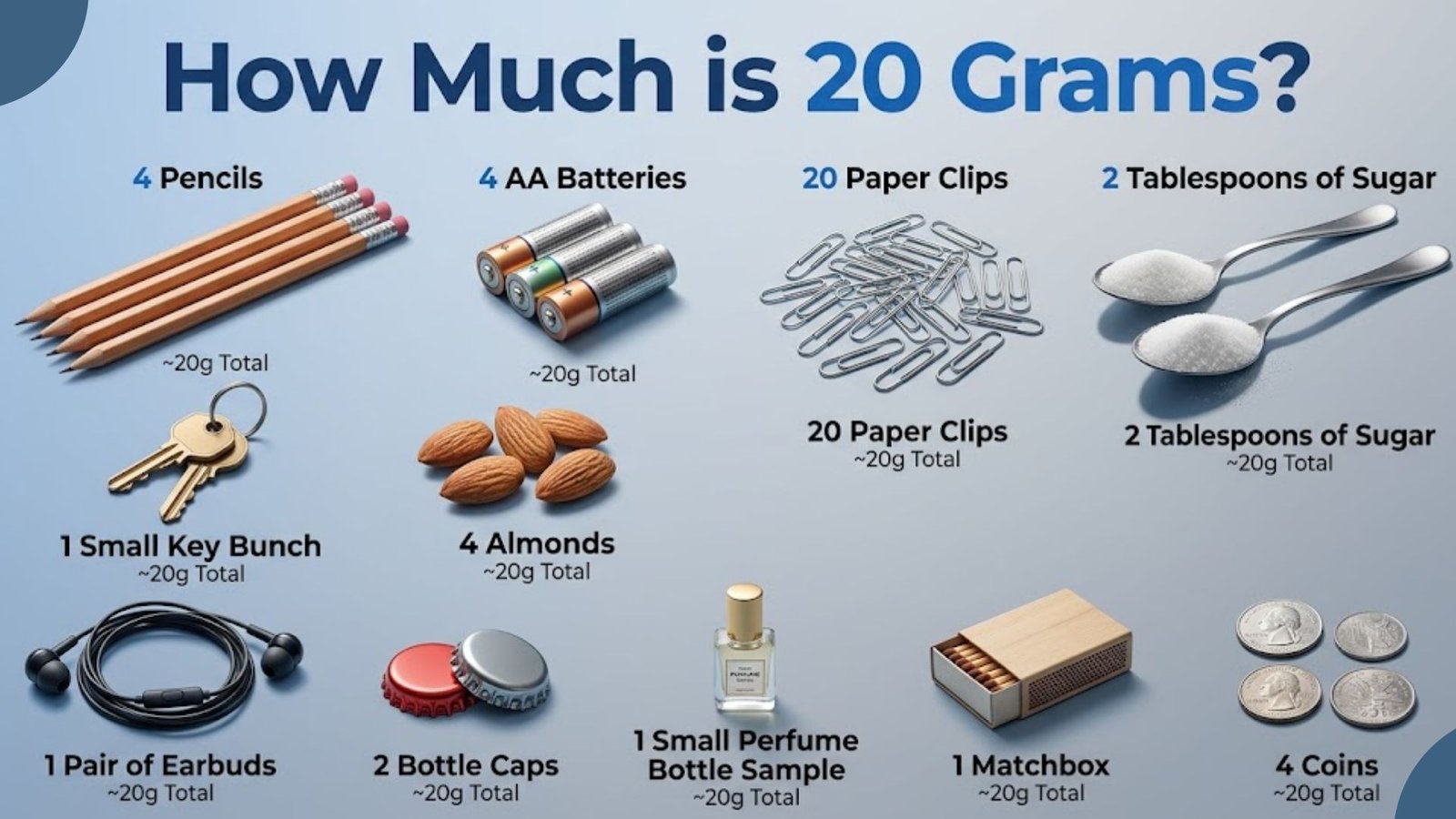
If you are wondering what is 20 grams or what is 20 g, it is equal to 0.02 kilograms or about 0.7 ounces. A small handful of paper clips, four teaspoons of sugar, or a few coins together can weigh close to 20 grams. These simple examples help explain how much is 20 g in an easy way.
If you want to know how big is 20 grams, it is a very light weight that can fit easily in your hand or pocket. Many people ask what does 20 grams look like because numbers alone can be confusing.
Some common things that weigh 20 grams include small jewelry items, earbuds, or two AA batteries together. These examples also help answer the question what weighs 20 grams in real life.
Understanding 20 grams visualized becomes easier when comparing it with everyday objects around you. For example, a small snack pack, a few pens, or lightweight accessories may weigh around 20 grams.
People often search things that weigh 20 grams to better understand measurements used in cooking, shopping, and mailing small items. By using familiar examples, it becomes simple to imagine exactly how much is 20grams in daily life.
Things That Weigh About 20 Grams
Four Plastic Credit Cards
Imagine holding four plastic credit cards in your hand, together weighing around 20 grams. In our digital world, these cards represent more than just currency they symbolize access to resources and opportunities.

The lightweight nature of these cards belies their heavy impact, as they can unlock everything from purchases to loyalty rewards, illustrating how our interactions with money can be both physical and virtual.
One Tablespoon of Honey
A single tablespoon of honey, sweet and vibrant, weighs about 20 grams. Beyond its delicious flavor, honey serves as an ancient remedy, praised for its potential health benefits.
Its lightweight composition makes it easy to incorporate into teas and recipes, yet its rich history as a natural sweetener adds a weight of tradition to every drop, reminding us of the interconnectedness between nature and nutrition.
A Mouse
The modest weight of a typical computer mouse, around 20 grams, highlights its significant role in our tech-driven lives.
This lightweight gadget is not just an accessory; it’s a crucial tool that translates human intention into digital action, enabling creativity and productivity. Despite its small size, a mouse connects us to vast virtual worlds, illustrating how compact devices can wield greater power than their weight suggests.
Four US Nickels
Four US nickels together weigh 20 grams, epitomizing the tangible aspect of currency in a world that’s increasingly shifting toward digital payments. Each nickel represents a part of economic history, with its own story to tell about the U.S. Mint and changing times.
While they may appear trivial in a cashless society, these coins carry the weight of tradition and the notion that, sometimes, small amounts can accumulate to create greater value.
Twenty Milliliters of Water
Twenty milliliters of water, equivalent to about 20 grams, embodies life itself. This small quantity serves as a reminder of the delicate balance of hydration and the crucial role water plays in sustaining all living organisms.
Lightweight and easily accessible, water is a universal symbol of health, renewal, and the importance of maintaining our connection to nature in our daily routines.
Fourteen Paper Clips
Fourteen paper clips aggregate to roughly 20 grams and represent the beauty of simplicity and utility in organizational tools. These small, unassuming objects hold together ideas and documents, mirroring the way we weave memories and tasks into the fabric of our lives.
Their lightweight construction belies a big purpose in our workspaces, where they play a vital role in maintaining order amidst chaos.
Five Teaspoons of Sugar
Five teaspoons of sugar, weighing about 20 grams, can sweeten a variety of dishes yet reminds us of the dual nature of sweetness pleasurable but potentially harmful in excess.
As we consider sugar’s place in our diets and its implications for health, these five teaspoons serve as a metaphor for moderation and balance. They beckon us to savor life’s sweetness while remaining conscious of our overall well-being.
18 Shelled Almonds
We often overlook the small, nutrient-dense gems that are almonds. Just 18 shelled almonds weigh approximately 20 grams and pack a punch with their healthy fats and protein.
They not only make for a satisfying snack but also contribute to heart health, making them a guilt-free indulgence. Next time you’re snacking, consider how tiny portions can provide substantial benefits.
A Standard AA Battery
a common AA battery also tips the scale at about 20 grams. While we usually think of them as mere power sources for devices, they are a reminder of the energy encapsulated in humble forms.
This small object plays a pivotal role in our daily lives, powering everything from remote controls to smoke detectors, demonstrating how essential lightweight technology is in modern convenience.
Seven Ping Pong Balls
Picture a lively game of table tennis, where seven ping pong balls weigh in at about 20 grams. These lightweight spheres symbolize not just leisure but also coordination and skill.
They encapsulate the spirit of play, reflecting how sometimes the lightest things bring the most joy and connection among friends and family.
A Single Chocolate Bar Square
Ever thought about how a single square of chocolate can weigh 20 grams? This small piece carries with it a world of indulgence and comfort, making it a favorite treat for many.
It serves not just as a quick mood booster but also invites a moment of mindfulness, urging us to savor each bite rather than consume it mindlessly.
A Hummingbird
a hummingbird weighs about 20 grams, showcasing the beauty of nature in a petite package. These tiny aviators remind us of resilience and agility, able to hover and dart with grace.
Their existence encourages us to appreciate the delicate balance of ecosystems and the importance of protecting such exquisite species.
A CD or DVD Disc
With advancements in digital media, a CD or DVD disc might feel nearly obsolete, yet it weighs about 20 grams and evokes nostalgia.
This small disc not only represents the evolution of music and film consumption but also the tangible connection to memories and experiences housed within its grooves. It invites reflection on how technology alters our interactions with art and entertainment.
Twenty Dollar Bills
a stack of twenty dollar bills can weigh around 20 grams, symbolizing both wealth and economic transactions. The lightness of paper currency belies its powerful impact on our choices and lifestyles.
In an era of digital currency, holding physical money can remind us of the value we assign to tangible resources, raising questions about the true worth of our possessions and the way we navigate financial landscapes.
Practical Applications of Understanding 20-Gram Measurements
Understanding 20-gram measurements can revolutionize the way we approach cooking and nutrition. For instance, in the realm of baking, precision is critical; knowing exactly how much 20 grams of flour or sugar contributes to a recipe can mean the difference between a light, airy cake and a dense one.
Breaking down ingredients into such manageable measurements, home bakers can experiment with ratios, creating custom recipes that suit individual tastes without the guesswork.
The kitchen, the concept of 20-gram measurements extends into nutrition and portion control. Imagine tailoring your meals to include exactly 20 grams of protein from sources like legumes or lean meats, ensuring balanced energy throughout the day.
This awareness allows users to make informed decisions about their diets, promoting not just physical health but also a deeper connection to what they consume.
Tracking these small measurements can empower individuals to fully embrace mindful eating, transforming meals into intentional acts rather than mindless routines.
How to Estimate 20 Grams Without a Scale
Estimating 20 grams without a scale can be both fun and practical, especially in the culinary world.
A common method is using everyday objects as reference points. For instance, a standard paper clip weighs about 1 gram; thus, you could gather about 20 paper clips to visualize the weight you’re aiming for.
This technique not only allows for quick estimation but encourages creativity in utilizing items around you.

Engaging approach is using the classic tablespoon for kitchen measurements. While a tablespoon of a dense ingredient like sugar weighs approximately 15 grams, you can fill it slightly heaping to reach your desired amount.
A small piece of fruit can also serve as a rough guide; an average medium-sized egg weighs about 50 grams, so a third of that aligns closely with your 20 grams.
Utilizing these intuitive methods not only enhances your cooking skills but also develops a deeper connection to the ingredients you use.
How to Measure 20 Grams in the Kitchen: Cooking and Baking Tips
Measuring 20 grams in the kitchen can be surprisingly straightforward once you embrace the right tools and techniques.
A digital scale is your best ally, offering precision that traditional measuring cups can’t match. When you’re tackling small quantities, like spices or baking ingredients, even slight variations can affect the outcome, so investing in a reliable scale becomes invaluable.
For a quick estimate, consider that a standard teaspoon of granulated sugar weighs about 4 grams, making it easy to gauge your 20 grams by measuring out about 5 teaspoons.
If a scale isn’t available, think creatively with kitchen items you might have. A tablespoon can serve as a handy substitute most types hold roughly 15 grams of water, so a level tablespoon plus a small pinch can help you achieve that perfect 20-gram target.
The best accuracy, always consider the density of the ingredient you’re measuring, as this can lead to surprising variations.
Keep a conversion chart nearby as a reference; it not only expands your measuring toolbox but also allows you to experiment confidently, transforming your cooking and baking adventures into precise art forms.
Why Small Weight Measurements Can Be Difficult to Visualize
Small weight measurements often challenge our perception because they fall below the threshold of everyday experience.
A gram or a milligram can feel abstract, as our minds are more accustomed to dealing with larger units like ounces or pounds.
This disconnect not only complicates our understanding of weight but can also lead to misconceptions about the quantities we’re handling.
Ever tried to picture a single gram of a substance? It’s a tiny speck, yet that minimal amount can have significant implications in fields like chemistry and nutrition.
Our brains are wired to think in comparative terms, often relying on relatable anecdotes or visual cues. When it comes to tiny measurements, the lack of tangible references can lead to confusion.
Picture a dime weighing about 2.5 grams; that’s a concrete example, but how many of us regularly weigh items in grams? This gap in familiarity can affect everything from cooking to crafting, where precision is paramount.
Everyday Situations Where Knowing 20 Grams Helps
In the realm of cooking, grasping the concept of 20 grams can elevate your culinary skills. Imagine whipping up a batch of cookies; knowing that 20 grams of sugar can dramatically influence sweetness and texture can help you tailor recipes to your taste.
The world of nutrition, understanding that 20 grams of protein can be achieved through just a handful of nuts or a small serving of chicken can empower you to make healthier choices.
This knowledge becomes especially crucial for individuals aiming for specific dietary goals, such as muscle gain or weight loss.
In daily life, the ability to estimate 20 grams can transform your approach to portion control. For example, if you’re packing lunch, visualizing 20 grams of cheese can help you manage calorie intake without sacrificing flavor.
When engaging in activities like meal prepping or sharing a snack with friends, measuring in grams can foster a sense of mindfulness, ensuring that you share delicious treats equitably.
Grams vs Ounces: Understanding Small Weight Conversions
When diving into the world of small weight conversions, grams and ounces each hold a unique significance. Grams, a metric unit, are often favored in scientific and international settings for their precision and ease of conversion.
One gram is one-thousandth of a kilogram, making it intuitive for calculations involving larger weights. Conversely, ounces belong to the imperial system, commonly used in the United States and a few other countries.
A single ounce equals about 28.35 grams, illustrating an ever-present challenge for those trying to bridge these two weight systems.
These differences becomes crucial in various contexts, from culinary endeavors to nutritional labeling. For instance, when crafting a recipe that requires precise measurements, knowing how to convert ounces to grams enhances accuracy, ensuring the perfect flavor and texture.

This knowledge plays a vital role in dietary choices being able to convert weights can help in making informed decisions about portion sizes, especially when sustainability and health-conscious practices are in play.
Adopting a holistic view of these units can empower individuals, enabling them to navigate diverse settings with confidence and clarity.
Common Mistakes When Estimating Small Weights
Underestimating the impact of environmental factors can lead to significant miscalculations when estimating small weights.
Individuals might overlook variations caused by humidity or temperature, which can subtly alter the weight of lightweight materials like feathers or fabric.
Understanding that even minor shifts in these conditions can skew an estimation emphasizes the importance of controlled environments for accurate weight assessments.
Common mistake is relying too heavily on intuition rather than utilizing precise measuring tools. Many tend to “eyeball” weights, especially with lightweight items, assuming their judgment is sufficient.
This approach often results in considerable errors, as our perception can be heavily influenced by visual cues or past experiences.
Encouraging a culture of measurement where every weight is assessed against a scale helps to reinforce accuracy and builds a habit that minimizes guesswork.
There’s a tendency to confuse volume with weight, especially in contexts like cooking or crafting. A small, fluffy item may take up significant space but weigh little, leading to miscalculations if one assumes volume directly relates to weight.
Clarifying these concepts not only sharpens estimating skills but also fosters a deeper understanding of material properties.
FAQ’s
Is 20g a Tablespoon?
No, 20 grams is not universally equivalent to a tablespoon, as the weight conversion varies depending on the ingredient. For example, 20 grams of flour will take up a different volume than 20 grams of honey or sugar due to differences in density. Understanding the specific ingredient is crucial for accurate conversions in cooking and baking.
What is an Example of 20 Grams?
To visualize 20 grams, consider a medium-sized apple, which typically weighs around 182 grams. When cut into smaller slices, about one-tenth of the apple would approximately equal 20 grams. This practical representation can help you gauge weight intuitively in everyday cooking scenarios.
How Much is 20g in Teaspoons?
The conversion of 20 grams to teaspoons also depends on the substance in question. For example, 20 grams of granulated sugar is about 4 teaspoons, while 20 grams of olive oil would be roughly 4.5 teaspoons. Recognizing these variables can significantly enhance precision in culinary measurements.
How Much is 20 Grams in Cups?
Converting 20 grams to cups varies greatly according to the material. For instance, 20 grams of flour is about 0.16 cups, while 20 grams of sugar equals approximately 0.1 cups. Utilizing a kitchen scale is often a more reliable method than volume when accuracy is essential.
Is 20 grams considered heavy or light?
Twenty grams is generally regarded as light, especially in everyday contexts. It’s about the weight of a few pieces of chocolate or a couple of teaspoons of butter. This light measurement can allow for easy incorporation into various recipes without heavy impacts on overall mass.
How many ounces are in 20 grams?
Twenty grams is equivalent to roughly 0.71 ounces. This conversion highlights the difference between metric and imperial systems, illustrating why understanding both can be beneficial, particularly for global recipes or ingredient lists.
Is 20 milliliters the same as 20 grams?
Not necessarily; while 20 milliliters and 20 grams can be equal for water (due to its density), this relationship changes with different substances. For oils or honey, for example, the weight in grams will differ from its volume in milliliters. Thus, comprehension of density is essential for accurate conversions in cooking and other applications.
Conclusion
20 grams is a small but useful unit of weight that appears in many daily items. When people ask “How Much is 20 Grams?”, the answer becomes easy by comparing it with real-life objects like snacks, stationery, or small accessories. Understanding this measurement helps in cooking, shopping, and general awareness of weights in a simple and practical way.