Water Bottle Dimensions 2026: Ultimate Guide to Choosing the Perfect Bottle
Choosing the right water bottle is more important than most people think. From staying hydrated at the gym to carrying water during travel, the size, height, width, and capacity of a bottle can completely change your daily convenience. That’s why understanding water bottle dimensions helps you pick a bottle that perfectly fits your lifestyle, backpack, car cup holder, or fitness routine.
In this complete 2026 guide, you’ll discover different water bottle sizes, measurements, shapes, and capacities with easy real-life comparisons. Whether you need a compact bottle for school, a lightweight travel bottle, or a large insulated bottle for outdoor adventures, this guide will help you confidently choose the perfect option for your everyday needs.
Dimensions of a Water Bottle
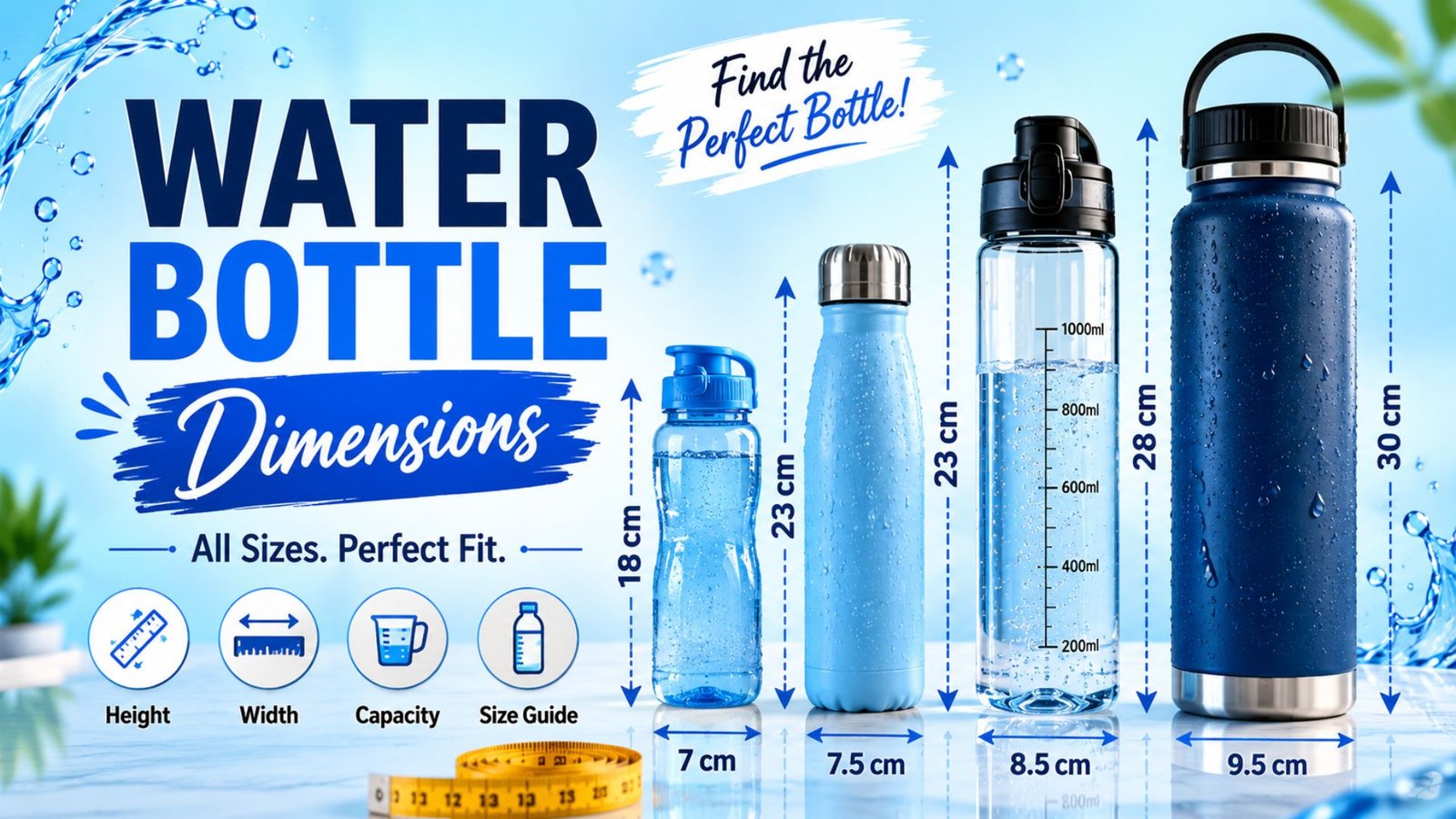
When selecting a water bottle, understanding the dimensions is crucial for both functionality and convenience. Generally, water bottles come in a variety of sizes, from compact 250ml bottles ideal for quick hydration, to larger 1-liter options that are perfect for outdoor adventures.
The height and diameter significantly influence portability; a taller bottle may offer more capacity, but can be cumbersome in smaller bags.
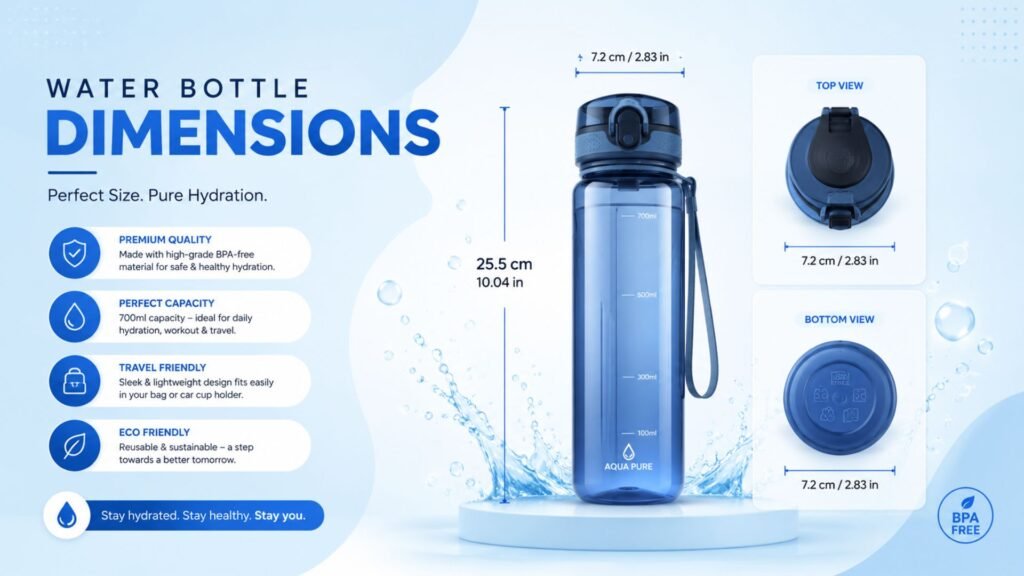
The shape of the bottle plays a pivotal role in its usability. Bottles with a slim profile are designed for easy grip and fit into cup holders, while wider ones may provide better stability but sacrifice compactness. Understanding these elements allows you to choose a bottle that seamlessly fits into your daily routine.
Read Also: 30 Meters Long: 16 Powerful Real-Life Distance Comparisons
Standard Water Bottle Dimensions Table
Each category serves specific lifestyle needs and activities. For example, a medium-sized bottle is perfect for daily workouts, while an extra-large option is ideal for hydration during extended outdoor activities. Knowing these standards enables you to make informed choices based on your personal hydration needs.
| Water Bottle Capacity | Height (inches) | Diameter (inches) | Height (cm) | Diameter (cm) | Cap Size (inches) | Cap Size (mm) |
| 8 oz (237 ml) | 5.5 in | 2.25 in | 14 cm | 5.7 cm | 1.0 in | 28 mm |
| 12 oz (355 ml) | 7 in | 2.5 in | 17.8 cm | 6.4 cm | 1.0 in | 28 mm |
| 16.9 oz (500 ml) | 8 in | 2.5 in | 20.3 cm | 6.4 cm | 1.1 in | 28 mm |
| 20 oz (591 ml) | 8.9 in | 2.75 in | 22.6 cm | 7 cm | 1.1 in | 28 mm |
| 1 Liter (33.8 oz) | 11 in | 3 in | 27.9 cm | 7.6 cm | 1.2 in | 30 mm |
| 1.5 Liter | 12.25 in | 3.5 in | 31.1 cm | 8.9 cm | 1.2 in | 30 mm |
| 2 Liter | 12.5 in | 4 in | 31.8 cm | 10.2 cm | 1.3 in | 33 mm |
How Many Inches is a Water Bottle?
The height of a water bottle can significantly impact its convenience and usability. A standard 16-ounce bottle usually measures around 8 inches tall, while larger bottles, such as a 64-ounce, can soar to about 12 inches. This discrepancy affects how you store or transport your bottle, especially when considering cup holders and backpack compartments.
When you think about how many inches is a water bottle, consider its diameter as well. A wider mouth may add some bulk but enhances ease of cleaning and filling, while slimmer designs might fit better in smaller bags. Understanding these measurements can help you choose a water bottle that seamlessly fits into your daily routine.
Plastic Water Bottle Dimensions
Water bottle dimensions can significantly influence user experience, portability, and storage. Standard bottles typically fall within a range of 300 ml to 2 liters, accommodating various lifestyles from quick hydration during workouts to long hikes. The dimensions also affect how easily bottles fit into travel gear or cup holders, which can make a big difference when you’re on the go.
Understanding dimensions is essential for both consumers and manufacturers. Larger bottles may offer more capacity but can become cumbersome, while smaller bottles prioritize convenience. By analyzing the proportions and structure, we can choose bottles that balance functionality and ease of use, enhancing our hydration habits.
Read Also: 14 Most Common Things That Weigh About 15 Ounces 2026
How Tall is a Water Bottle?
When discussing how tall a water bottle is, heights often range from 5 to 12 inches depending on the capacity. Smaller sizes, like those around 500 ml, typically stay on the lower end, making them easy to squeeze into bags or pockets. Conversely, 1-liter bottles can stand significantly taller, sometimes pushing a foot in height.
The height of a bottle also plays a vital role in user preference. Taller bottles often feature a more ergonomic design, allowing for comfortable drinking without constant tilting. In contrast, shorter bottles may appeal to those who prioritize compact storage, showcasing how preferences in height can lead to diverse market options.
Plastic Bottle Cap Size Chart
A plastic bottle cap size chart is invaluable for anyone who frequently uses or replaces caps. Cap diameters typically range from 28 mm to 48 mm, with 28 mm being quite common for standard water bottles. This sizing directly impacts functionality; the right size ensures a secure seal, preventing spills and leaks during transport.
Understanding the relationship between cap sizes and bottle dimensions can enhance user convenience. For instance, having the correct cap ensures that a bottle is not only functional but also user-friendly, making it effortless to open and close. Owning multiple bottles with compatible sizes streamlines the experience, allowing for improved practicality in day-to-day hydration.
Here’s a quick overview of plastic bottle cap sizes:
| Bottle Capacity | Cap Size (inches) | Cap Size (mm) |
| 8 oz (237 ml) | 1.0 in | 28 mm |
| 12 oz (355 ml) | 1.0 in | 28 mm |
| 16.9 oz (500 ml) | 1.1 in | 28 mm |
| 20 oz (591 ml) | 1.1 in | 28 mm |
| 1 Liter (33.8 oz) | 1.2 in | 30 mm |
| 2 Liter | 1.3 in | 33 mm |
Water Bottle Weight
The weight of a water bottle can significantly affect your hydration routine, especially for athletes and outdoor enthusiasts. While empty, a standard plastic bottle weighs about 10-20 grams, but when filled, this can increase dramatically. Choosing a lighter water bottle is essential for those who need to carry multiple bottles during long hikes or sporting events.
The material matters aluminum and stainless steel bottles tend to weigh more than their plastic counterparts but offer durability and insulation. If you’re considering a new purchase, keep water bottle weight in mind as it plays a pivotal role in ensuring your comfort on the go.
Read Also: How Far Is 500 m? 14 Incredible Real-Life Comparisons
How Many Oz is a Water Bottle?
When it comes to hydration, understanding the volume of your water bottle is key. Most commonly used water bottles hold 16.9 ounces (500 ml), a size that balances convenience and capacity. However, sizes can vary widely, making it crucial to know the water bottle dimensions that suit your needs best.
For those looking to stay hydrated during extended activities, 32 ounces (1 liter) is often preferred. A larger capacity means fewer refills, which can be a game-changer during outdoor adventures or long workdays.
How Many Oz is a Regular Water Bottle?
A regular water bottle, typically found in stores, generally contains around 12 to 20 ounces. This range caters to casual users who may not need extensive hydration, making it ideal for quick errands or light workouts. Understanding these oz measurements can help you choose the right bottle for your daily activities.
If you’re aiming for more substantial hydration, bottles that exceed 20 ounces can hold enough water for a more active lifestyle. They often feature designs that encourage sipping throughout the day, which can help keep you consistently hydrated.
How Many Water Bottles is 1 Liter?
When converting measurements, it’s helpful to know that 1 liter equals approximately 33.8 ounces. Therefore, if you’re filling up from a liter bottle, you’re looking at roughly 2 water bottles of the standard 16.9-ounce size. This information is especially useful for tracking your hydration goals and ensuring you drink enough throughout the day.
Consider that different bottle shapes may affect this number slightly due to their water bottle dimensions. For instance, a wider bottle may seem bulkier, yet its total volume remains the same, potentially making for a more enjoyable drinking experience.
Water Bottle Measurement Terminology
Understanding water bottle measurements is crucial for selecting the right bottle for your needs. Key terms include capacity, which refers to the volume of liquid a bottle can hold, and diameter, indicating the width of the bottle.
Familiarity with these terms helps in finding a bottle that fits comfortably in your hand or a cup holder. Another important term is height, which affects portability and storage.
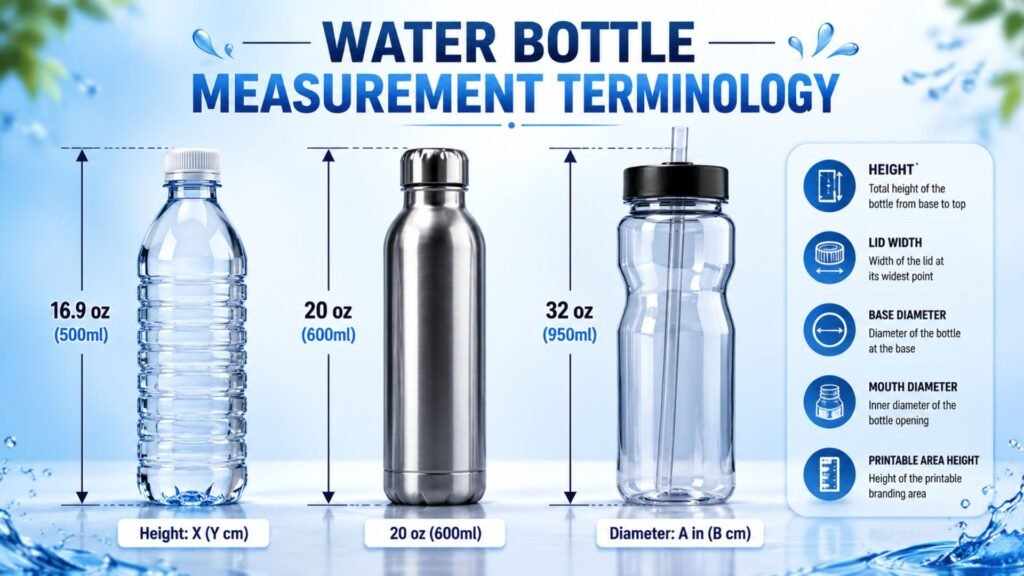
Ounce (oz) is a common measurement for capacity, widely used in the U.S. system, while the liter (L) is preferred in many other countries. Factors like bottle shape can also influence how these measurements translate in day-to-day use, impacting both aesthetics and functionality.
Dimensions of Popular Water Bottle
Among popular sizes, the 20 oz bottle is a favorite for daily hydration, ideal for keeping you refreshed without being cumbersome. Measuring about 2.75 inches in diameter and 10 inches in height, this size strikes a balance between portability and capacity.
Meanwhile, the 32 oz option offers more significant hydration for outdoor activities like hiking, generally coming in with a 3 inches diameter and 11.5 inches height.
Another commonly seen size is the 16 oz, a go-to for casual gym-goers. This bottle measures approximately 3 inches in diameter and 6.5 inches high, making it easily portable yet capable of providing ample hydration for moderate activity.
Other Common Sizes with Precise Measurements
In addition to popular sizes, there are other standard dimensions that cater to diverse hydration needs. The 12 oz bottle is frequently seen in children’s sports, measuring about 3 inches in diameter and 6 inches in height, providing a perfect size for smaller hands.
On the larger side, 64 oz bottles typically measure 4 inches in diameter and 11.5 inches tall, perfect for extended outdoor adventures.
Understanding these measurements ensures that you pick the bottle size that best fits your lifestyle. Whether you’re at the gym or on a weekend camping trip, knowing the precise dimensions of your water bottle can aid in choosing the most suitable hydration solution.
Bottle Dimension Comparison
When comparing bottle dimensions, the differences in shape, height, and capacity can influence not just usability but also styling preferences. A wide-mouth bottle offers ease of filling and cleaning but may be less convenient for sipping on-the-go. In contrast, slimmer designs are often more portable but can make refills trickier.
Understanding these nuances can significantly enhance your hydration experience. For instance, a tapered bottle fits well in car cup holders, while a more robust, wider bottle provides a stable base for more vigorous activities.
Choosing the Best Water Bottle Size for Different Activities
Selecting the right water bottle size is crucial for specific activities. For quick gym workouts, a 20 oz or 24 oz bottle might suffice, ensuring you stay hydrated without the burden of carrying too much weight. For outdoor enthusiasts trekking on long hikes, opting for a 32 oz or 64 oz bottle will ensure ample hydration over extended periods.
Consider how long you’ll be active and the availability of refill stations. A compact 16 oz or 20 oz bottle is ideal for short adventures, while larger sizes should be your go-to for day-long excursions where water sources may be scarce. The right choice not only optimizes your hydration but also enhances your overall experience!
Read Also: 2 Ounces Visualized: 21 Incredible Items With Exact Weight
Average Water Bottle Height and Diameter
The average height of a standard water bottle typically ranges between 8 to 10 inches, while the diameter usually falls around 2.5 to 3 inches. These dimensions make them convenient for carrying in a backpack or cup holder. The ergonomic design encourages users to hydrate frequently.
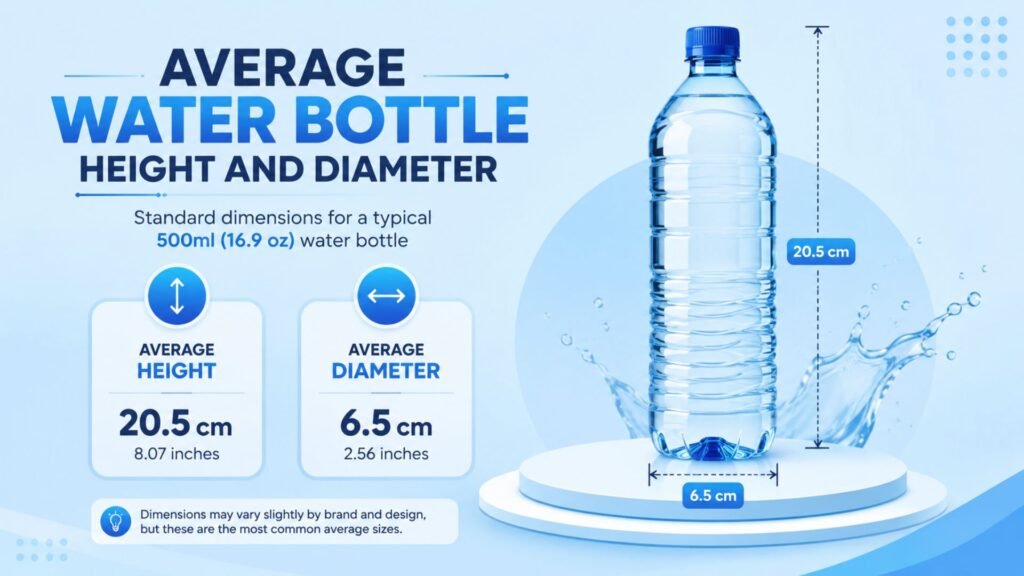
In contrast, tall bottles designed for colder beverages can reach heights of 11 to 12 inches, emphasizing the relationship between height and capacity. This taller structure often accommodates intricate designs, enhancing visual appeal. In addition, bottles with a larger diameter may hold more liquid, resulting in a perfectly balanced mix of style and functionality.
Understanding these average dimensions helps consumers choose the right bottle for their needs. Whether for exploring outdoors or daily office use, the right fit gives a sense of comfort during hydration.
Water Bottle Size Chart (Inches & Centimeters)
A water bottle size chart provides essential metrics for anyone in search of the perfect hydration solution. Common sizes include 16 oz (473 ml; 6.5 in.), 20 oz (591 ml; 8 in.), and 32 oz (946 ml; 10 in.). Each measurement translates seamlessly from inches to centimeters, ensuring clarity for a global audience.
For larger capacities, bottles can reach 64 oz (1.89 L; 12 in.) or more, popular among athletes and outdoor enthusiasts. Such dimensions cater to varying lifestyle needs, emphasizing durability and portability. With an available size chart, users can select a bottle compatible with their daily travels.
Understanding the size chart not only assists in selecting the right bottle but also influences hydration habits geared towards an active lifestyle. The right size can enhance usability and encourage consistent water intake.
Standard Water Bottle Volume by Type
Different types of water bottles serve varied volumes, impacting user choice based on lifestyle and activities. Standard plastic bottles often contain 16.9 oz (500 ml), while steel bottles can hold between 18 oz (532 ml) to 32 oz (946 ml). These discrepancies reflect the intended use, with portability in mind for lighter types.
Collapsible bottles, designed for on-the-go adventurers, range from 8 oz (237 ml) to 12 oz (355 ml), providing a compact option. Filtered water bottles often have a standard volume of 20 oz (591 ml), emphasizing convenience and purification in one unit. Such variations ensure consumers find the most suitable option for their hydration requirements.
Understanding volume by type helps individuals make informed choices tailored to their activities, whether that’s daily hydration at work or weekend hikes. The right bottle not only serves its purpose but can truly enhance the overall experience of staying properly hydrated.
Differences Between Plastic and Steel Bottle Sizes
When comparing plastic and steel water bottle sizes, several distinctions emerge, influencing consumer preference. Plastic bottles are generally lighter and often available in smaller sizes, making them ideal for short-term use or casual outings. They typically range from 12 to 32 oz, providing a versatile option for varied needs.
On the other hand, steel bottles tend to boast larger capacities, often accommodating 18 oz up to 64 oz. Their sturdiness enhances usability during adventurous activities, appealing to outdoor enthusiasts. Steel bottles also come with insulation options, allowing users to maintain beverage temperatures for extended periods, effectively broadening their use case.
Personal style and sustainability play roles in the choice between materials. While plastic bottles are often single-use, the durability of steel options promotes a more eco-friendly lifestyle. Understanding the differences in sizes and characteristics between plastic and steel bottles ultimately aids consumers in selecting the ideal hydration companion.
Common Water Bottle Sizes Explained
Common water bottle sizes have established norms that serve various user needs, ensuring everyone finds their ideal fit. 16 oz, commonly seen in vending machines, is ideal for light hydration tasks. The 20 oz option caters well to daily commuters or gym-goers, providing a balance between portability and hydration needs.
For those engaging in outdoor activities, larger bottles, such as the 32 oz or the popular 64 oz, become essential. These sizes cater to extended adventures, ensuring a sufficient supply of water during long hikes or camping trips. Users can stay hydrated without frequent refills, underscoring the importance of selecting a size that fits their activity level.
Emerging trends point to the rise of specialized sizes like flask-style bottles or those designed for specific activities (e.g., cycling). Recognizing the diversity in bottle sizes allows users to personalize their hydration experience and encourages more consistent water consumption.
Read Also: How Long Is 8 Inches? Incredible 24 Everyday Objects
How Bottle Shape Affects Water Bottle Dimensions
The shape of a water bottle significantly influences its dimensions, affecting both usability and style. Slim and tall bottles are often designed for easy grip and fit in car cup holders, whereas wider designs provide stability and larger volumes. Each shape contributes uniquely to user experience, making design a vital consideration.
The bottle’s shape can determine its stackability or how well it fits into backpacks or bags. Flat-sided bottles maximize space efficiency, while rounded designs promote easier cleaning. Consumers benefit from understanding these design elements, enabling them to choose shapes that align with their lifestyle.
Aesthetics matter. A well-designed bottle, regardless of its dimensions, enhances portability while showcasing personal style. Recognizing the relationship between shape and water bottle dimensions encourages informed choices for those seeking both functionality and flair in their hydration selection.
Do Water Bottle Dimensions Affect Cup Holder Fit?
When it comes to practicality, water bottle dimensions are crucial for ensuring a good fit in your vehicle’s cup holder. Many cup holders are designed to accommodate standard sizes, typically around 3 to 3.5 inches in diameter. If your bottle exceeds this, it might not only struggle to fit but could also tip over during sharp turns or sudden stops.
The height of your bottle plays a significant role. Taller bottles may not fit under a car’s dashboard or may impede the use of other nearby controls. A well-fitted bottle enhances not only convenience but also safety while driving.
Consider the shape of the bottle. Slimmer, contoured designs often adapt better to varying cup holder shapes compared to wider, bulkier options. A smart choice in dimensions can transform your driving experience, keeping your hydration needs met without the hassle.
Reusable Water Bottle Sizes vs Disposable Bottle Sizes
Reusable water bottles come in a plethora of sizes, typically ranging from 12 ounces to 64 ounces, catering to various hydration needs and lifestyles. On the other hand, disposable bottles usually have standard capacities, generally peaking at 16.9 ounces. This discrepancy means that reusable bottles often offer more volume, encouraging users to drink more throughout the day.
The materials used in reusable bottles can influence their dimensions. For instance, insulated bottles may be bulkier than single-use plastic versions but provide superior temperature retention. This adds versatility to your hydration routine, especially during outdoor activities or long commutes.
Understanding the environmental impact is key. While disposable bottles may seem convenient, their limited size and short lifespan contribute to waste. Opting for reusable bottles not only supports sustainable practices but also allows for a greater variety in water bottle dimensions, fitting your personal preferences and lifestyle better.
Tips for Measuring a Water Bottle at Home
When measuring a water bottle at home, start with the height. Use a ruler or a measuring tape to get an accurate reading from the base to the highest point. This measurement is essential for determining if it will fit in your bag or a specific cup holder.
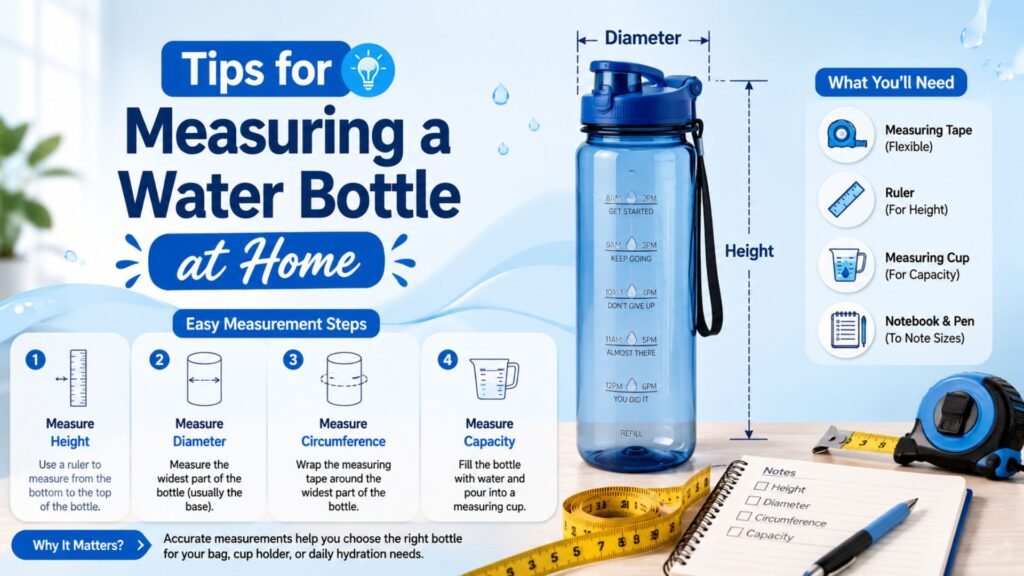
Focus on the diameter. To get the most accurate measurement, measure straight across the widest part of the bottle. This will help you compare its fit against your cup holder dimensions or any storage space you have in mind.
Don’t forget to account for the cap and handle if applicable. Measure these additional features as they can impact the overall dimensions and usability of the bottle. By carefully measuring these aspects, you can ensure that your new water bottle will meet your needs and fit seamlessly into your life.
FAQ’s
Is a Water Bottle 8 Inches?
Not all water bottles are 8 inches; sizes vary based on design and capacity.
How Long Is a 16.9 oz Water Bottle in Inches?
A standard 16.9 oz water bottle typically measures around 8 inches tall.
How Long Is a 12 OZ Water Bottle?
A 12 oz water bottle generally measures about 6 to 7 inches in height.
How Long Is a 500ml Water Bottle in Inches?
A 500ml water bottle is usually around 9 inches tall, although sizes can vary among brands.
What is the Most Common Water Bottle Size?
The most common water bottle size is 16.9 ounces, which is equivalent to about 500ml.
Why Do Some Bottles Look Larger But Hold the Same Amount?
Bottles may have different shapes and thicknesses, affecting their appearance while holding the same volume.
How Do I Know If a Bottle Fits in a Cup Holder?
Check the bottle’s diameter; most cup holders accommodate bottles that are around 2.5 to 3 inches wide.
Are All Water Bottles Made of The Same Material?
No, water bottles can be made from various materials, including plastic, stainless steel, and glass, each with different properties.
Copied!
Conclusion
Understanding water bottle dimensions makes it much easier to select a bottle that matches your daily activities, storage needs, and hydration goals. From small portable bottles to large insulated containers, every size offers unique benefits depending on how and where you use it.
Before buying your next bottle, always consider its height, width, capacity, portability, and compatibility with bags or cup holders. The right dimensions can improve comfort, convenience, and hydration throughout your day.